








Rug 200x250 cm: does the size suit your room?
You've already settled on the dimensions and just want reassurance that they're right. The answer upfront: for medium-sized living and dining areas, 200x250 cm is one of the most reliable formats around. The rug covers the area beneath a seating group or a dining table for four to six people, draws the furniture together into a unit, and leaves enough floor showing at the edges so everything looks ordered.
Compared with 200x300 cm, this variant is a touch shorter and therefore the better choice if your room has limited depth. Large formats can quickly feel overwhelming in smaller rooms. 200x250 cm sits right in between: generous enough to fill the floor, compact enough not to press in. The result is a room that feels calmer straight away and gives your seating or dining group a firm base.
Choosing the right material for your 200x250 cm rug
The larger the area, the more the material matters for care and lifespan. With 200x250 cm, it's therefore especially worth looking closely at the fibre. The four most common options compared:
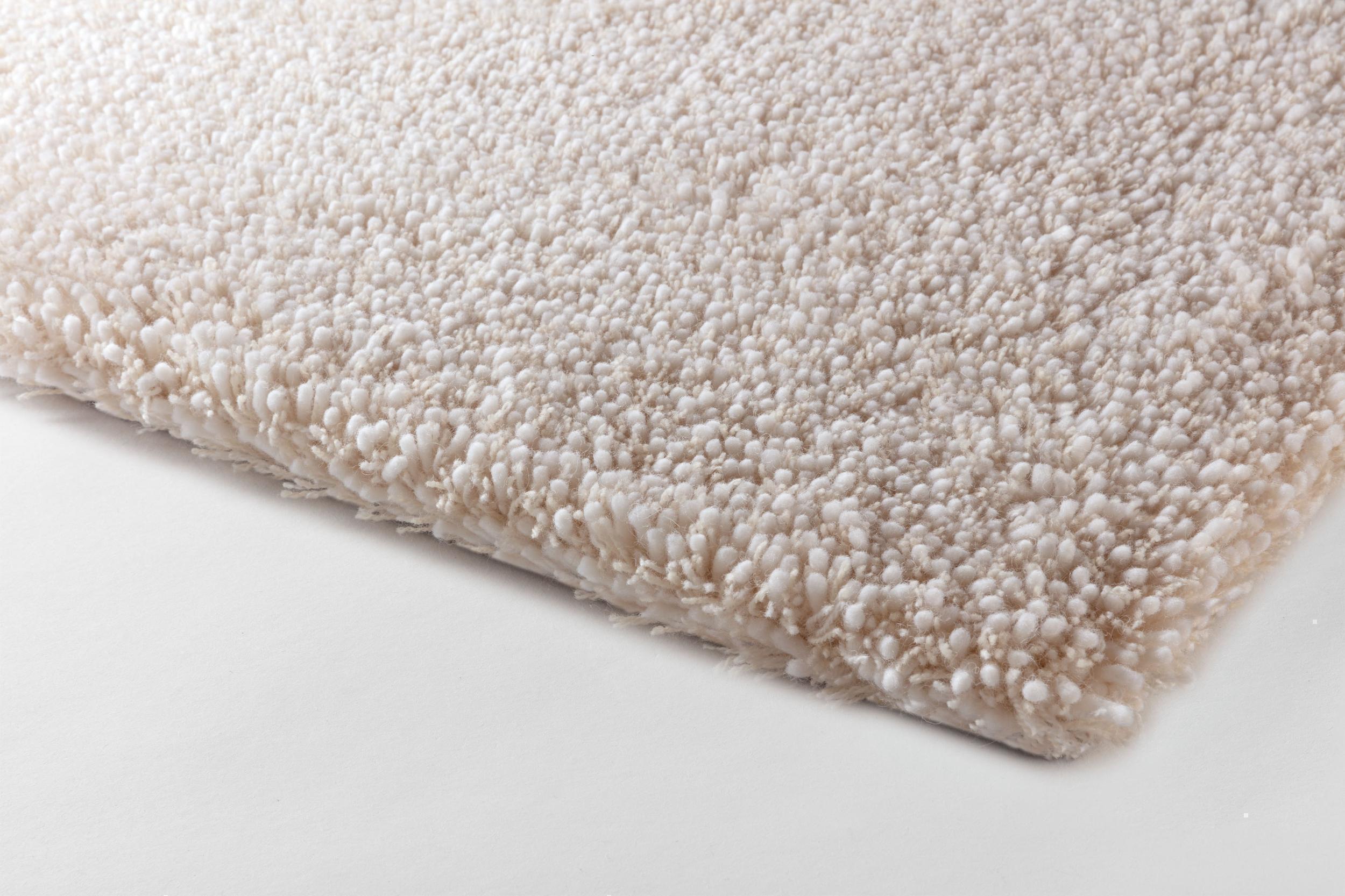
- Wool: retains warmth in winter, absorbs moisture and breaks down odours. Thanks to its antistatic properties it gathers less dust, and the natural fats in the fibre make it resistant to stains. Hand-knotted wool rugs will last you 60 to 100 years under typical use in a living space. Perfect for the living room and bedroom. Avoid permanently damp rooms such as the bathroom, as this takes a toll on wool.
- Viscose: can be woven densely and finely, feels soft and has a silky sheen. It's suitable for those with pet hair allergies and for rooms that see light use. Because viscose holds onto moisture for a long time, it has no place in hallways, entrances or damp rooms.
- Polypropylene: lightweight, abrasion-resistant and robust in daily use. Liquid runs off quickly, the fibre dries fast and it's considered allergy-friendly. One point to note: cheap versions often wear out after just a few years, so opt for a solid quality.
- Polyester: holds its shape even under constant strain, dries quickly and barely fades in light.
For busy living and dining areas, you're on the safest ground with sturdy polypropylene, good-quality polyester or low-maintenance wool. For machine-woven goods made from polyamide or polypropylene, expect a lifespan of around 10 to 20 years, as these fibres are built for that.
Placing a 200x250 cm rug in the living room
In the living room, a rug measuring 200x250 cm frames your seating group while still leaving enough floor visible so the room doesn't feel cluttered. Keep one thing in mind: at least the front feet of the sofa and armchairs should stand on the rug. This brings the sofa, armchairs and table together into one zone and marks out the centre of the room.
Wide sofa or corner sofa
Many people worry that a 200x250 rug will get lost under a large sofa. This only happens if you push it too far under the front of the sofa. Position it so there's a clear strip of floor between the sofa's front edge and the rug's edge, with the coffee table sitting centrally on top. As a guide: if the rug is a touch wider than the sofa, the whole group sits neatly within the frame.
Enough distance from the wall
Leave floor space free all round. As a rule of thumb for this format, allow a strip of about 40 to 50 cm between the wall and the rug's edge. This way the rug frames the floor and the room stays uncluttered. If it sits too close to the wall, it loses its effect as an anchor and starts to look like ordinary flooring.
Rug 200x250 cm under the dining table
A dining room rug measuring 200x250 cm suits a dining table for four to six people well. The key rule: even with chairs pulled out, all table and chair legs must remain on the rug. Allow roughly 60 to 70 cm of margin per side around the table. For a table up to around 90x160 cm, this is enough so no one's chair legs slip over the edge.
If you have a larger table or particularly deep chairs, test it beforehand: mark the rug's outline on the floor with masking tape and pull the chairs out. If the legs land off the marked area, go up to the next size.
Rug 200x250 cm in the bedroom
Under a double bed, this format works best laid crosswise, so a strip of rug shows on both sides and at the foot of the bed. When you get up in the morning, your feet land on soft material instead of a cold floor. Alternatively, you can slide around two thirds of the length under the bed and leave the front third exposed. Both arrangements create a balanced look and give the bed a clear footing.
Non-slip underlay and underfloor heating
A non-slip underlay keeps the rug in place, protects the floor beneath and also absorbs footstep noise. With a generous format like 200x250 cm in particular, it pays off, as nothing slips and no wrinkles form. If there's underfloor heating beneath, choose a flat underlay that lets heat through well, so enough of it reaches the surface. For the rug itself, look for a quality approved for underfloor heating with a low pile.
200x250 cm for balconies and patios
You can also get this size as an outdoor rug. Outside, a patio rug measuring 200x250 cm brings your lounge or dining group together as a unit, just as you'd expect indoors, and instantly makes the space feel cosier. Choose weatherproof fibres here that can cope with moisture and sun.
Avoiding common mistakes with 200x250 cm
- Underestimating the size: a rug that's too small makes the room feel lost and unsettled. Grab a tape measure first and determine the area beneath your seating or dining group.
- Too little distance from the wall: without a clear border, the rug loses its effect. Keep 40 to 50 cm of space from the wall.
- Furniture beside rather than on it: if no piece of furniture stands on the rug, the zone falls apart. Place at least the front feet on the rug.
- Fibre doesn't match the use: viscose in the hallway or wool in the bathroom quickly causes trouble. Choose the material according to the room's demands.
How to find your 200x250 cm rug
First measure the area, then decide on the use: living, dining, sleeping or outdoors. The material follows from that. Then filter the shop for 200x250 cm and choose the combination of look and fibre that suits you. Lay it out, place the front feet on it, and you're done. The room gains structure straight away and feels larger.
