
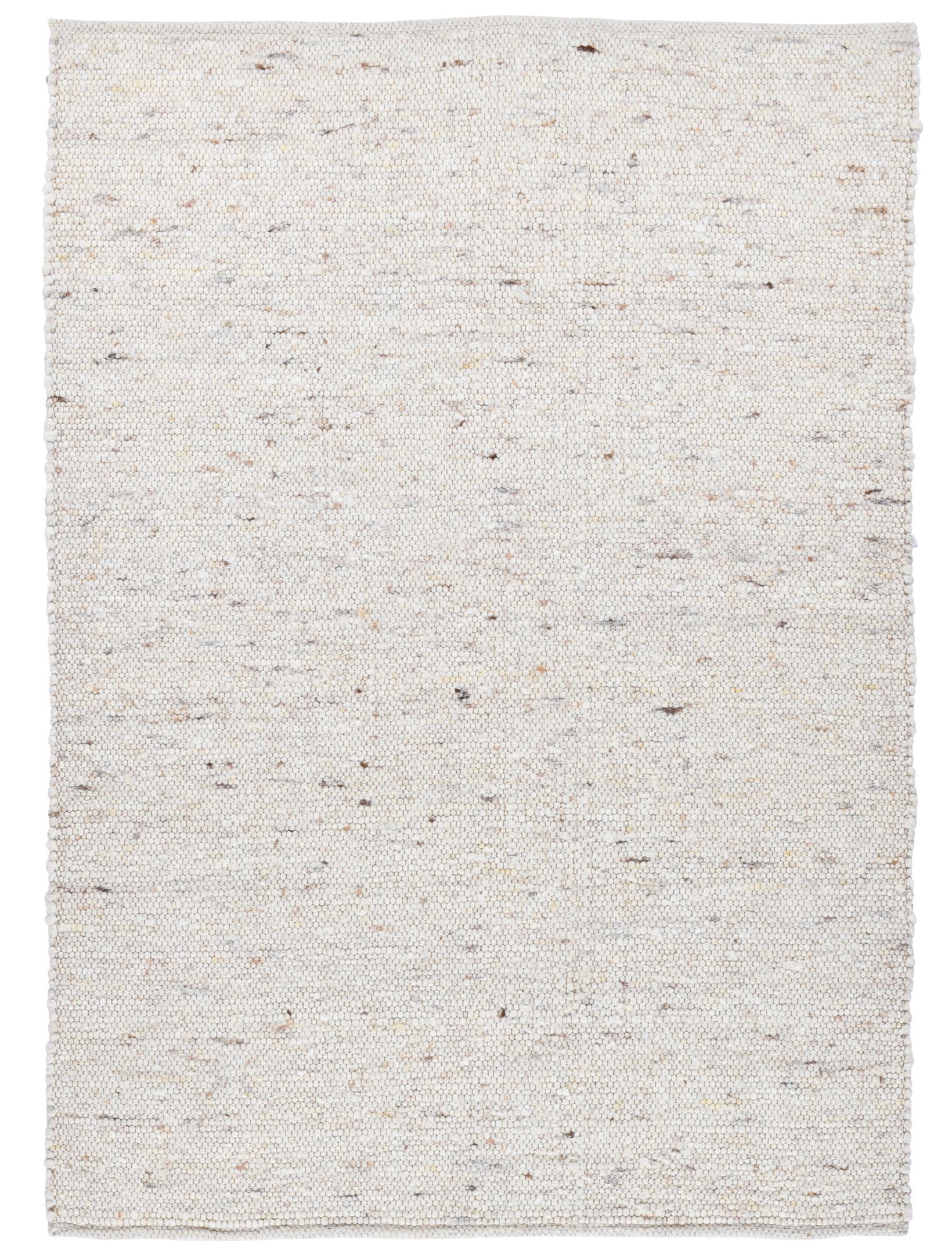


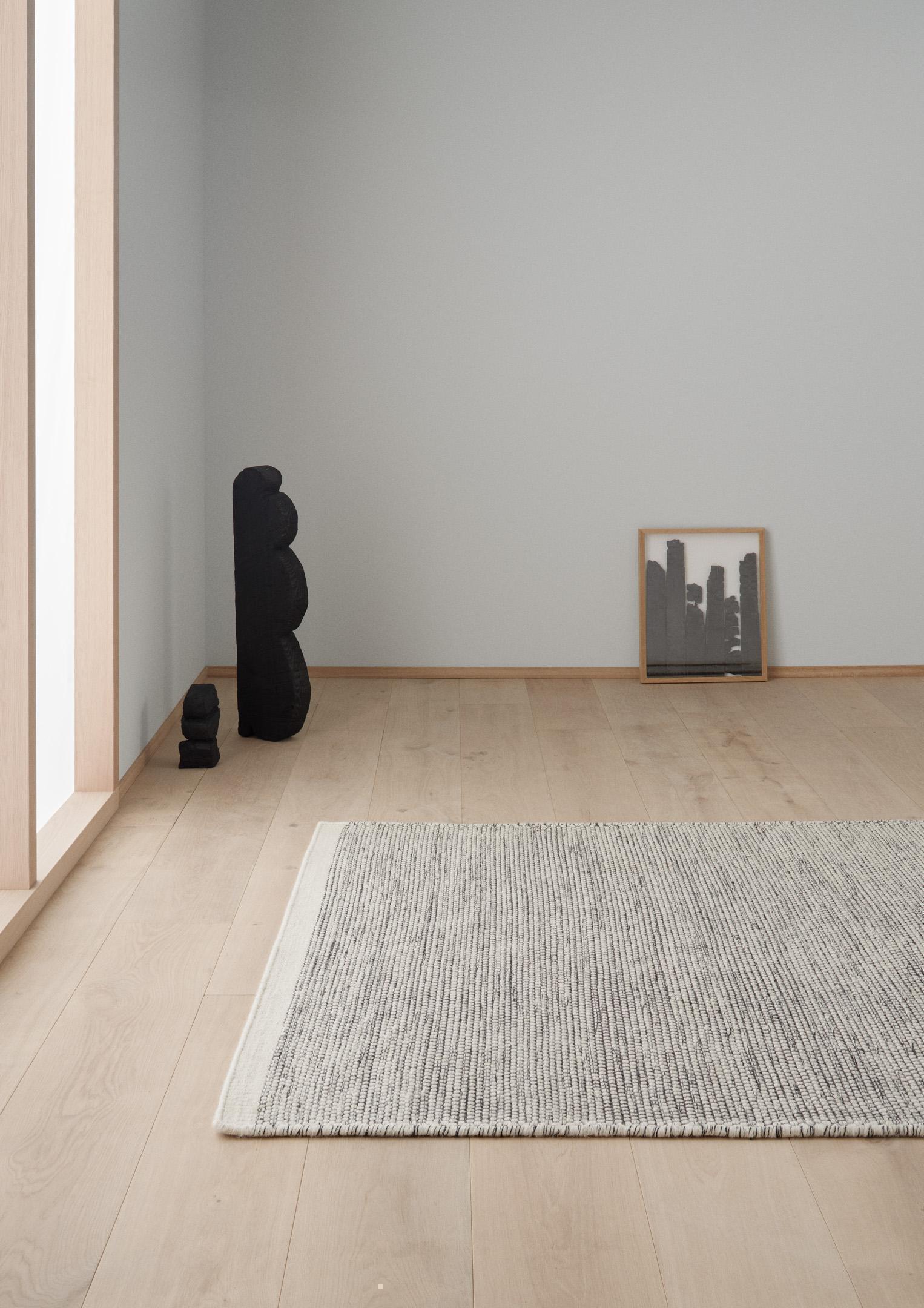


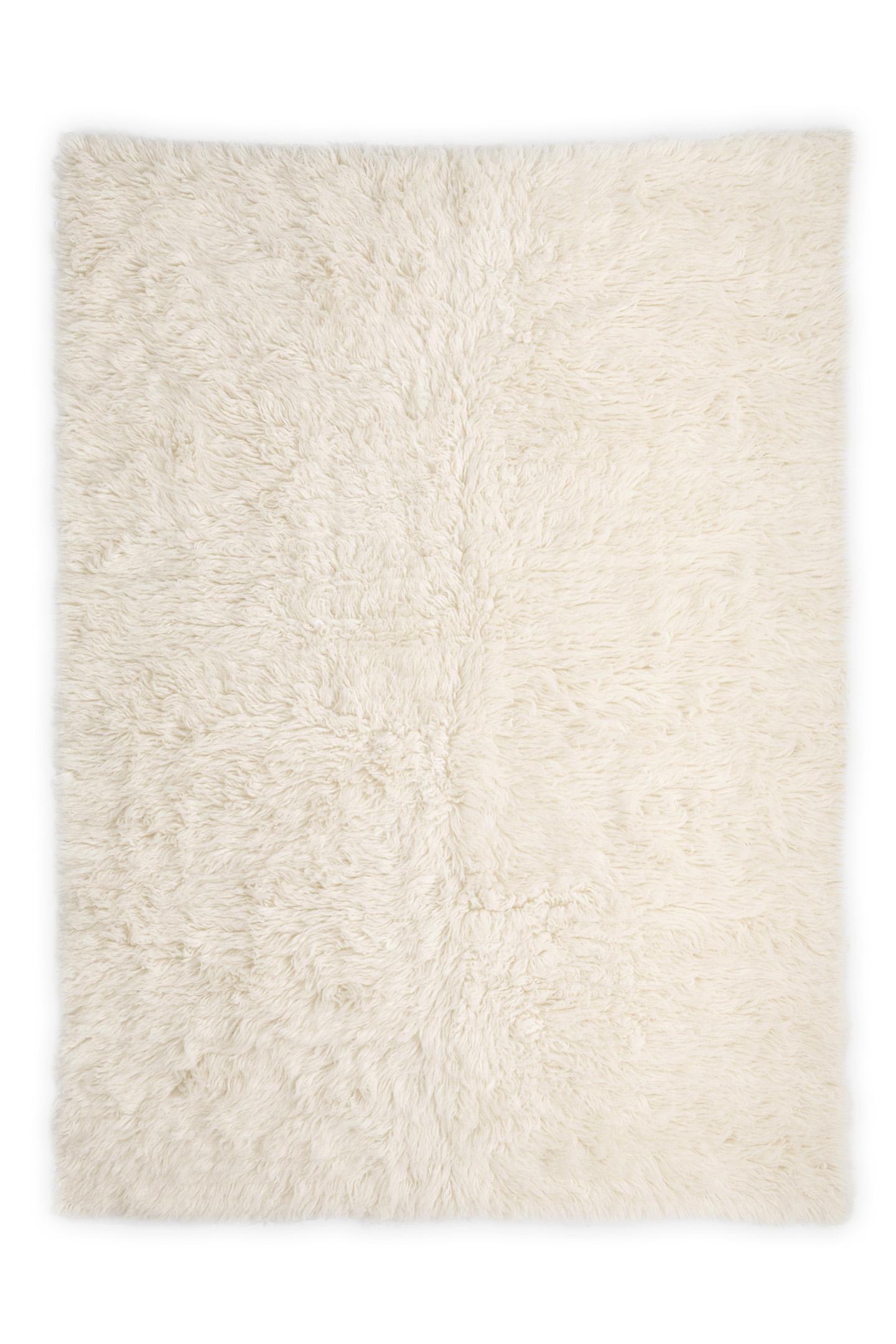



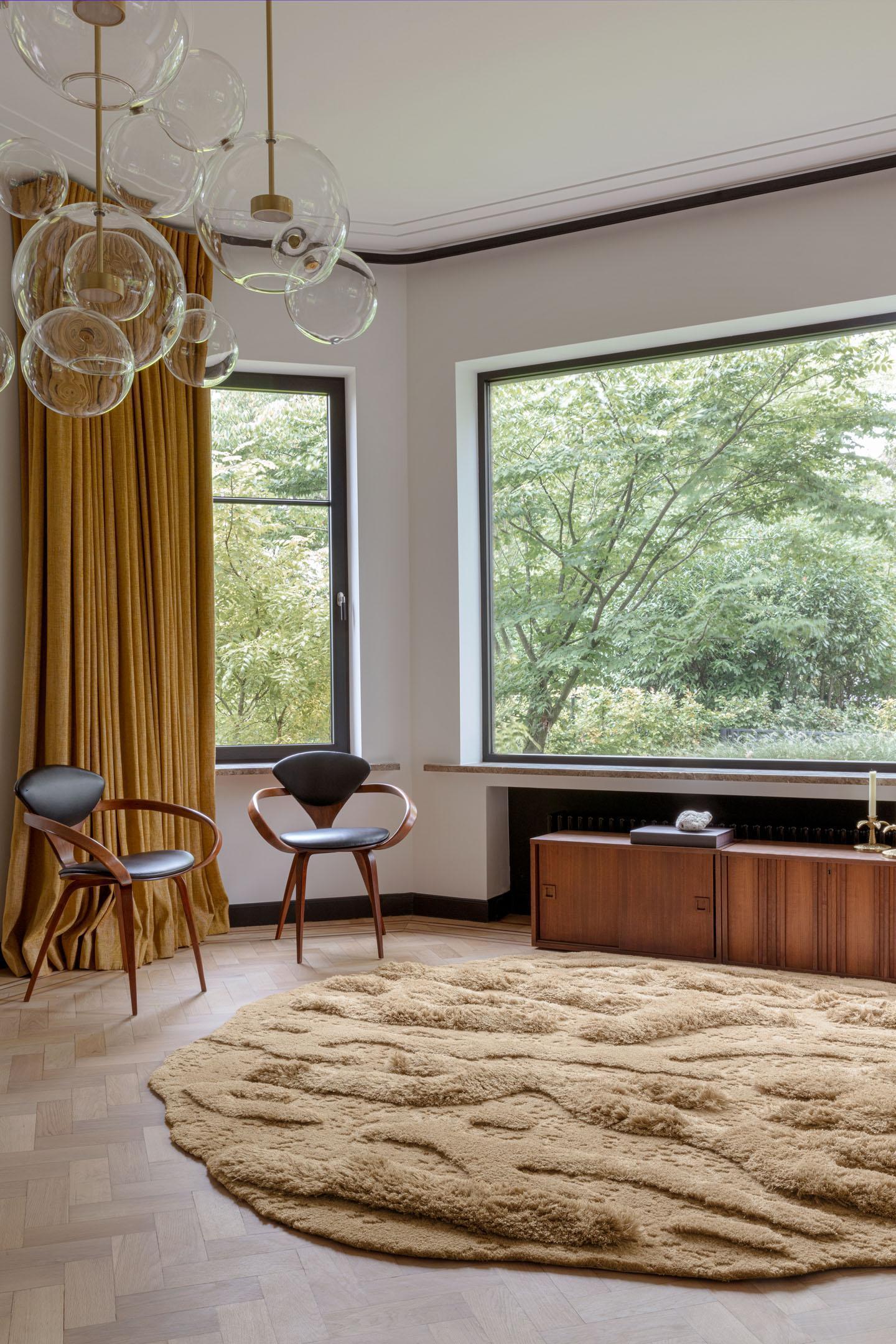
Rug 200x300: the large rug for the seating area
A rug measuring 200x300 cm is large enough to bring a sofa, armchairs and coffee table together on one surface. Instead of individual pieces of furniture scattered around the room, a clearly defined seating area is created. The room instantly feels more ordered, more generous and warmer.
This size is known in the trade as „L" and belongs to the larger standard dimensions for living spaces. A rug 2x3 m works best when it relates to the furniture. The most common solution in the living room: only the front legs of the sofa and armchairs rest on the rug. This keeps the seating group visually connected while giving the rug enough surface area to make an impact.
The distance to the wall is important. As a rule of thumb, leave at least 20 to 40 cm free between the edge of the rug and the wall. This border ensures the rug looks deliberately placed rather than like a wall-to-wall floor covering. It is precisely this strip of bare floor that takes the heaviness away from the large format.
Large rug in an open-plan layout as a room divider
In open-plan layouts, a large rug takes on the role of a room divider, entirely without built-ins or structural changes. In an open loft layout, you can use it to visually separate the dining area from the lounge: the rug 200x300 cm sits beneath the seating group and clearly marks where the living area begins and the dining area ends.
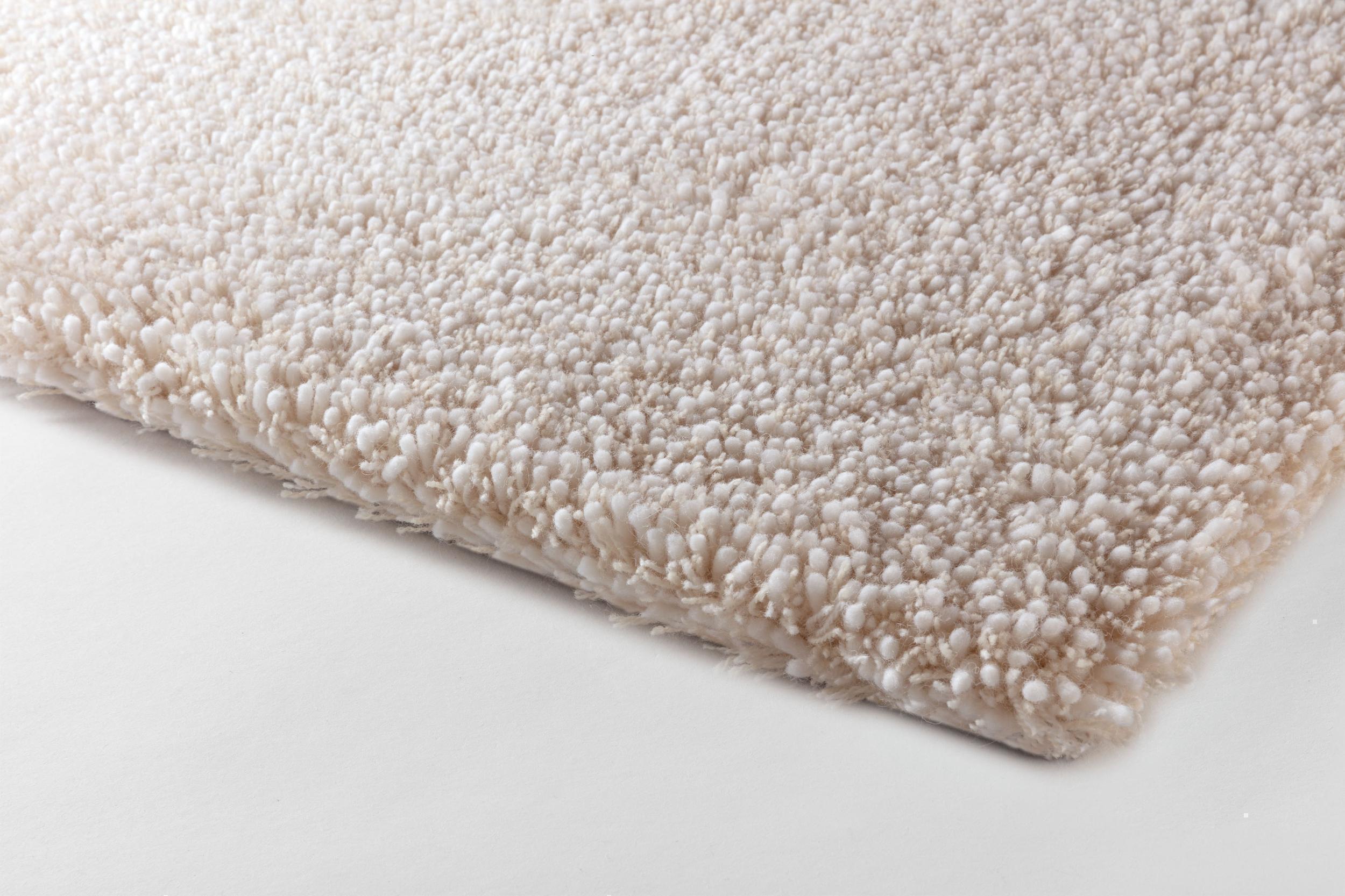
There is also the matter of acoustics. Textile floor coverings reduce reverberation and improve speech intelligibility, especially in large, open spaces with hard floors. For sound absorption, the density of the pile is more decisive than pile height alone. Wool and dense, high-pile constructions absorb sound most effectively.
A practical point: a large rug has a greater acoustic effect when it is placed deliberately beneath the seating or dining group rather than floating freely in the room without any furniture reference. A suitable rug underlay further increases sound absorption, particularly on concrete or tiles.
Rug 200x300 cm under the dining table: 60 to 70 cm overhang
Under the dining table, a single figure determines the outcome: the overhang. The rug should extend at least 60 to 70 cm beyond the edge of the table on all sides. Only then do chairs that have been pulled back remain fully on the rug and do not tip over the edge.
A concrete example: with a dining table for 6 people measuring 160x90 cm, a rug 200x300 cm provides enough overhang all round. You pull the chair back to stand up, and the rear legs still land on the surface. This is precisely what prevents the scraping and worn edges that occur when chairs are constantly pushed over the edge of the rug.
Which size and when? 200x300 compared to 160x230 and 300x400
The right size depends on the room and the furniture. This guidance will help you choose:
- Rugs 160x230 cm: the more compact living room size, well suited to smaller seating groups or when only the coffee table area is to be highlighted.
- Rug 200x300 cm: the workhorse for medium to large rooms. Brings a complete seating group together and fits under a dining table for 6.
- Rug 300x400 cm: the large format for expansive open-plan living and dining rooms, large corner sofas, or when you want a very large furniture group to sit entirely on the rug.
For a standard double bed, 200x300 cm is often the right size when roughly two thirds of the surface lies under the bed and the rug remains visible on the sides. This makes the format a solid choice as a bedroom rug too. Anyone wanting to dress a large balcony or terrace can opt for a robust outdoor rug variant in similar dimensions.
Common mistakes when buying a large rug
The most common mistake is choosing a rug that is too small. A living room rug in 120x170 cm under a large seating group leaves the furniture floating rather than uniting it. The seating group then stands all around it, and the rug looks like a small island in an empty room.
The second mistake: misjudging the surface area. Before you order, mark out the planned 2x3 m on the floor with painter's tape. This test shows you within minutes how much floor space the rug actually occupies and whether a wall clearance of 20 to 40 cm still works.
And a third point that is often overlooked: non-slip protection. On smooth floors such as parquet or tiles, an anti-slip underlay prevents the rug from sliding or the edges from curling up. With such a large format, this is doubly worthwhile.
Rug 200x300 for families and pets: the robust material
Large rugs often lie where there is a great deal of activity: in the dining area, in the family living room, in the hallway. Here, durability counts.
- Polyamide (nylon) is considered the most hardwearing synthetic fibre and is therefore frequently used in heavily trafficked areas. In a household with a dog, polyamide is a good choice for the heavily used dining area.
- Polypropylene is easy to care for because the fibre absorbs almost no moisture and stains can usually be wiped away. The fibre is also heat-resistant and therefore suitable for underfloor heating.
- Wool offers the softest and warmest feel while also being long-lasting. It regulates moisture and contributes to a balanced indoor climate. New wool rugs shed initially, which settles with use and regular vacuuming.
- Cotton feels light and airy and is suitable for allergy sufferers, but wears more quickly than wool.
For families and pet households, a robust synthetic fibre is usually the more practical choice. Anyone who wants warmth and the best feel, and is willing to invest a little more care, will do well with wool in the long term.
How to care for a rug 200x300 cm properly
A rug 200x300 cm should be vacuumed thoroughly at least once a week, regardless of pile length. For high-pile rugs, a smooth suction nozzle without a rotating brush is gentler on the fibres.
Absorb liquids immediately with an absorbent cloth, pressing rather than rubbing, so they do not sink deep into the fibres. Synthetic fibre rugs made from polyamide, polyester or polypropylene can be treated with water and clear glass cleaner. Wool rugs should only be dabbed when stained, out of consideration for the fibre structure.
For a deep clean, the recommendation is approximately every three years, less often with good care. A format in 2x3 m does not fit in any domestic washing machine. A professional wet or extraction cleaning is more practical and gets even large surfaces thoroughly clean.
