


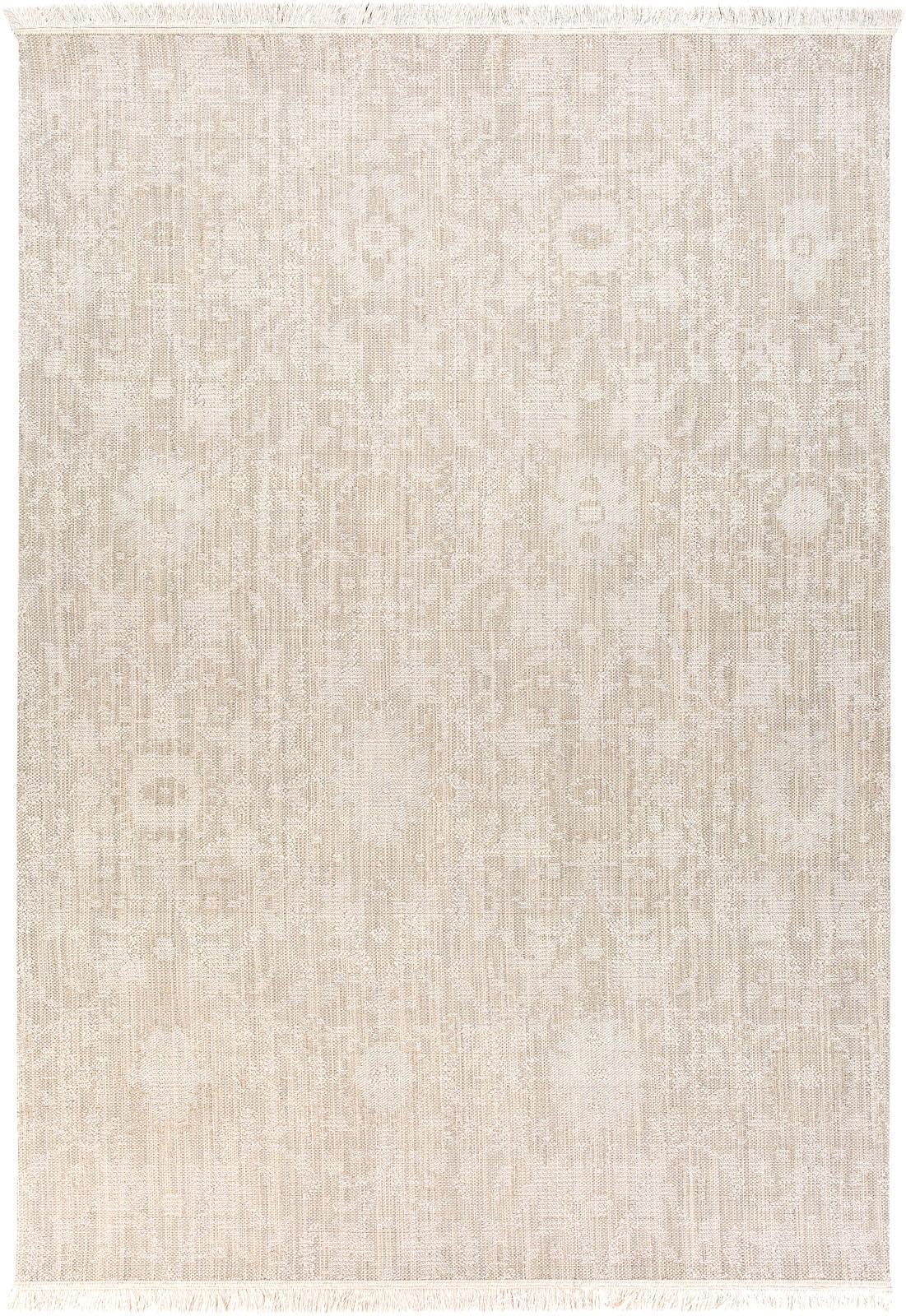


Hallway rug: the right material for the most heavily used room
The hallway is the most heavily trafficked spot in the home. Wet shoes, sand from the playground, dog paws and the dirt every visitor brings in all end up here. Before you think about colour and pattern, the material determines whether you will enjoy your hallway rug for a long time. Wet shoes and mud pose the first question, and that question is answered by the choice between synthetic fibre and natural fibre.
A good rug at the entrance delivers several benefits at once: it dampens footsteps, protects the floor from scratches and abrasion, catches dirt right at the entrance and immediately makes the area feel more homely. According to manufacturer data, textile floor coverings significantly reduce impact sound compared to a hard floor, which is noticeable in quieter footsteps in the hallway. For this to work in everyday life, the runner must be hard-wearing, non-slip and easy to clean.
Synthetic fibre versus natural fibre: polypropylene, sisal, wool compared
Easy-care synthetic fibres have established themselves for thoroughfare areas. Short pile made from polypropylene is considered the most robust choice for heavily used hallways: moisture-resistant, dirt-repellent and quickly cleaned with a damp cloth. A flatweave rug made from polyamide is also very hard-wearing, and a loop-pile surface in polyamide ranks among the most durable options of all.
With natural fibres, it is worth taking a closer look:
- Sisal is tightly woven and can withstand a great deal of foot traffic, according to manufacturer data more than other rug types. The drawback: sisal must not get wet, otherwise the fibres expand and the covering buckles.
- Wool is robust and pleasant underfoot, but quality is particularly important here; otherwise you will find less enjoyment from it in the hallway.
- Cotton feels soft underfoot and is often machine washable, but it flattens more quickly than polypropylene under heavy use.
Interior design experts clearly advise against delicate materials such as silk in the hallway. If you prefer something straightforward, a short-pile synthetic fibre rug is the safe foundation; in a dry hallway with little moisture, sisal and wool come into their own aesthetically.
Moisture in the entrance: what withstands dampness and mud
The entrance area is precisely where it gets wet: dripping umbrellas, wet soles, and constant mud in autumn. Sisal and jute absorb moisture with repeated exposure to dampness, dry slowly and can even develop mould under constant stress. A sisal runner that has buckled after a wet autumn is the classic example of the wrong material choice in a damp spot.
Polypropylene has the advantage here because it barely absorbs moisture and can be wiped down with a damp cloth. For the spot directly behind the front door, an easy-care short-pile rug is therefore the more practical choice. A small rug in the size 80x150 acts as a dirt trap there before the actual hallway begins, keeping the rest cleaner.
Washable carpet runners: what can go in the machine and what cannot
Washable does not mean the same thing for every runner; the care label always has the final say. As a general rule, lightweight, flatwoven and short-pile rugs made from polypropylene or polyester are the easiest to wash and dry. Robust synthetic fibres usually tolerate a delicate cycle at 30 to 40 degrees with mild detergent and without bleach.
A washable polypropylene runner on a delicate cycle at 30 degrees, then dried flat or hung up, is the straightforward everyday example. Important: machine-washable runners should generally not go in the tumble dryer; air drying is better for their longevity. Pull the rug back into shape before drying so it retains its form. Wool, jute and very thick or heavy rugs, on the other hand, do not belong in the machine, as they can damage the fabric and the appliance. Clean sisal only with a slightly dampened cloth; no wet cleaning.
Sizes and wall clearance: from the narrow hallway to 80x300
The correct width determines whether the hallway rug truly fits. Common runner widths are 60 to 90 cm. For narrow hallways under 100 cm wide, 50 to 60 cm is often a better choice than the classic 80 cm; in wider hallways over 1.20 m, you are more likely to opt for 90 to 100 cm. As a general rule, leave 10 to 20 cm of floor exposed on each side, which gives the runner a visually calm appearance.
For the length, measure the entire hallway and subtract approximately 30 cm. Common sizes are 200, 250 and 300 cm, and for very long corridors 350 cm as a single continuous piece. The classic size for standard hallways is 80x300. Placing two shorter runners end to end rarely looks convincing and usually appears as a makeshift solution; a single continuous piece is the better choice.
Two details that matter in a narrow hallway: a low pile of under 10 mm makes the carpet runner appear visually wider. And from approximately 10 to 12 mm pile height, clearance when opening doors can become tight, so check door clearance beforehand.
Non-slip safety: keeping the runner securely in place
On tiles, laminate or parquet, nothing should slip; otherwise the runner in the hallway becomes a tripping hazard. Models with a non-slip backing often hold sufficiently on their own. With thin runners or very smooth floors, place an additional anti-slip underlay beneath. This should be slightly smaller than the rug; a gap of one to two centimetres from the edge is usually sufficient.
Common mistakes with hallway rugs and how to avoid them
- Too light a colour: White, beige and light pastel shades show every mark immediately. Because the hallway rug has to cope with mud, rain, dog paws and sand, brown, grey or black are the better choice. A family with children and a dog will find life considerably easier with a dark short-pile rug, as sand from the playground would stand out immediately on beige.
- Natural fibre in the damp spot: Sisal and jute directly behind the door buckle over time. A moisture-resistant short-pile rug belongs there instead.
- Wrong width: 80 cm in a narrow hallway can quickly feel overpowering; 50 to 60 cm fits more neatly.
- No wall clearance: If the runner reaches right to the walls, the hallway feels cramped. Leave 10 to 20 cm free.
- Washing without checking the label: Wool or thick rugs in the machine can damage both the rug and the appliance. Always read the care label first.
From hallway to living room: when the runner continues
Many hallways today open directly into the living room. To keep the transition looking calm, match the colour tone of the hallway rug to the area beyond. The practical runner in the entrance and the rug in the living room should complement each other in colour, allowing the eye to flow through the space rather than stopping at a hard boundary. The underlying principle for materials remains the same: robust and easy to care for where traffic is heaviest, softer and more comfortable where you spend more time.
