






Bedroom Rug for Warm Feet and More Calm
The first step out of bed says a lot about how the day begins. Instead of cold laminate or tiles, your foot lands on a warm, soft surface. That is exactly what a bedroom rug delivers: a pleasant surface underfoot in the morning, a visual frame for the bed, and a quieter feel to the room. The result feels immediately warmer and cosier.
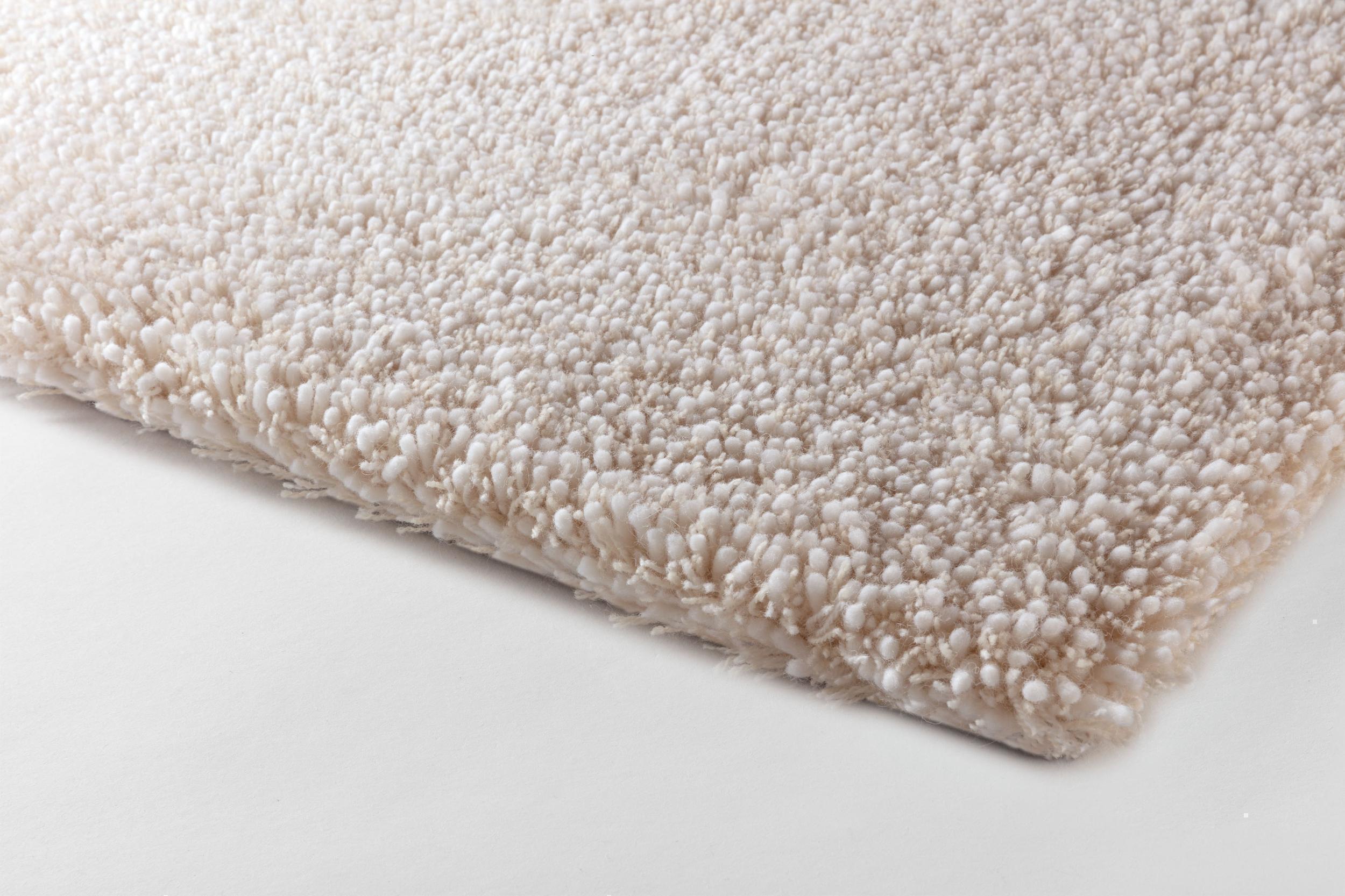
In the bedroom, heavy wear is rarely a concern. Nobody walks through in street shoes, no office chairs roll across the floor. That broadens your options: you can prioritise softness and comfort rather than the hard-wearing durability required of a living room rug. The rug under the bed can be pleasantly thick and fluffy.
The real sticking point is size. A rug that is too small looks lost; one that is too large overwhelms the room. Both issues can be resolved with clear rules of thumb, covered in more detail below. First comes the feel and the material, then the numbers.
Soft Bedroom Rug: Wool, Viscose or Cotton
The material determines how the rug feels under bare feet and how much care it requires. Three fibres are particularly interesting for the bedroom.
Wool: Warm, Balancing, Long-lasting
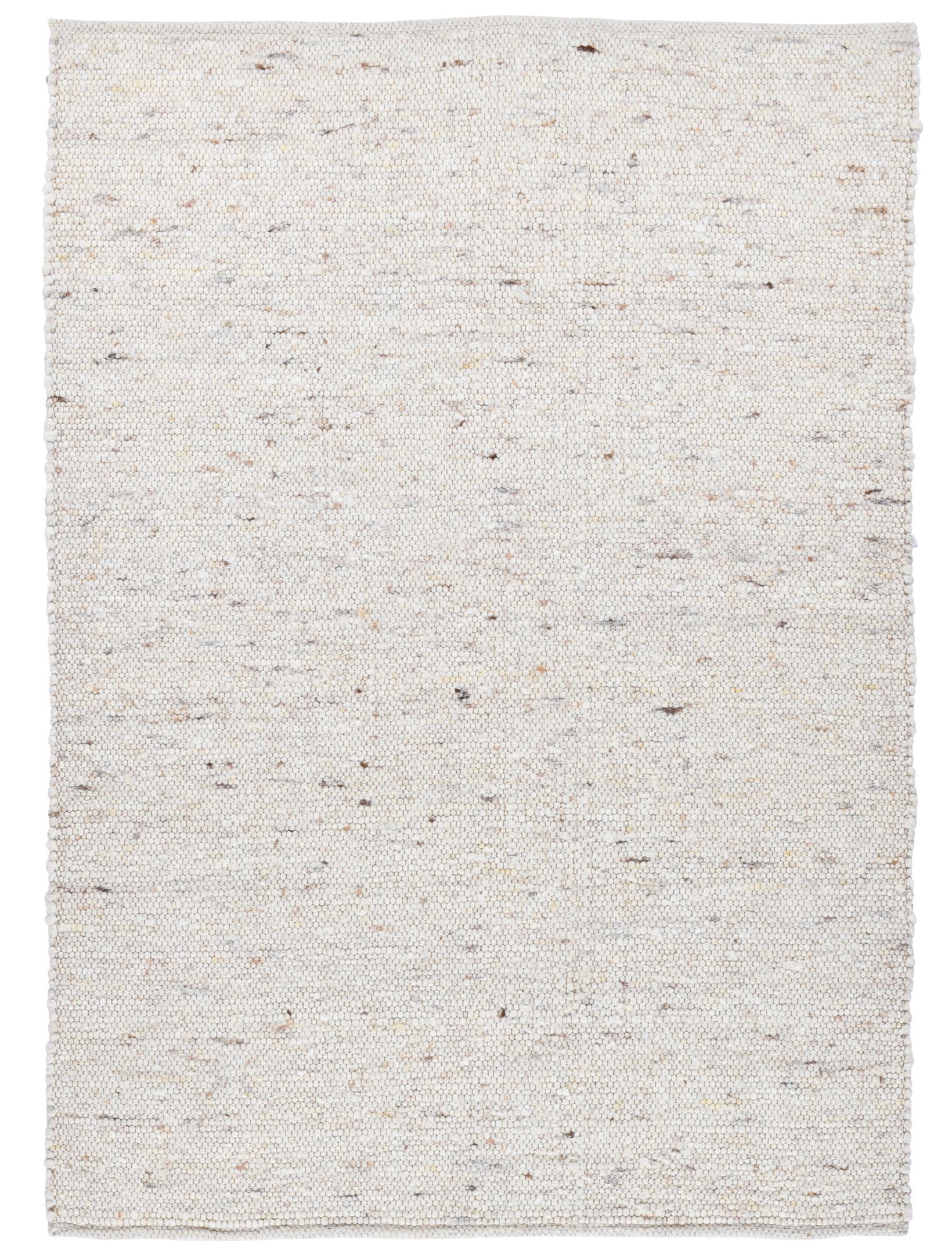
Wool is the classic choice for a soft rug beside the bed. It insulates warmth and makes itself immediately felt underfoot: the barefoot test in the morning is noticeably more pleasant on a wool rug than on cold laminate. Wool absorbs moisture and releases it again, creating a balanced indoor climate. A good wool rug, with careful maintenance, lasts several decades.
A practical advantage, particularly in the bedroom: virgin wool rugs spring back from pressure marks left by furniture or bed feet, because the fibres can stretch and contract. If you rearrange the bed, the indentations disappear over time on their own. Wool also has antistatic properties, which means it attracts less dust. New wool rugs may shed initially; remove these loose fibres by hand rather than with the vacuum cleaner.
Viscose: Silky Sheen, Gentle Texture
Viscose feels particularly soft thanks to its fine spinning and dense weave, and has a silky sheen. Because it is less elastic and less heat-regulating than cotton, it suits rooms with low levels of wear, which makes it a good match for the bedroom. Viscose sheds very little and is therefore considered a good choice for allergy sufferers or households with pets. Protect the rug from direct sunlight, as the material can fade.
Cotton: Lightweight and Easy to Care For
Cotton absorbs moisture and has a thermoregulating effect, similar to wool, but is lighter in weight. The big advantage: cotton rugs in smaller sizes can often be machine-washed without difficulty. That makes cotton appealing if you want a straightforward, easy-care rug beside the bed.
In brief: in the bedroom, wool scores with cosiness and warmth, cotton with softness and simple upkeep, viscose with a gentle texture and sheen. If sustainable rugs matter to you, wool as a natural fibre is a good starting point. Those who prefer something especially fluffy should opt for a high pile rug with a long pile.
Bedroom Rug and Room Acoustics: Reducing Footfall Noise
A hard floor makes every footstep echo; a rug absorbs exactly that footfall noise. The room instantly feels quieter and softer. Worth knowing: a rug reduces footfall noise mainly within the room itself, and has little effect on airborne sound from neighbouring rooms.
The longer and denser the pile, the more sound the rug can break. A high pile rug with a long pile therefore makes the room noticeably quieter than a flat one. Wool rugs are considered particularly suitable for calming room acoustics, owing to their natural sound absorption. As a welcome side effect, an anti-slip underlay beneath the rug also provides additional footfall noise insulation.
Bedroom Rug with House Dust Allergy: What to Bear in Mind
With an allergy, the rule of thumb is clear: choose a short pile. Fluffy, high pile fabrics offer house dust mites more places to nest than short pile rugs. A short pile rug combined with a vacuum cleaner fitted with a HEPA filter, which retains the smallest dust particles, is therefore the sensible combination in an allergy-sufferer's home.
Expert opinion on rugs in the bedroom for house dust allergy is divided. One argument in favour: mites need food, moisture and warmth, which are hardly present on the rug itself, and a rug traps dust within the pile rather than allowing it to be stirred up. Some specialist bodies advise against fitted carpet altogether for those with severe allergies, as deep pile varieties can harbour a similar level of mite infestation to the sleeping area itself. If in doubt: short pile, regular vacuuming with a HEPA filter, and if your allergy is pronounced, consult your doctor.
Finding the Right Size for a Single Bed, Double Bed and King-size Bed
This is where the most common purchasing concern gets resolved. The basic rule for a rug under the bed: it should extend 60 to 90 cm beyond the bed on each side and at the foot end, so that your feet land safely on the rug when you get up. The most frequent mistake is placing the rug under only half the bed, causing the feet to miss it entirely when getting up.
Sizes by Bed
- Single bed: approximately 140 x 200 cm. This structures the area without overwhelming it.
- Double bed (180 x 200 cm sleeping surface): at least 240 cm wide, to ensure sufficient overhang. The optimum is 200 x 290 to 200 x 300 cm.
- King-size bed: from 250 x 350 cm to 300 x 400 cm, so that the rug extends harmoniously beyond the sides and foot end.
Placement: Full Coverage, Two-Thirds Technique or Runners
There are three tried-and-tested approaches:
- Full coverage under the bed: The bed stands entirely on the rug, with 60 to 90 cm of overhang on the sides and at the foot end. The calmest and most generous solution, provided the room has enough space.
- Two-thirds technique: Only approximately one third of the rug lies under the bed, with the rest extending towards the foot end. This visually lengthens the bed and works particularly well in smaller rooms.
- Two runners: As an alternative to a large rug, place two narrow runners of around 60 cm width to the left and right of the bed. This gives you a warm surface underfoot on both sides.
Two points for a harmonious look: around medium and large rugs, approximately 50 cm of floor should remain visible so the room does not feel cluttered. In small bedrooms, an oversized rug can make the space feel more confined, so take the whole room into account, not just the bed. On shape: rectangular rugs harmonise more naturally with the bed owing to their matching shape, while a round rug stands out more and makes a deliberate statement, for example in a reading corner.
Preventing Slipping
On smooth flooring beside the bed, the rug can slide around. An anti-slip underlay prevents slipping and the formation of ripples. Choose one that is one to two centimetres smaller than the rug, so it remains invisible from the outside.
Cleaning Your Bedroom Rug and Keeping It Looking Its Best
The good news: wear in the bedroom is low, so upkeep remains correspondingly manageable. Vacuuming once a week is generally sufficient.
- Short pile: A brush-roller vacuum cleaner lifts deep-seated dirt from the pile effectively.
- High pile and long pile: Use a smooth floor nozzle without a rotating brush, to avoid loosening fibres.
- Wool: Do not treat wool rugs with soap or washing-up liquid, as this can permanently damage the material.
- Viscose: Regular vacuuming is sufficient for everyday care. Stains are best removed with diluted washing-up liquid, glass cleaner or white wine vinegar.
A thorough deep clean is necessary approximately every six to twelve months, or even only every one to three years, depending on the level of use. For allergy sufferers, a vacuum cleaner with a HEPA filter, which retains the smallest particles, is worthwhile.
