


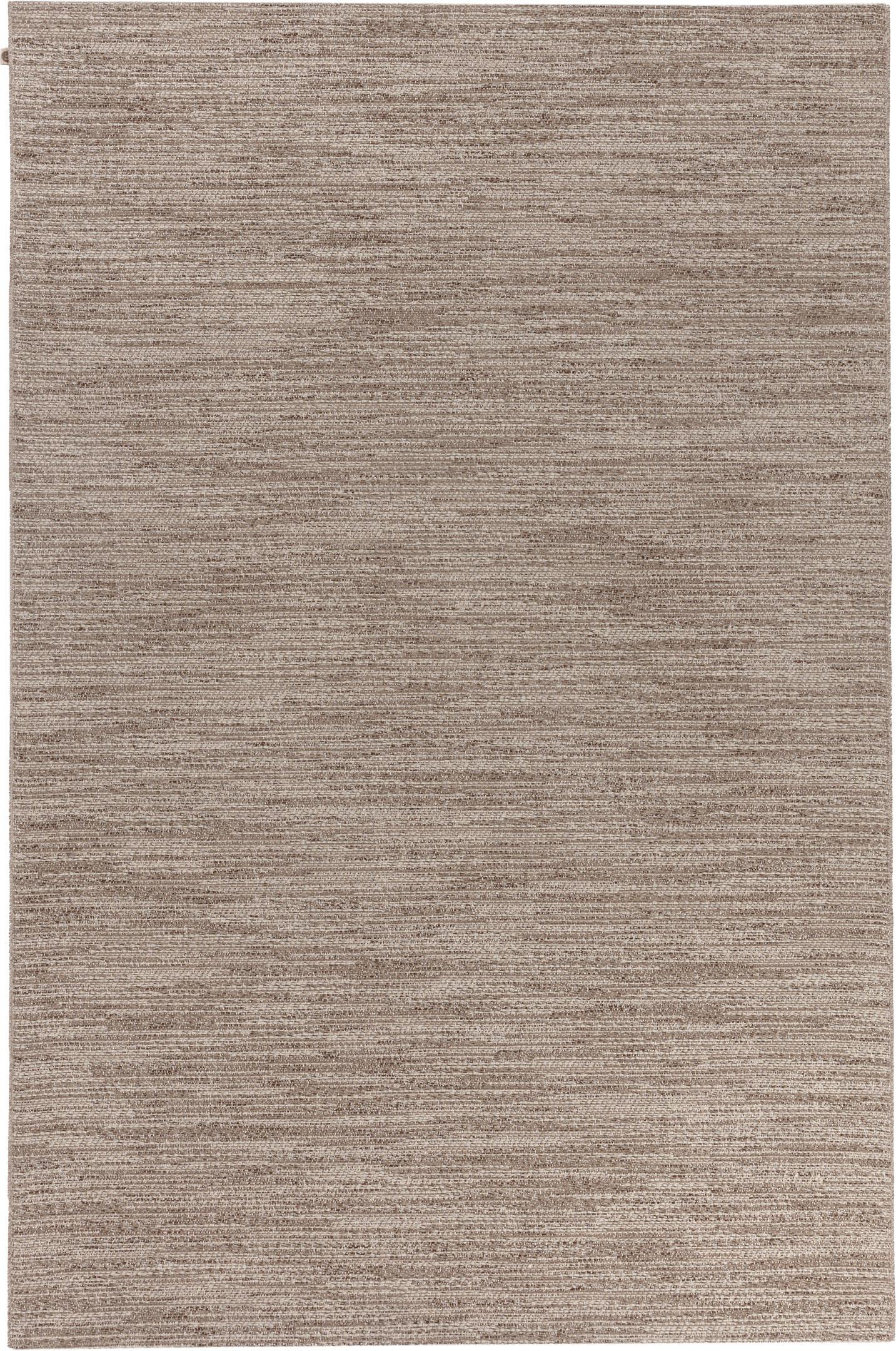


Square Rug: the right shape for tables and seating groups
Choosing a square rug is always worthwhile when your furniture itself is square in layout. A square dining table, a corner sofa, or a compact seating group: all of these call for a shape that echoes the same base line. With a square, all four sides are equal in length, and that is precisely what creates a calm, balanced look. A square has no top and no bottom, which is why the surface feels even and establishes a clear focal point.
The most common question before purchasing: does a square rug look odd or out of proportion in my room? The answer is straightforward. A square works in a rectangular or irregularly shaped room too, as long as you place it as a clearly defined island beneath a table or seating group. The rug then defines a zone rather than following the outline of the walls. This gives the area focus and structure, and the shape fits in naturally.
Rule of thumb: table shape equals rug shape
The quickest guide when buying is: square table, square rug. A round table works well with either a round or a square rug, so you have flexibility there. Imagine a round four-person table under which you deliberately place a square rug instead of a round one. The rectangular frame around the round table top looks orderly and calm, and you gain more usable surface at the corners.
A square rug also suits large corner sofas well, and for an L-shaped sofa the shape is almost the obvious choice. It picks up the right angle of the seating corner and holds the group together visually.
Square rug by room: living room, dining room, bedroom
Square living room rug
In the living room, a square structures open areas and brings the seating group to a common denominator. For a spacious living room, a 200x200 cm rug is a solid starting point; in a more square-shaped open living area, a 250x250 cm model works as a central design element. For large lofts or widely spaced furniture arrangements, rugs of 300x300 cm and above are suitable, with made-to-measure options going beyond 400x400 cm. The general rule for living room rugs is: at least as wide as the sofa, ideally 15 to 25 centimetres more on both sides.
Dining room
In the dining area, what matters most is that the chairs remain on the rug when pushed back. For a round or square four-person table of around 80x80 cm, a 200x200 cm rug works well; for larger square dining tables, 200x200 cm or 240x240 cm is the right size.
Bedroom
As a bedroom rug, you can place a square as an accent at the foot of the bed to structure the space in front of it. A small format of 60x60 cm is suitable as a bedside rug, while 100x100 cm creates a focal point in a smaller seating corner.
Placing furniture correctly: all legs or only the front ones
The effect depends on how you position the furniture on the rug. If you move the sofa and armchairs away from the wall into the room and place all their legs on the square, you create a cosy, self-contained seating group. This requires space: in a room that is too small, the arrangement can look cramped and the passageways may become too narrow.
With larger seating arrangements, it is often sufficient for only the front furniture legs to rest on the rug. In a large living room with a corner sofa, you can arrange the furniture around the square and let individual pieces overlap it slightly; this loosens up the strict grid. Towards the wall, 30 to 60 centimetres of clearance is a good guideline; in large rooms, more space around the rug is also fine, so that it does not look squeezed in.
A practical tip before buying: mark out the dimensions on the floor with masking tape. This immediately shows you how the square sits in the room. And if you are wavering between two sizes, go for the larger one. A rug that is too small quickly looks lost.
Which material holds up best in everyday use?
The right material depends on where the rug is placed and how heavily it will be used.
- Wool: The natural lanolin in the fibre makes it resistant to dirt and water; wool feels warm and soft, dampens impact sound, and regulates humidity. It is unsuitable for damp rooms, as the material deteriorates with prolonged exposure to moisture.
- Cotton: A renewable, robust raw material, plant-based and therefore also suitable for allergy sufferers who cannot use wool. Depending on the care label, cotton rugs are often machine washable.
- Sisal: Absorbs humidity, does not build up static charge, and insulates against heat and impact sound. The texture is coarse, stains are difficult to remove, and sisal tolerates moisture only to a limited extent.
- Synthetic fibre: Polypropylene and polyester are low-maintenance, affordable all-rounders; nylon withstands the heaviest use. For a rug on the terrace, a weather-resistant synthetic option is the right choice for outdoor use.
For a heavily used dining area with children, synthetic or washable cotton (following the care label for what the machine can handle) is your best option. For a square living room rug that is to stay beautiful for a long time, wool remains the most important and most durable fibre.
How long does a square rug last, and how do I care for it?
Longevity depends greatly on material and care. Machine-made rugs frequently last 8 to 20 years, while inexpensive tufted models often last only five to seven years. Wool rugs average 10 to 25 years, and high-quality natural fibres such as wool and sisal can last decades with good care. These are not firm guarantees, but useful benchmarks.
For everyday care, a few simple rules are sufficient:
- Vacuum regularly; vacuum wool rugs in the direction of the pile. New wool rugs shed at first, but this settles within a few weeks.
- For stains, press a clean cloth firmly onto the area to absorb liquid rather than rubbing it.
- Clean sisal and jute only when dry and avoid moisture; protective mats help in the dining area.
- Rotate the rug every six months so that wear patterns are distributed evenly.
- Avoid direct sunlight to prevent the colours from fading.
- Plan for a professional clean every one to five years, depending on material and use.
Common mistakes when buying a square rug
- Chosen too small: A square that is too small looks lost, while one that is too large makes the room appear optically smaller. When in doubt, go for the larger size.
- Forgetting the chair legs: Under the dining table, the rug must be large enough for the chairs to remain on it even when pushed back.
- Wrong material in the wrong place: Wool and sisal do not belong in damp rooms; weather-resistant synthetic fibre is needed for the terrace.
- Leaving out an anti-slip mat: An anti-slip mat or rug pad keeps the rug firmly in place and prevents it from shifting.
- Bought without measuring: Anyone who does not mark out the area with masking tape beforehand quickly underestimates how much space the square takes up in the room.
