


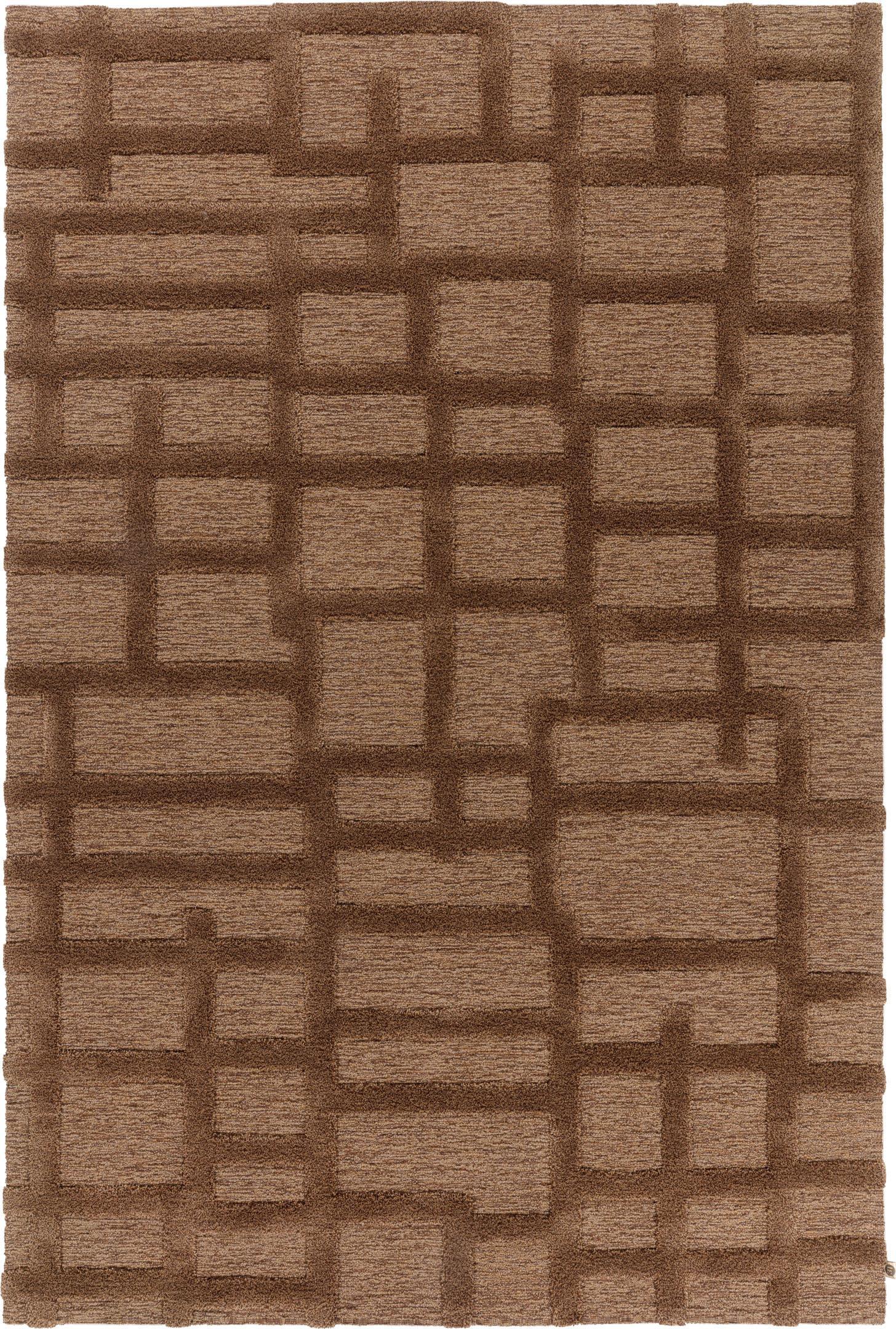


Living room rug for everyday use: robust and still homely
A living room rug needs to do two things at once: look good and withstand daily life. You want warm feet, less echo in the room, and a clearly defined seating area around the sofa. At the same time, children, dogs, or guests walk across it, a glass gets knocked over occasionally, and hair accumulates. That is exactly where it becomes clear whether a rug brings you joy or causes trouble.
The good news: you do not have to choose between homely and easy to care for. Robust materials such as polypropylene or polyester look soft and high-quality today, and a low-pile rug is quicker to keep clean than you might think. Once you know how your living room is used, you can find the right rug in just a few steps.
Rug for the living room with children and pets: the right material
This is where the most important decision is made. With dogs and cats, robust, easy-to-clean synthetic fibres such as polypropylene or polyester are recommended. Polyester is considered enormously durable, abrasion-resistant, and weather-resistant; polyamide is even more hard-wearing than polypropylene. Pet hair is best removed from such a rug with a damp rubber glove or a pet hair brush.
Household with a dog: Instead of a light-coloured wool rug in front of the sofa, polypropylene or polyester is the better choice. The fibres can be dabbed clean without difficulty, hair comes off with a damp rubber glove, and a short pile handles paws and claws in everyday use.
Family with a toddler and a juice cup: Go for low pile. With low pile, dirt does not penetrate the fibres as quickly, spilt liquid can be dabbed up before it soaks in deeply, and the vacuum cleaner glides over it more easily. With stains, speed matters: dab up liquid rather than rubbing, and test the cleaning product on an inconspicuous area first.
Wool remains a strong choice for the living room when things are quieter at home. Wool is the most commonly used natural rug material and brings a cosy atmosphere to the living room. Beige rugs in front of a light bouclé sofa create exactly this warm homeliness, and this can be achieved with wool rugs just as well as with high-quality synthetic fibre. With intense, direct sunlight you should be aware: the fibres of wool rugs can fade over time.
Low pile or high pile in the living room: what suits your everyday life
Up to a pile height of 1.5 cm one speaks of low pile; from 1.6 cm of high pile (on average around 3 cm); above 5 cm of long pile. For everyday use, the rule of thumb is straightforward:
- Low pile is easy to care for: dirt penetrates less deeply, the vacuum cleaner glides easily, and furniture and chair castors move better on it. Ideal with children, pets, and heavy traffic.
- High pile feels softer and warmer underfoot. However, due to the greater surface area it picks up more dust and is often harder to clean. It suits quieter living rooms where cosiness is the priority.
If your living room sees heavy use, low pile is usually the more relaxed choice. If you want to sink in barefoot and have little risk of soiling, there is every reason to choose high pile.
Living room rug for allergy sufferers: keeping fine dust and mites under control
Around 10 per cent of people react to house dust mites. For allergy sufferers, a low-pile rug is the better choice, because high pile picks up more dirt and is harder to clean. Combined with a synthetic fibre, you are well positioned: synthetic fibre rugs are often considered hypoallergenic and harbour less dust, mites, and allergens than natural fibre rugs. Polyacrylic is additionally resistant to mould and mites; viscose rugs shed very little fluff, which is beneficial for allergy sufferers and pet owners.
Allergy-friendly household: A low-pile rug made from synthetic fibre harbours fewer mites than a high-pile wool rug. Combined with regular vacuuming, you keep fine dust and mites well under control. A rug also binds dust at floor level rather than allowing it to swirl through the air.
Caring for your living room rug: vacuuming, stains, pet hair
Care does not require much effort if you do it regularly. And it noticeably extends the lifespan of your rug.
- Vacuuming: at least 1 to 2 times per week; in heavily used areas or with pets, daily. With long pile, use a brush roll that can be switched off so the fibres are not damaged.
- Stains: act quickly, dab up liquid rather than rubbing, and test the cleaning product on an inconspicuous area first.
- Wool rugs: treat with care, dab with cold water and pure soap, and dry with a towel or hair dryer.
- Pet hair: remove with a damp rubber glove or a specialist pet hair brush.
How long does a living room rug last: lifespan by material
How long your rug lasts depends greatly on the material and the construction:
- Machine-made rugs typically last 8 to 20 years before the pile is worn down.
- An average hand-knotted wool rug lasts 60 to 100 years with normal residential use.
- Natural fibre rugs such as sisal or coir in residential quality last up to 10 years. Sisal is also considered difficult to ignite and resistant to moths.
For most living rooms, a well-made machine-made rug is the practical choice. Those who want to invest for the long term opt for wool. In both cases, the rule holds: regular care extracts the maximum lifespan.
Buying a rug for the living room: colour, style, and safe ordering
Now it comes down to size, colour, and shape. Ideally, 20 to 40 cm of space should remain between the edge of the rug and the wall, so the rug looks deliberately placed. In front of the sofa, the rule is: the rug may comfortably extend a little beyond the furniture on both sides, so that the seating group is brought together. For many living rooms, a rug of 200x300 cm or larger rugs of 300x400 cm is the right choice, especially if you have a large sofa.
Regarding shape: a rectangular rug is very well suited in front of the sofa or under a dining table. A round rug does not divide the room and works well in an interior with many straight and angular forms. Oval rugs bring movement into the space.
In terms of colour, beige is the safe classic for the living room: beige rugs create warm homeliness and can be combined with almost any sofa. Those who want more expression will find bolder patterns and colours among the designer rugs. And if your living room flows openly into the bedroom, you can coordinate style and colour palette with the bedroom rugs.
Do you have underfloor heating? Low-pile rugs up to around 1.5 cm conduct warmth better than high-pile variants. Wool has very good thermal conductivity and is well suited. With synthetic fibres, it is worth checking the product information, as some fibres can bond. A thermal resistance of no more than 0.15 m²K/W is recommended, and backings made from latex or textile conduct heat better than felt.
The question remains: what happens if the color or size doesn't work out at home? When you shop at Homerugs, you have a 30-day return policy. No ifs, ands, or buts. Just send the rug back to us, and we'll refund the purchase price.
