


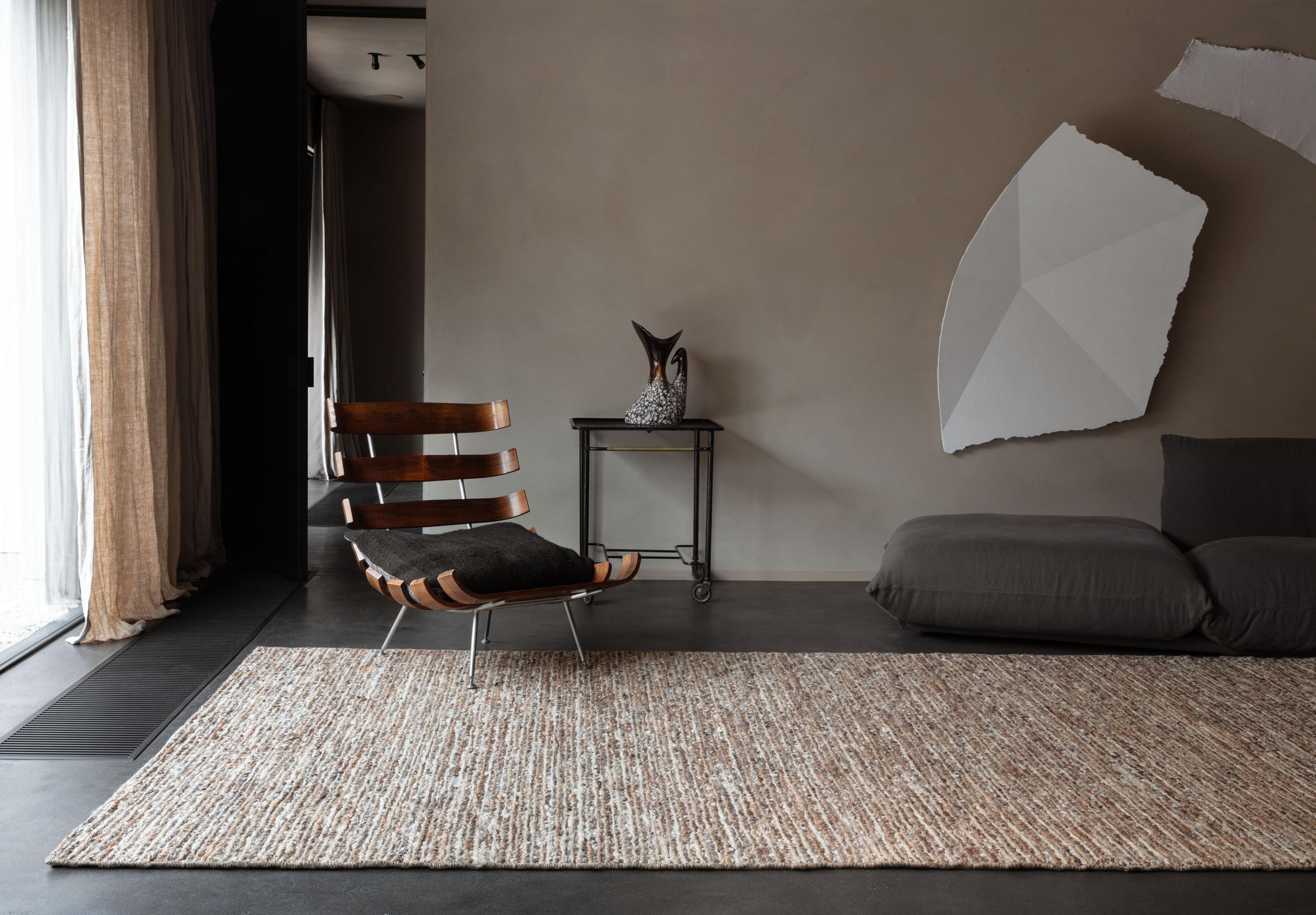


Jute Rug: the natural classic with warm tones
Before you fall in love with the look, answer the most important question first: a jute rug feels great in everyday life, as long as it is placed in the right spot. Jute is a natural fibre from the bark of the jute plant, grown mainly in India and Bangladesh. The fibre consists primarily of cellulose and lignin and is commonly known as the "golden fibre".
What you see is a warm colour palette ranging from light beige to golden brown. Every jute rug looks slightly different, because the natural material never turns out exactly the same. It is precisely these colour and texture variations that create the authentic look that suits Scandinavian purism, boho interiors, and naturally modern rooms so well.
The feel is firm and textured, not fluffy. Jute is a strong, hardwearing material and sits noticeably on the floor. Walking barefoot in the bedroom works well, because jute is softer and finer than sisal. Anyone expecting soft deep pile should know this in advance. The fibres also dampen sound and have a heat-regulating effect, so the room immediately feels calmer and more inviting.
Which rooms suit a jute rug, and which do not
Jute has one clear weakness: moisture. Wet jute can warp, become heavy, and lose its strength, and in conditions of persistent dampness without good ventilation it is prone to mould. A jute rug therefore belongs in dry, well-ventilated rooms, ideally with dry air and away from prolonged direct sunlight, which causes the colour to fade.
Living room
As a living room rug, jute is a safe choice as long as the room sees normal use. Under the sofa or as a flat base on parquet, jute handles everyday wear well. The warm natural tone brings calm to open-plan spaces and clearly defines the seating zone.
Bedroom
This is where jute comes into its own. The room sees little traffic, moisture is rarely an issue, and the fibre feels pleasant underfoot. For quiet living areas with little through traffic, a jute rug is ideal.
Kitchen and bathroom
Here things become critical. Take the example of a family wanting to put a jute rug in the kitchen: splashes near the sink, spilled drinks, damp floors. Jute absorbs moisture quickly and dries slowly, which affects both the fibre and the appearance. The same applies in the bathroom. For wet rooms, jute is the wrong fibre.
Hallway and entrance
A heavily used hallway with wet shoes and street dirt is too much for jute. Here a more robust sisal rug is the smarter choice, because sisal has a firmer, coarser structure and withstands more wear. A dry hallway with little foot traffic can, however, work well.
Common mistakes when buying a jute rug
Most disappointments come from incorrect expectations. These are the points to clarify beforehand:
- Wrong room: Placing jute in the kitchen, bathroom, or a damp basement. This will cause problems sooner or later.
- Overestimating comfort: Anyone expecting soft deep pile will be surprised by the firm feel. A cotton underlay makes the rug noticeably more comfortable underfoot.
- Treating colour variation as a defect: With natural fibre rugs, slight colour and texture differences are part of the material and are not a fault.
- Ignoring slip risk: Jute does not stay in place on its own on smooth floors. Without an underlay, the rug will slip.
- Buying too small: A rug that disappears only under the coffee table makes the room feel unsettled.
The right size: specific dimensions for sofa and dining table
Size determines whether a room looks cohesive. As a rule of thumb, the rug should extend 20 to 30 cm beyond the sofa on both sides and be at least as wide as the sofa.
A concrete example: for a two-seater sofa 190 cm wide, 160x230 cm is the sensible minimum size so that the rug extends on both sides. In larger rooms, 200x290 cm ensures that the entire seating group sits on the rug and creates a self-contained living island. For most rooms, 140x200 cm or 160x230 cm are common standard sizes.
Under a dining table, the rule is: the rug should be at least 60 cm longer than the table on each side, so that even pushed-back chairs still sit on the rug. For a dining table 160 cm long, you therefore need around 280 cm of rug length. Round jute rugs are usually available in diameters of approximately 80 to 200 cm. A round rug gives a straight-lined sofa a softer feel and forgives minor placement errors, while rectangular models must be positioned precisely.
Anti-slip underlay and accessories for secure hold
On smooth floors such as parquet, laminate, or tiles, a jute rug generally needs a separate anti-slip underlay. It keeps the rug securely in place and protects the floor at the same time. This is the most important accessory.
If the firm feel of the fibre is too hard for you, a softer cotton underlay helps. It provides noticeably more cushioning and makes the rug more comfortable underfoot. This resolves the most common comfort criticism with a simple addition.
Good news for underfloor heating: the mostly flat-woven jute allows warmth to pass through well and is suitable for use with it. It is anti-static, so it does not build up an electrical charge. Compared to wool, it insulates less strongly, which is an advantage on a heated floor.
Cleaning a jute rug: what helps and what ruins it
The clear message upfront: real jute is not machine washable. Too much water and mechanical movement damage the woven fibres and can cause the rug to fray or shrink. Dry care is the right approach.
What helps:
- Hoover regularly, ideally weekly and on both sides, using a soft brush attachment.
- Remove dry dirt by beating or vacuuming.
- Neutralise odours dry with bicarbonate of soda or baking powder, without adding extra moisture.
- Carefully blot stains (do not rub) with a little water or a mild solution, testing on an inconspicuous area first.
- A small amount of spilled water is not critical, but should be blotted immediately.
- Turn the rug occasionally so that it wears evenly.
What ruins the rug:
- A pressure washer, which forces water deep into the fibres and leads to swelling or mould.
- Wet cleaning and aggressive chemicals, which attack the fibre structure.
- Vigorous scrubbing.
For heavier soiling, professional cleaning is the gentler alternative to wet cleaning at home.
In brief: who benefits from a jute rug
A jute rug is worthwhile for you if you want an authentic natural look with warm tones that brings cosiness and calm to a room immediately. It suits living rooms and bedrooms as well as quiet areas with little moisture and moderate foot traffic. As one of the sustainable rugs made from a renewable fibre, it is also a considered choice.
We state the drawbacks clearly: moisture, wet rooms, and heavily used hallways are its limits. Anyone who takes this into account, chooses the right size, and plans for an anti-slip underlay will get a natural classic with a long lifespan. If the feel is too firm, a cotton underlay will help. And if your preferred location sees a lot of moisture, a more robust sisal rug is the better decision.
