


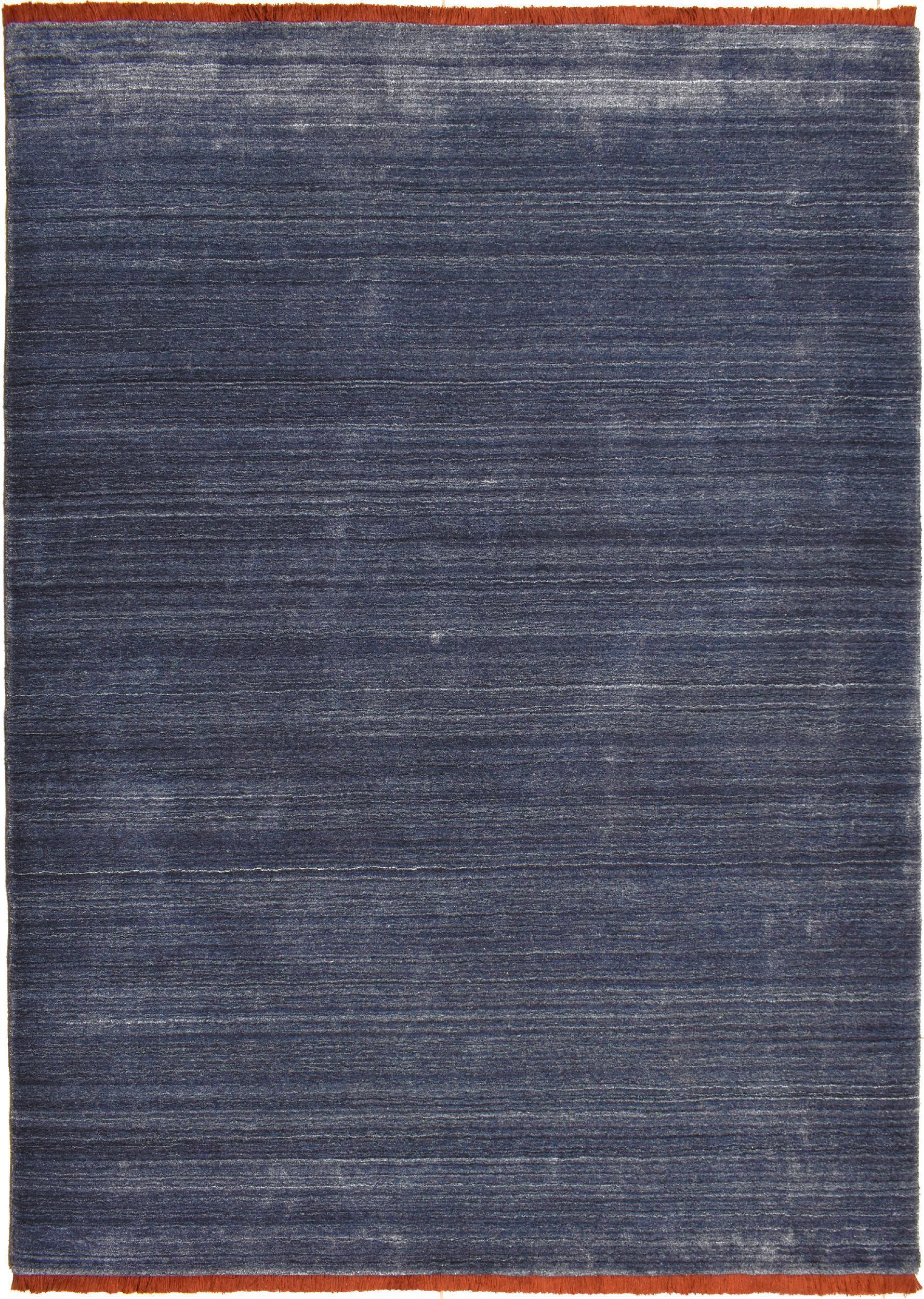


Blue rug: what blue really does in a room
A blue rug instantly brings calm and depth to a room. Blue demonstrably lowers pulse and blood pressure and has a soothing effect, which is why the colour works so well in living spaces. The room immediately feels more ordered and elegant without being loud.
The most common question before buying: does a blue rug not look too cool, too dark or too dominant? The answer depends on the shade, not the colour itself. Light blue creates a light, airy atmosphere and makes rooms appear optically larger. In a dark corner, a light blue rug noticeably brightens the area. Dark blue, by contrast, looks refined and striking, creating a clear focal point in large rooms. Both approaches work well; you simply need to know which effect you want.
Blue only feels too cool when it is left on its own. Combined with warm neutral tones or a warm accent, the effect shifts from cool to elegant. The room's light is also important: in sun-filled south-facing rooms, blue perceptibly dampens the perceived warmth, while in darker north-facing rooms you need a warmer shade of blue with a green or violet undertone.
Blue rug by room: dining room, living room, bedroom
Living room
In the living room, the blue rug is the centrepiece of the seating area. It connects the sofa, armchair and coffee table into one zone while simultaneously absorbing sound. A lighter shade of blue softens the visual impact of dark furniture, whilst dark blue stands out particularly strikingly beneath light furniture. For a modern living room, a flat rug placed under the front legs of the furniture is the safe choice.
Bedroom
In the bedroom, blue plays its soothing effect to the full. A soft blue rug placed under or beside the bed gives the room warm underfoot comfort in the morning and calm in the evening. Here you can confidently reach for deeper shades, as you want the room to feel cosy rather than bright.
Dining room
In the dining room, one rule of thumb applies: blue suppresses appetite, which is why a large, dominant expanse of blue under the dining table is not a good idea. As a subtle focal point, however, a blue accent rug under the table works very well. Use it deliberately and do not let the area dominate the entire dining space.
The right size per room: dining table, sofa, bed and hallway
The most common mistake when buying a rug is choosing one that is too small. These rules will help you avoid that:
- Sofa: The rug should be 40 to 60 cm longer than the sofa, otherwise the seating area will feel cramped. For open-plan living concepts, 160×230 cm, 200×290 cm or 240×340 cm are the common sizes.
- Dining table: Rug length = table length plus chair depth plus 25 cm clearance; the same calculation applies to the width. For a table of 160 cm, this gives you the right size. The rug should extend at least 75 cm beyond the table edge so that the chair legs remain on the rug even when pushed back.
- Round dining table: A good rule of thumb is roughly twice the table diameter. A round table with a diameter of 100 cm pairs well with a round rug of 200 cm.
- Bed: If you want the entire bed to sit on the rug, plan for an overhang of 40 to 50 cm on each side. 240×340 cm suits a king-size bed, 200×290 cm suits a queen-size bed. Alternatively, place narrow runners of approximately 60 cm width on either side.
- Hallway: Common runners are 70×200 cm, 80×250 cm or 80×300 cm. In large hallways, round rugs with a diameter of 100 to 160 cm break up angular lines.
Teal rug or classic blue: the difference and who it suits
A teal rug sits between blue and green and can even have a grey undertone. Depending on the light, the effect shifts towards blue or green, which makes the colour lively and less austere than pure blue. Teal radiates warmth despite cool light and is therefore particularly well suited to north-facing rooms.
Classic blue is clearer and calmer. Navy blue or ice blue pair well with warm southern light, as they pleasantly temper the brightness. Warmer shades such as teal, teal-green or indigo are the better choice when your room receives a lot of northern light. In brief: teal if you want warmth and a green touch, classic blue if you are looking for clear calm.
Combining a blue rug with colours: beige, sand, mustard yellow, coral
Blue is an accommodating partner. Neutral tones such as beige, sand, white and grey together with blue create a balanced, calm picture. If you want to bring life to the room, you add warm accents.
A concrete example: a beige sofa with a light blue rug and cushions in mustard yellow creates a lively, warm contrast that still remains harmonious. Coral also works as a fresh counterpoint to blue. For a more refined look, combine dark blue with gold or brass, which feels deep and high-quality at the same time.
Blue rug for families and pets: robust materials
When children or pets live in the household, the material determines everyday life. This overview will help you:
- Synthetic (polypropylene, polyester): hard-wearing, long-lasting and easy to care for, particularly resistant to water and stains. The first choice for heavily trafficked areas. A hallway runner of 80×300 cm in polypropylene withstands a great deal, and polypropylene is often even weather-resistant.
- Wool: absorbs moisture, neutralises odours and is resistant to stains thanks to its natural lanolin content. Wool is anti-static, so it picks up less dust, and it cushions pressure marks from furniture because the fibre can stretch and contract. A good wool rug lasts decades with proper care.
- Cotton: absorbs moisture similarly to wool, has a thermoregulating effect and is slightly lighter. Smaller cotton rugs can often be washed in the machine.
- Viscose: soft with a silky sheen, but less robust and sensitive to moisture. Better suited to low-traffic rooms and by no means suitable for hallways, entrance areas or damp rooms.
Details on each fibre can be found on the relevant material pages. For households with children and pets, synthetic and wool are the most robust options. You can find out more about construction and appearance on our Designer Rugs pages.
For care: hoover at least once a week, more frequently in heavily used rooms. Blot liquid carefully from the outside inwards. Wool must never be treated with soap or washing-up liquid. For red wine, do not use warm water, as it sets the stain. Synthetics tolerate mild rug shampoos and household remedies such as vinegar. A professional clean every two to three years is worthwhile.
Common mistakes when buying a blue rug
- Bought too small. The classic error. Measure according to the sofa and dining table rule before you order.
- Shade chosen regardless of room light. Placing cool shades of blue in dark north-facing rooms makes the room feel cold. Use teal or indigo there instead.
- Large expanse of blue in the dining area. Use blue there as an accent under the table, rather than as a dominant surface.
- Wrong material in the wrong place. Viscose does not belong in a hallway or damp room; polypropylene is the smarter choice for high-traffic areas.
- Blue left on its own. Without warm neutral tones or a warm accent, blue can feel cool. Plan the combination from the outset.
