
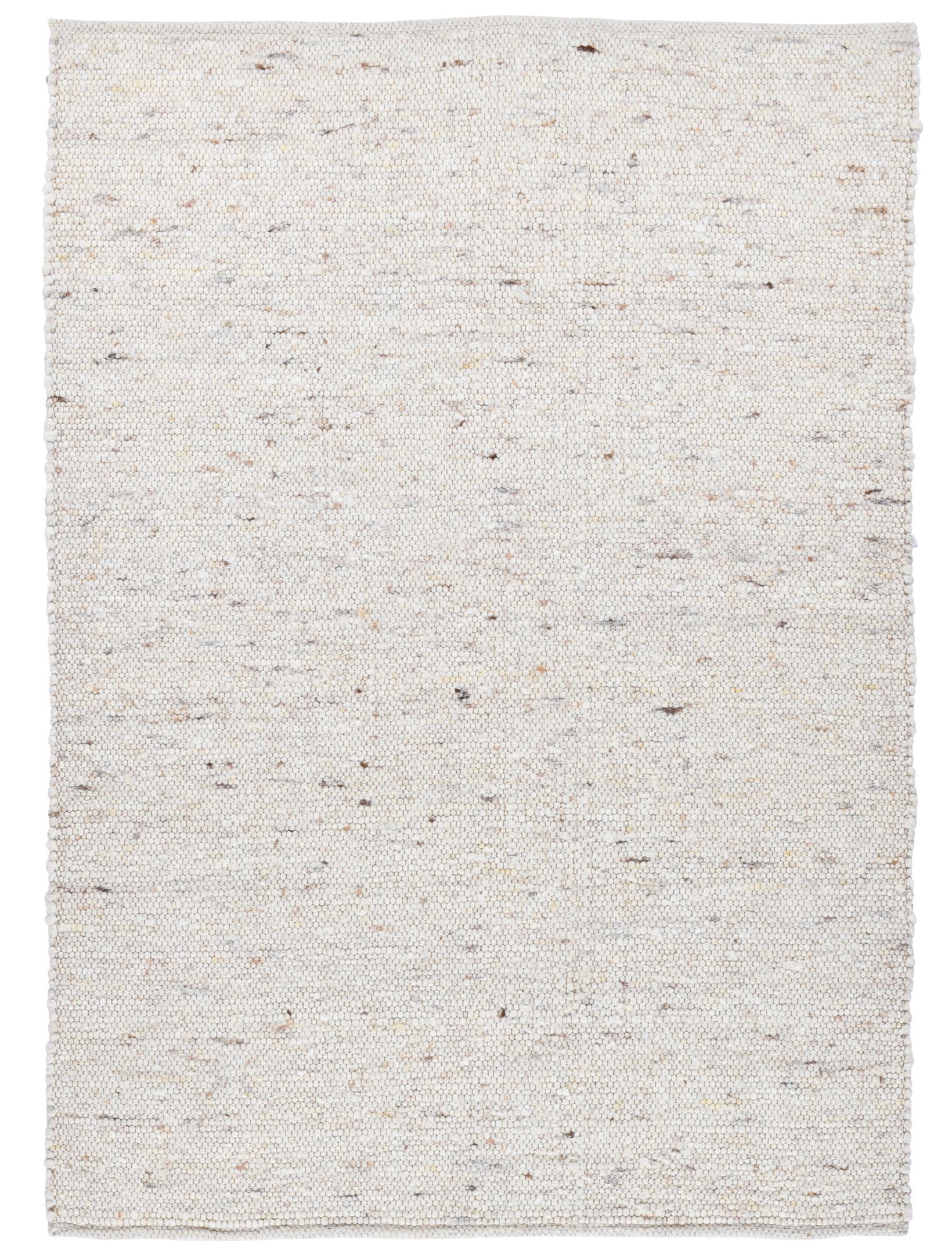
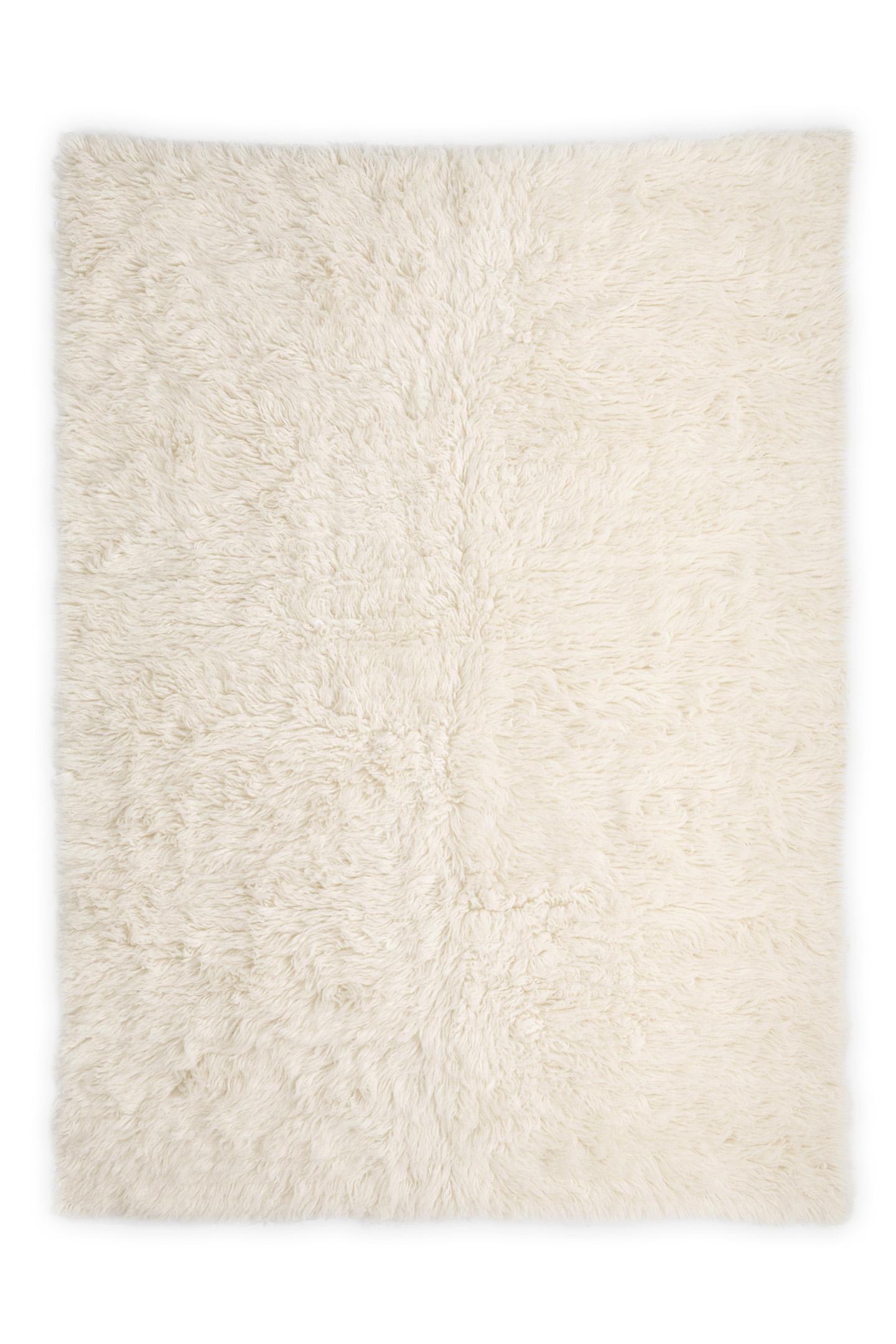


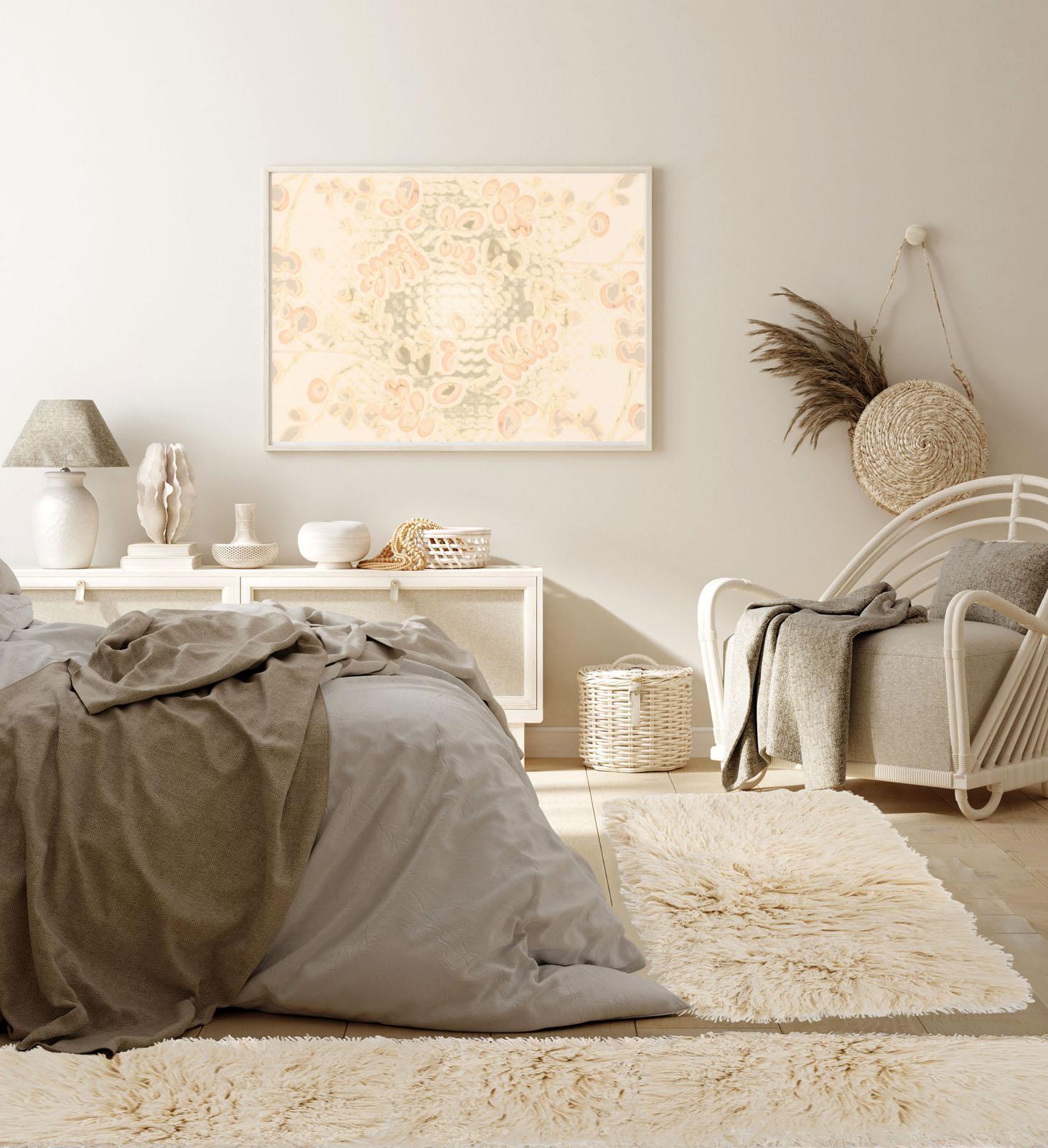


Light Rug: more light and space in the room
A light rug transforms a room faster than almost any other piece of furniture. It brings light to the floor, makes the space feel larger and creates a calmer atmosphere. The reason is simple: light colours reflect more daylight than dark shades, while dark colours absorb the light and make a space feel cramped. Anyone with limited natural light or living in smaller rooms gains a noticeable sense of openness with a light rug.
Consider a period flat with high ceilings and narrow windows. Such a room can feel dark and heavy despite its charm. A rug in cream on the wooden floor addresses exactly that: the floor becomes more welcoming, and the whole room immediately feels brighter and more open. No renovation, no tradespeople, simply lay it down.
The most common concern when buying a light rug: does it not look dirty straight away and is it too delicate for everyday use? The short answer: a light rug does not necessarily get dirty faster. What matters is the material and the pile. A low-pile rug prevents dust from sinking deep into the fibres, and a wool rug brings a natural resistance to dirt and moisture through the lanolin it contains. We explain how to choose the right material and pile further below.
Which colour shades count as light and how they work
Light does not mean only white. The group includes cream, beige, light grey and white, as well as delicate pastel shades. All of them reflect light and make the room appear optically larger, but each shade has its own character.
- Cream and beige: warm and welcoming, more forgiving in daily use than pure white and works well with wood and natural materials.
- Light grey rug: cool and calm, very versatile to combine and practical because fine dust and light signs of use are less noticeable than on cream.
- White rugs: the clearest, most airy effect. Visually the most striking, but the most demanding in everyday use, so better suited to quieter zones.
A trick for maximum spaciousness: if you choose the rug in the same light shade as the floor or wall, the visual boundaries disappear and the room appears as one large, cohesive surface. This additionally creates a sense of calm and cosiness.
Buying light rugs by room: living room, dining room, bedroom
The right light rug depends on where it will be placed. Thinking room by room helps you make the decision more quickly.
Living Room
Here, the effect on the room matters most. A large light rug beneath the seating group pulls the furniture together and creates a clear zone. Make sure that at least the front legs of the sofa and armchairs rest on the rug, as this creates a visual connection. In open-plan layouts, a large light rug can neatly separate the seating zone from the dining area whilst keeping the space airy.
Dining Room
Around the table, there should be roughly 60 cm of overhang so that the chairs remain fully on the rug even when pulled back. A light rug beneath the dining table makes the zone feel calm and inviting. A low-pile rug is practical here because crumbs and dust are easy to hoover up.
Bedroom
A light rug creates a soft, calm feeling in the morning. Ideally it sits partly under the bed and extends out on either side, so you have a warm surface underfoot when you get up on both sides. A wool rug also regulates temperature: pleasantly warm in winter and relatively cool in summer.
The right size for a light rug: guidelines and wall clearance
Size plays a decisive role in whether a light rug achieves its full effect. A rug that is too small makes the furniture appear to float and fragments the room rather than opening it up. A generously sized light rug, on the other hand, pulls the area together and makes it feel more spacious.
- Ideally leave 20 to 40 cm between the edge of the rug and the wall. If you want the room to feel particularly spacious, go up to 40 to 50 cm and choose a generous size.
- Small living room up to 20 m²: as a guideline, 160x230 cm or 200x300 cm, minimum size 160x230 cm. Even 160x230 cm makes such a room appear visually more spacious.
- Keep at least 80 cm clear between the rug edge and any doorway for walkways.
Rule of thumb: go one size larger rather than too small. A tightly sized rug can quickly look like a postage stamp in the room.
Round rugs and white rugs: effect in the floor plan
Not every room calls for a rectangle. Round rugs break up rigid lines and work particularly well where they echo a curved shape. A round light rug beneath a round dining table, for example, rounds off the whole zone and creates a harmonious look. In small corners, in the entrance area or beneath a single armchair, a round rug also creates a calm focal point.
White rugs deliver the strongest brightening effect in a floor plan. They draw light even from a dark room with little natural daylight. Because white is the most demanding to maintain, these rugs are best placed where there is less activity, such as in the bedroom or a quiet reading nook. For heavily used surfaces, a light grey rug or a rug in cream is the more practical everyday choice.
Material for the light rug: wool, viscose or low-pile
The material determines care and durability. With light colours in particular, it is worth looking closely.
Light Wool Rugs
Wool is the all-rounder for everyday use. The lanolin it contains, a natural wool wax, protects the fibres against dirt and moisture, making new wool naturally dirt-repellent and comparatively easy to clean. The fibres are elastic and spring back after pressure from furniture or footsteps. In addition, wool improves acoustics and dampens impact sound. A wool rug lasts between 10 and 25 years depending on use and care. For families with children or pets, a light wool rug is therefore often the most relaxed choice.
Viscose
Viscose has a silky sheen and feels luxurious. However, it is delicate and care-intensive: viscose absorbs water strongly, is prone to water marks and can warp when wet. It is therefore less suitable for heavily used rooms, families or households with pets, and better suited to quiet zones with a decorative purpose.
Low-Pile
Low-pile is robust and practical for everyday use. The short fibres prevent dust from sinking deep, making it easy to hoover and the best choice for allergy sufferers. A light low-pile rug tolerates intensive hoovering and is well suited to living rooms, dining rooms and hallways.
Everyday Care
Regular hoovering is half the battle. For wool rugs, once or twice a week with a flat nozzle. Treat stains immediately: sprinkle red wine generously with salt, leave to absorb and dry, then hoover up. Dab urine stains with a 1:1 mixture of water and white vinegar and brush off once dry. For wool, avoid aggressive cleaning products and do not soak the rug or dry it in direct sunlight. If desired, protect a light rug additionally with a fabric protector spray, which forms an invisible protective layer and prevents stains from penetrating. Test first on an inconspicuous spot and renew the treatment from time to time. A professional deep clean is recommended roughly every three years, or less frequently with careful maintenance.
Common mistakes when buying a light rug
- Bought too small: The most common mistake. A tightly sized rug makes the furniture appear to float. Go generous and closer to the wall.
- Wrong material for the use: Viscose in a household with children is unnecessary stress. For high-traffic use, wool or low-pile is the better choice.
- White where there is a lot of activity: White rugs belong in quiet zones. In heavily used rooms, cream or light grey is more practical for everyday life.
- Stains treated too late: The faster you react, the better the stain comes out. This applies doubly for light rugs.
- Wool rug cleaned incorrectly: Aggressive products, excessive moisture and sunlight damage the structure and colour. Gentle hoovering and spot cleaning is usually sufficient.
