
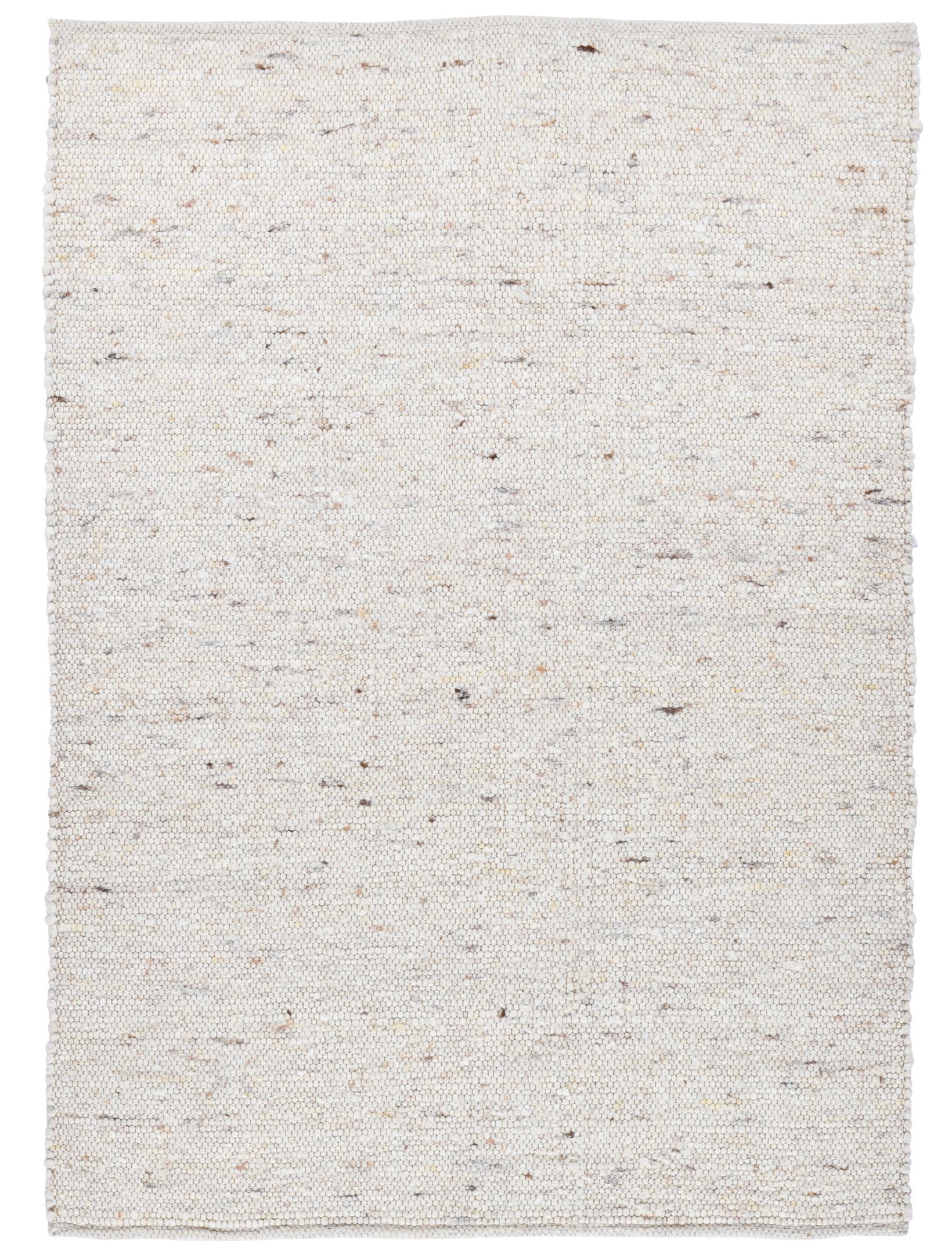
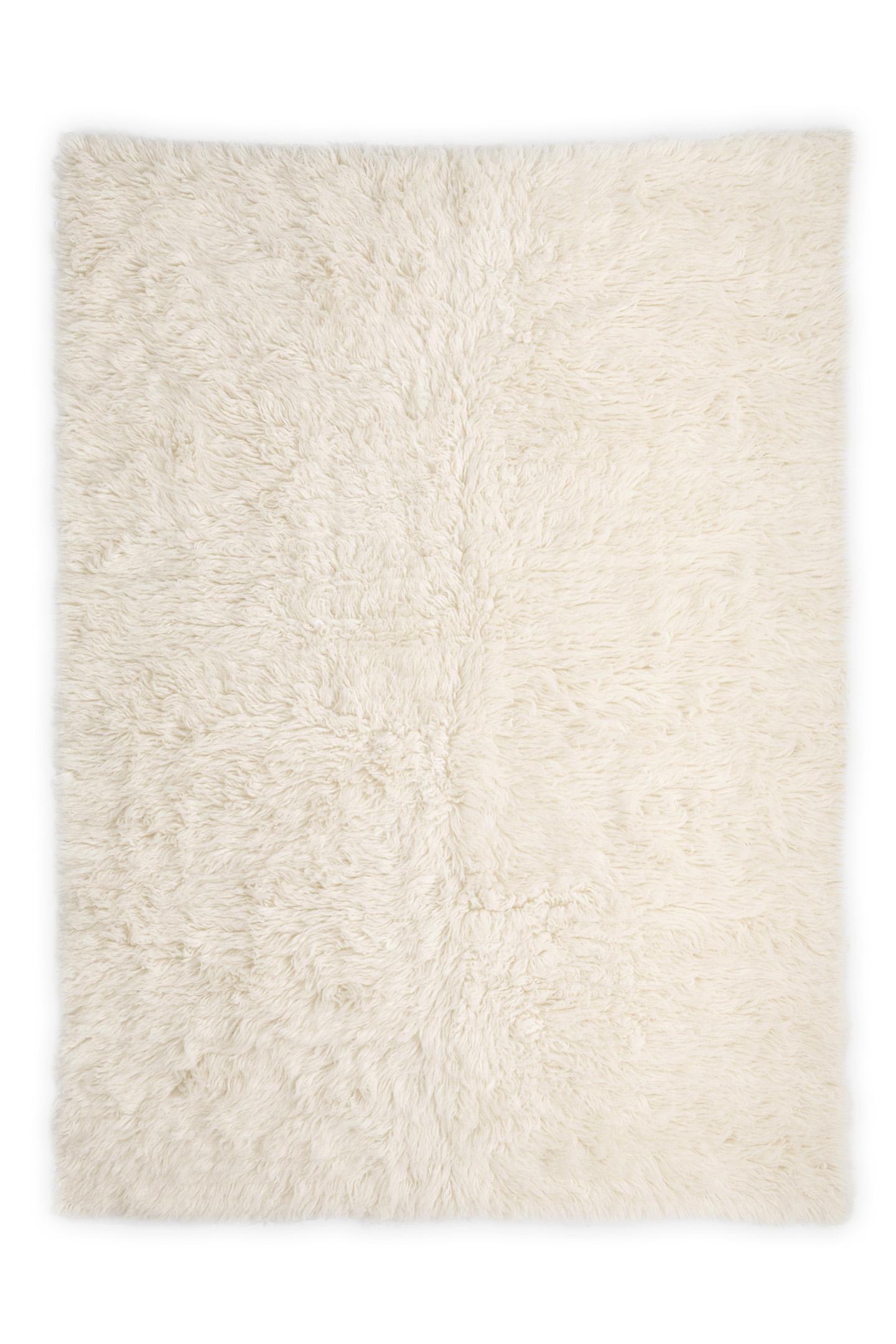


Virgin Wool Rug: more warmth, less echo in the room
A virgin wool rug changes a room immediately and noticeably. You get up in the morning, and the floor is warm rather than cold. This is down to the fibre itself: wool consists of up to 85% air and retains heat in much the same way as a woollen jumper. In winter it warms, in summer it has a balancing effect.
Then there is sound. A reverberant period flat with parquet flooring sounds harsh, and every footstep carries far. Place a virgin wool rug in the room and it becomes quieter. Textile floor coverings achieve impact sound improvements of at least 20 dB. You hear less clattering, less reverberation, and the room immediately feels warmer and calmer.
The fibres are loosely crimped and voluminous. After compression they spring back up, which is why a high-quality wool rug remains dimensionally stable and retains its structure for many years.
Indoor climate and moisture regulation through virgin wool
Virgin wool absorbs moisture and releases it again when needed. You notice this particularly in winter: damp air outside, dry heating air inside. The fibre buffers these fluctuations and keeps the indoor climate more balanced.
A further point: virgin wool neutralises odours and barely builds up static charge. Less dust is thrown into the air, making the atmosphere in the room more pleasant. For a healthy living environment, this is one of the strongest reasons to choose a virgin wool rug.
Living room rugs made from virgin wool: warm, quiet, dimensionally stable
The living room sees the most traffic. This is precisely where virgin wool pays off: hardwearing, permanently dimensionally stable, and colour-fast even under heavy use. Living room rugs made from wool preserve their structure and colour intensity for many years.
When it comes to size, a simple rule of thumb helps: the rug should be wider than your sofa, and at least the front legs of the sofa and armchairs should rest on it. This makes the seating arrangement look cohesive rather than thrown together. If the rug is to extend fully beneath the sofa, plan for approximately 40 to 60 cm more length than the sofa itself. Common sizes such as 160 x 230 cm or 200 x 290 cm suit most living rooms.
Laying a virgin wool rug correctly in the bedroom and dining room
Take a walk through the flat and the question of size becomes straightforward. In the hallway a narrow runner is often sufficient to catch sand and dust. In the living room the seating arrangement determines the dimensions.
Bedroom
Here it is all about that first step in the morning. As a guideline, plan for around 45 to 60 cm of overhang on each side of the bed. This means you step onto warm wool rather than a cold floor when you get up. Those who prefer a closer fit can use two smaller rugs to the left and right of the bed.
Dining room
At the dining table the rule is: rug length = table length + chair depth + 25 cm clearance. This way the chairs remain fully on the rug even when pulled back and do not tip at the edge. For a round table seating four with a diameter of 100 cm, a round rug of approximately 200 cm in diameter is a good match.
A note on underfloor heating: many virgin wool rugs are suitable for use with it, though this depends on the construction and backing of the individual model. Check the specification for the particular rug. For the bathroom, wool is the wrong choice, as the fibre cannot tolerate prolonged and excessive moisture.
Virgin wool for allergy-sensitive households: antistatic and odour-neutral
Virgin wool barely builds up static charge. As a result, less dust is thrown into the air, which can be an advantage in allergy-sensitive households. This is an industry tendency, not a medical claim: if you have a known wool sensitivity, test your individual tolerance before making a decision.
The fibre is also practical for families with children. Wool has a high temperature threshold and is naturally difficult to ignite, a reassuring factor in everyday home life.
Caring for a virgin wool rug and treating stains
This is the crux of the care question, and the answer is a relaxed one. Virgin wool contains lanolin, the natural wool wax, which acts as a dirt-repellent and self-cleaning agent. As a result, a virgin wool rug can often go a long time without any intensive cleaning.
Day-to-day care looks like this:
- Vacuum once or twice a week, preferably with a flat, smooth nozzle, so that dust and sand are removed early.
- Blot liquids immediately with absorbent kitchen paper, and gently dab any residue with a damp cloth. Avoid rubbing or pressing.
- Do not use bleach, vinegar, or aggressive chemical agents, as they damage the wool fibre.
- Keep out of direct sunlight to prevent the fabric from fading.
- For a deep clean, engage a specialist once or twice a year.
A new wool rug will shed a little at first. This is a sign of quality and settles with time. Simply continue vacuuming as normal and the effect will disappear on its own.
Natural fibre and origin: what sets virgin wool apart from ordinary wool
Virgin wool is always shorn from a living sheep. This preserves all of the fibre's valuable properties: elasticity, lanolin, and the natural crimp. This is precisely what distinguishes it from wool obtained from other sources, which has often lost these properties.
As a natural fibre, virgin wool is a renewable raw material, biodegradable, and free from petroleum-based starting materials. Those looking for sustainable rugs will find here a material that combines longevity with natural origin.
And the question of price? A virgin wool rug costs more than a synthetic fibre rug, but with proper care it lasts considerably longer, because the fibres are naturally elastic, dirt-repellent, and dimensionally stable. Hand-woven wool rugs and hand-knotted qualities can, with good care, last 50 to over 100 years; machine-made wool rugs, depending on use, frequently 8 to 25 years. Calculated over the lifespan, a high-quality wool rug is an investment that pays for itself.
