


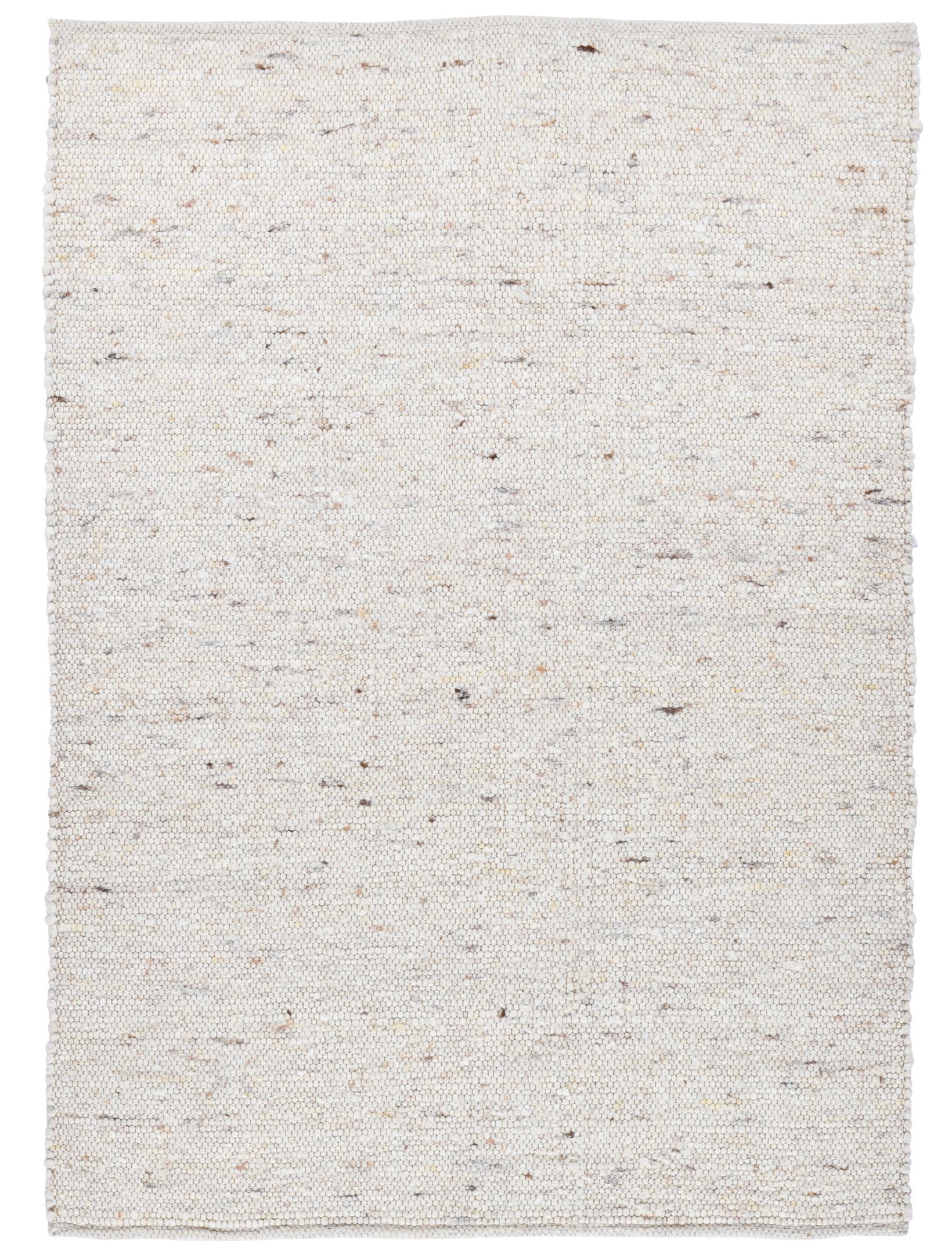


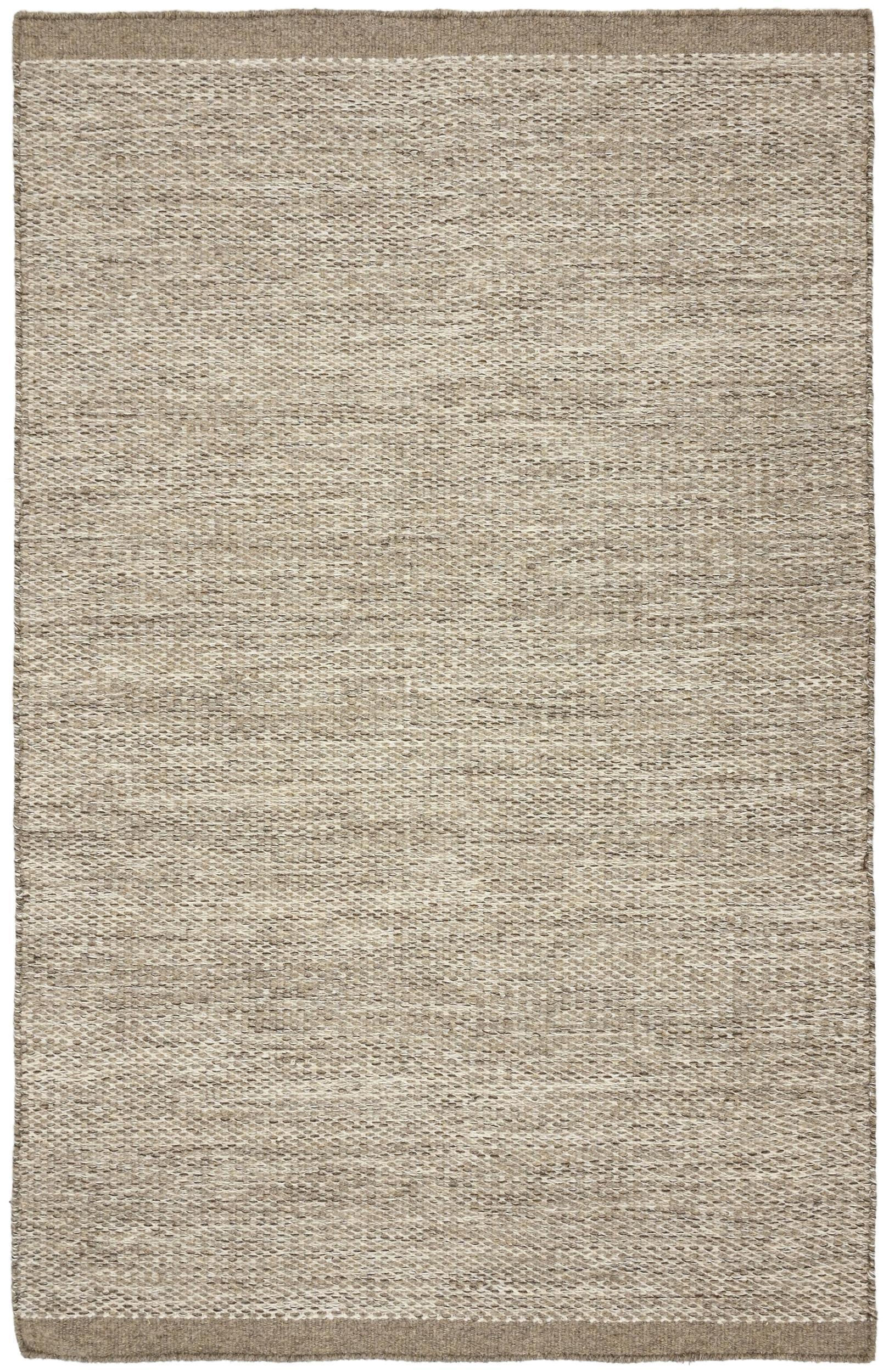


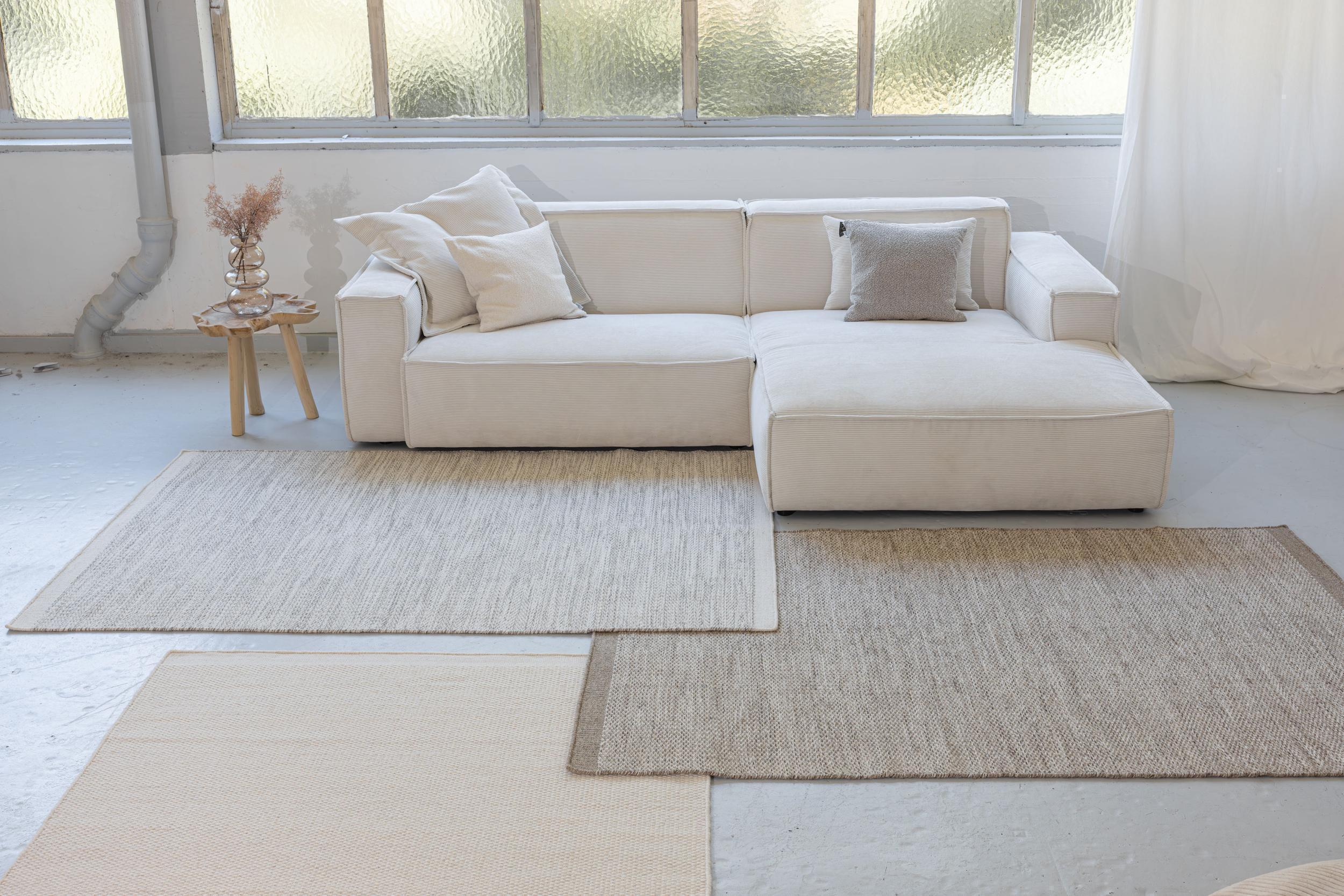
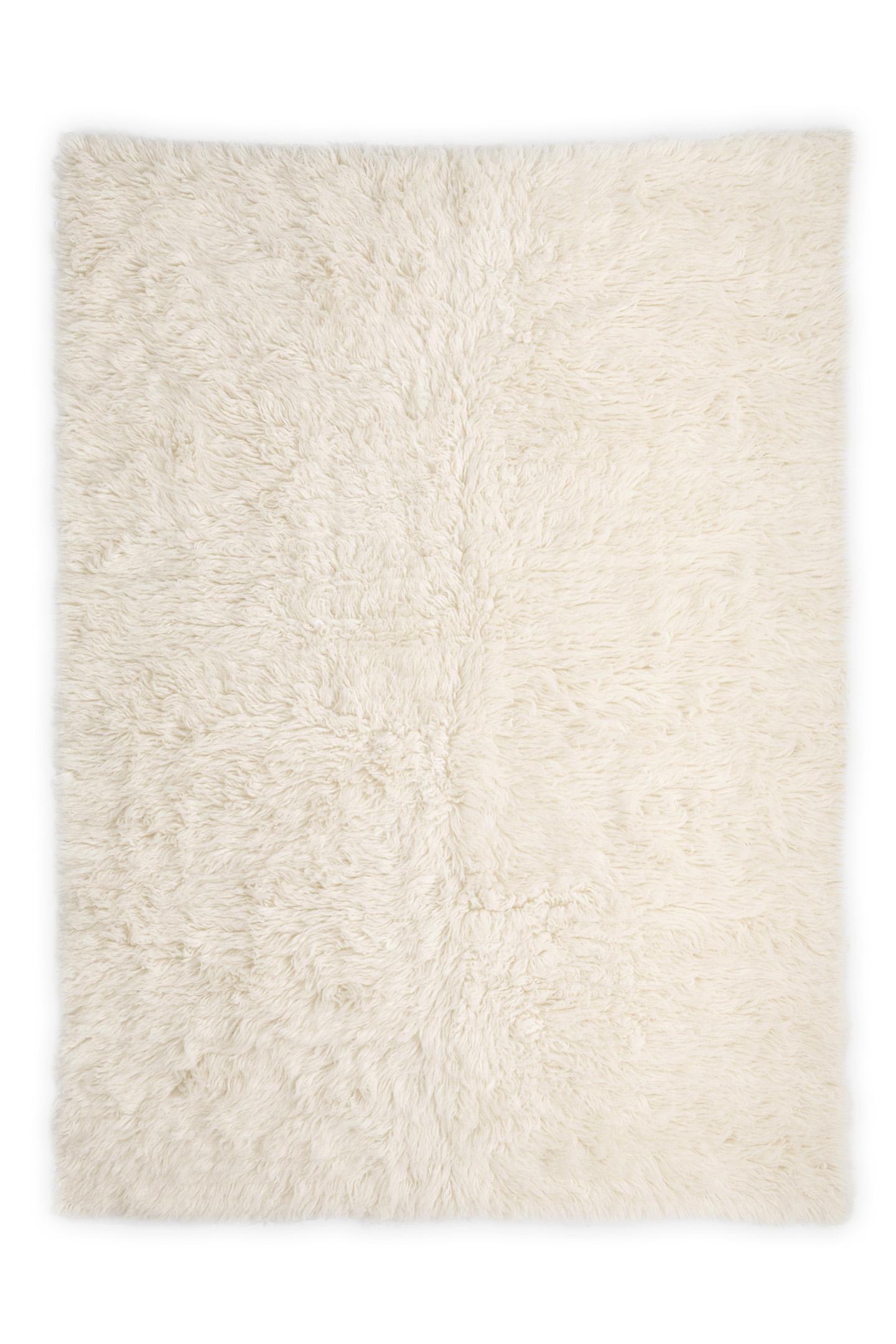


Rectangular Rug: straight lines, clear zones
A rectangular rug brings order to a room. Its straight lines run parallel to walls and furniture edges, and that is precisely what creates the tidy effect. In an open-plan layout, it divides the floor into zones that are immediately legible: the seating area here, the dining spot there. If your sofa is in a fixed position and so is your dining table, then the shape that aligns with this architecture is a rug cut to a rectangular format.
The advantage is practical: a rectangular rug frames the seating area and prevents furniture from appearing to float in the room. It dampens sound, brings warmth underfoot and defines a surface on which everything belongs together. A rug and sofa combination works as a single unit rather than as loose individual pieces.
Why the rectangular rug follows the architecture of the room
Rectangular rugs come into their own when laid parallel to walls, sofas or shelving units. This creates a calm transition between wall and floor, and the eye finds clear lines. A rectangular rug also looks more harmonious in a rectangular room than in a square one.
If you want more dynamism, you can lay the rug diagonally to the walls. This breaks up the symmetry and creates a livelier feel, though in small rooms this can quickly become restless. For most living rooms and dining rooms, the parallel orientation is the safe choice. Those with round layouts or a casual seating arrangement might also consider a round rug. With a corner sofa the choice tends towards square shapes, whereas a sofa with two armchairs works well on a rectangular model.
Rectangular rug by room: living room, dining room, bedroom
Living room
The rug beneath the sofa should be at least as wide as the sofa, ideally 15 to 30 cm wider on each side. Around the seating group there should be approximately one metre of free space, otherwise the arrangement looks cramped. In an open-plan living and dining area, the rug takes on the role of zone divider: it separates the sofa zone from the dining spot, and what was a diffuse surface becomes two legible areas.
Dining room
Rectangular table, rectangular rug: the shapes should correspond, and this applies especially to elongated and extendable table models. The rug should be larger than the table all the way round, so that chairs pushed back still stand fully on the rug. Depending on the source, the recommended overhang is between 60 and 90 cm per side. For a table for 4 people (approximately 80x160 cm), a rug of around 200x280 cm is suitable.
Bedroom
If the bed stands fully on the rug, the rug should extend at least 60 to 90 cm beyond each edge of the bed. For a 180x200 cm double bed, this means a rug width of at least 240 cm for overhang on both sides. Alternatively, the one-third technique works well: one third of the rug lies under the bed, two thirds remain visible in front of it. This saves floor area and keeps the barefoot path warm.
Hallway and entrance
In a narrow hallway, lay a 120x170 cm rug parallel to the longest wall. The edge follows the wall, the walkway gains a clear line and the room feels ordered.
Standard sizes and what they can do with which furniture
Common formats for living room rugs are 160x230 cm, 200x290 cm and 240x340 cm. This helps with orientation:
- Rug 120x170 cm: for hallways, small seating corners or as a runner in front of the bed.
- 160x230 cm: for compact living rooms and smaller sofas, usually with the front sofa legs on the rug.
- Rugs 200x300 cm: the all-rounder for living rooms with a larger sofa and for dining tables seating 4 to 6 people.
- 240x340 cm: for large seating groups, corner sofas or dining tables seating up to 8 people.
- Rug 300x400 cm: for open-plan layouts where a corner sofa is to stand fully on the rug.
Remember the furniture-leg logic as the 4-2-0 rule: either all four legs stand on the rug, or only the two front ones, or none at all. With three legs it looks as though the piece of furniture is about to fall off the rug. If you place only the front legs on it, a clearance of 15 to 30 cm relative to the sofa width is sufficient, and the rug typically slides 20 to 40 cm under the sofa. If a corner sofa is to stand on it completely, calculate the sofa width plus 20 to 30 cm on each side, often from 240x340 cm up to 300x400 cm. For sloped ceilings, alcoves or very large tables, a made-to-measure rug is worth considering.
Material and care: what stands up to stains, children and pets
The material determines everyday life. A brief overview:
- Wool: soft, thermally insulating and temperature-regulating, hardly creases. New wool rugs shed fibres at first, which settles with use. Wool is unsuitable for damp rooms such as the bathroom.
- Cotton: absorbs moisture, has a thermo-regulating effect and is lighter than wool. Smaller cotton rugs can often be machine-washed at 30 °C on a delicate programme.
- Viscose: silky sheen, derived from wood or bamboo, feels soft. Viscose is more sensitive to moisture and requires greater care.
- Polypropylene: lightweight, moisture- and stain-resistant, colourfast. Ideal for families and households with pets.
- Polyester: retains its shape even under heavy use, dries quickly and is lightfast. Some models are described as machine-washable by the manufacturer; check the care label.
For daily care, the key measure is regular vacuuming to prevent dirt from working its way deep into the fibres. With stains, acting quickly helps. A red wine stain is best treated damp with a little salt and a few drops of water, working from the outside inwards. For coffee, sprinkle bicarbonate of soda or baking powder on the stain and spray hot water over it. Synthetic fibres such as polyester, polypropylene and viscose can be treated with water and a clear glass cleaner, while natural fibres such as wool and cotton should be professionally cleaned. A large format such as a 300x400 cm rug benefits from a professional deep clean every one to three years, depending on use.
Rectangular rug for allergy sufferers: what fibres and pile deliver
A rug binds fine dust particles from the air. According to a study by the German Allergy and Asthma Association, it can reduce the fine dust content compared to smooth floors by up to 50 per cent. Short-pile rugs bind dust and mite droppings more effectively than high-pile ones and are easier to vacuum. Synthetic fibres such as polypropylene or polyamide are inorganic and provide no habitat for house dust mites.
Expert opinion on this is not entirely unanimous: some guides explicitly recommend rugs for allergy sufferers, while others lean towards smooth floors. A rug can therefore reduce the burden, though this is no therapeutic promise. Those who react sensitively do well with a short-pile model in synthetic fibre and regular vacuuming.
Common mistakes when buying and how to avoid them
The most common mistake is choosing a rug that is too small. It makes furniture appear to float and the room feel unsettled. So measure before you buy: note the sofa width or table dimensions, add the overhang (15 to 30 cm at the sides of the sofa, 60 to 90 cm all around the dining table) and mark the format on the floor with masking tape or newspaper. This shows you immediately whether the size is right and how much free space remains.
The second mistake is the wrong orientation. Lay the rectangular rug parallel to the dominant wall or furniture edge, so that it follows the architecture of the room. The third mistake is three furniture legs on the rug. Stick to the 4-2-0 rule. And if your layout tends towards a round or square shape, check carefully whether square rugs or a round rug would be a better fit. With a tape measure and a few minutes of planning, you make a purchasing decision that works in the room.
