


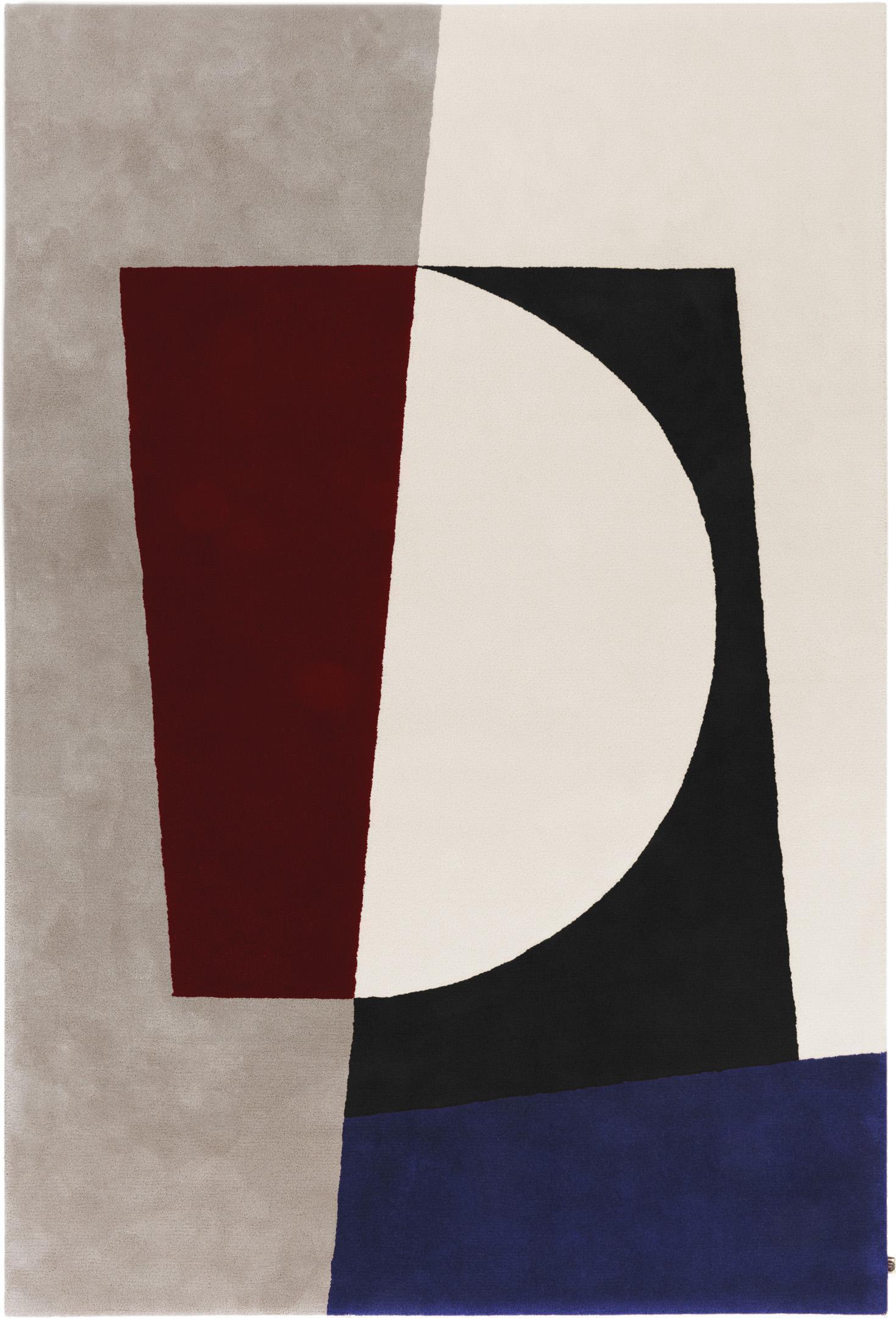


Designer Rugs as a Compositional Anchor in the Room
A rug transforms a room faster than any other piece of furniture. It brings warmth, dampens sound, defines zones and gives the room character. Designer rugs go a step further: they become the compositional anchor around which everything else is arranged. The rug takes on an architectural role. It draws the sofa, armchair and table together into a cohesive group, rather than leaving individual pieces of furniture scattered around the room.
That is precisely the difference between an ordinary floor covering and a true design rug. The room instantly gains more identity, more depth and a clear compositional direction. No renovation project, no tradespeople, no weeks of waiting. Simply lay it down and the room immediately feels warmer, calmer and more considered.
The Right Size: How the Design Rug Connects the Furniture
Size is the most common reason for a mistaken purchase. A rug chosen too small makes even a high-quality interior look disproportionate and lost. That is why, when in doubt between two sizes, the answer is almost always: go with the larger one.
For the living room, there are two simple rules of thumb. The rug should extend approximately 20 to 30 cm beyond each side of the sofa, so that it neatly frames the seating area. If it reaches beneath the sofa, at least 10 to 20 cm of the front sofa legs should rest on the rug. Common living room sizes are 160x230 cm, 200x290 cm and 240x340 cm, depending on the sofa and room concept.
In the dining room, a different rule applies: the rug should be at least 60 cm larger than the table on all sides. This ensures that pushed-back chairs remain with all four legs on the rug and no awkward edge is created.
Designer Rugs by Room: the Right Piece in the Right Place
Living Room
The living room rug is the stage for the entire seating arrangement. An example: a dark leather sofa with clean lines. A light viscose rug brings depth and contrast through its shifting light play, and with 20 to 30 cm of overhang on each side it frames the seating area calmly. This turns individual pieces of furniture into a cohesive zone.
Dining Room
For a table seating six people, choose a rug that is 60 cm larger than the table on all sides. Then chairs will not slip off the edge when someone stands up, and the area looks clearly defined. Robust, low-pile models are practical here, because more happens beneath a dining table than in a quiet seating area.
Bedroom
In the bedroom, the rug should carry the bed, rather than lying in front of it like a narrow strip. For a king-size bed, a format of around 240x340 cm with 40 to 50 cm of overhang on each side works well. This means you step onto something soft in the morning and the bed is given a calm frame.
Hallway
A long, angular hallway can quickly feel austere. A round designer rug breaks up these lines and provides soft contrasts. For heavily trafficked areas, a hard-wearing low-pile rug is the best choice, as it withstands a great deal and is easy to keep clean.
Combining Colour, Pattern and Design Direction Harmoniously
Bold and harmonious are not mutually exclusive. The trick lies in balance. If the rug sets a strong colour or pattern accent, keep the rest of the room calmer. If the interior is already striking, a design rug with a clear, restrained line often makes a stronger impact. A consistent design direction throughout the interior gives the whole room coherence.
Handmade rugs have a genuine advantage here: they are not limited in the number of colours, whereas machine-made models typically combine only around 8 to 10 colours. This is apparent in the depth and nuance of the pattern. Those looking for something special will find, particularly among modern rugs and editions such as a Limited Edition, a design that is simply not available everywhere.
Material and Appearance: Viscose Rug versus Wool Rug
The material determines the look, durability and everyday suitability. With design rugs, two fibres and their blends are usually in the foreground.
A viscose rug impresses with its silky sheen and smooth surface. Viscose is derived from cellulose, making it semi-synthetic, and its fibre structure creates a shifting light play: depending on the angle of view, the colour tone shifts slightly. This brings elegance and depth. However, viscose is more sensitive to pressure and moisture than wool and requires a little more care.
The wool rug is the robust choice. Wool absorbs moisture, neutralises odours and contains natural oils that make it more resistant to stains. It is antistatic and therefore attracts less dust. For heavily used rooms, wool is often the more practical fibre.
In short: if you want maximum sheen and a refined lustre, viscose is the stronger option. If everyday durability is the priority, wool is the way to go. Blended fabrics combine both properties.
Common Mistakes When Buying Designer Rugs and How to Avoid Them
- Bought too small. The classic mistake. A rug that is too small makes the room look unsettled. Follow the overhang rules for the sofa and dining table.
- Overlooking the construction. Hand-knotted rugs require no adhesives, are repairable and colour-fast. Tufted rugs age faster due to adhesives and are barely repairable. Knot density, meaning knots per square metre, is a central quality characteristic: the finer the knotting, the more detailed the pattern and the more hard-wearing the pile.
- Confusing trend with design. Timeless design is built on clear forms and considered colour choices. Trend pieces go out of fashion as quickly as the trend itself passes. A good design rug remains relevant for longer.
- Material and room are mismatched. A delicate viscose rug in a children's room or beneath a dining table quickly leads to frustration. Choose the fibre according to actual use.
An average hand-knotted wool rug, with normal residential use, lasts 60 to 100 years, with top-quality pieces lasting considerably longer. Machine-made models tend to reach 8 to 20 years. This is why high-quality hand-knotted rugs are considered a sound investment that can hold or increase in value.
Care and Everyday Suitability at a Glance
A design rug is suitable for everyday life if you observe a few simple rules. Vacuum at least once a week. With delicate fibres such as viscose, avoid rotating brush attachments and use specialist attachments without sharp edges. Blot stains immediately with a clean, light-coloured cloth, without rubbing. Aggressive products such as bleach, vinegar or turpentine attack the natural protective layer of the fibres and should therefore be avoided.
Direct sunlight causes colours to fade, so protect the rug with curtains or rotate it by 180 degrees annually for even wear. High-quality hand-knotted rugs should be professionally cleaned every five to eight years. It is normal for new wool rugs to shed a little at first; this settles down over time.
Wool rugs work well with underfloor heating, because wool has a low thermal resistance. Low-pile models with a low pile density conduct heat better than high-pile options. For allergy sufferers, low pile is the better choice, as dust and mites are less able to settle deep within it. This way, your design rug will stay beautiful for a long time and carry the room for many years to come.
