How is a Rug Made? From Thread to Finished Home Piece
How a rug is made: warp, weft and pile as the blueprint of every piece
Before we discuss techniques or materials, it is worth looking at three terms. They are the alphabet of every rug, and anyone who knows them will also understand how a rug is made and why one piece costs more than another.
The warp consists of the threads stretched lengthwise on the knotting loom. The weft runs across it, alternately over and under the warp. Together, warp and weft form the foundation weave that gives the rug its structure. Both are frequently made from cotton, because cotton is stable and holds its shape.
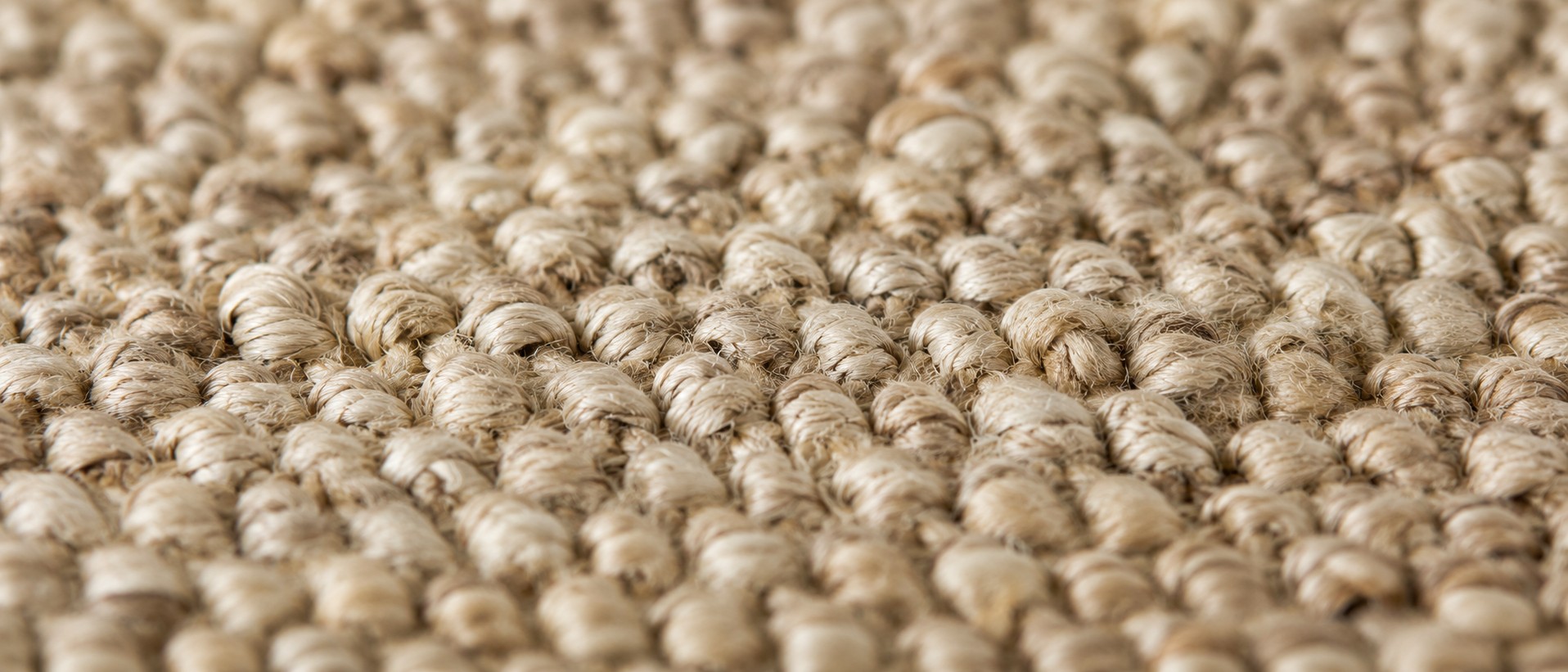
The pile is the layer you walk on. In a knotted rug, it is formed by the upward-projecting ends of the knots. Once the rug is finished, it is taken off the loom and the pile is trimmed with scissors to an even height. Only this trimming makes the surface flat and clean.
Why a kilim has no pile and can be used on both sides
A rug does not necessarily need a pile. If it consists only of warp and weft, it is called a kilim. It is flat-woven, has no protruding knots, and shows the same pattern on both the front and the back.
This has a practical advantage: you can use a kilim from both sides and turn it around when one side has been subjected to more wear. This flat, interwoven structure makes it robust and suitable for everyday use.
Weaving, knotting and tufting a rug: three techniques, three results
The three main production methods result in very different rugs. The difference lies in what happens to the yarn.
With weaving, warp and weft threads are interlaced with one another. The result is a flat weave without pile, as in a kilim. Woven rugs require time and craftsmanship; their structure is robust and long-lasting.
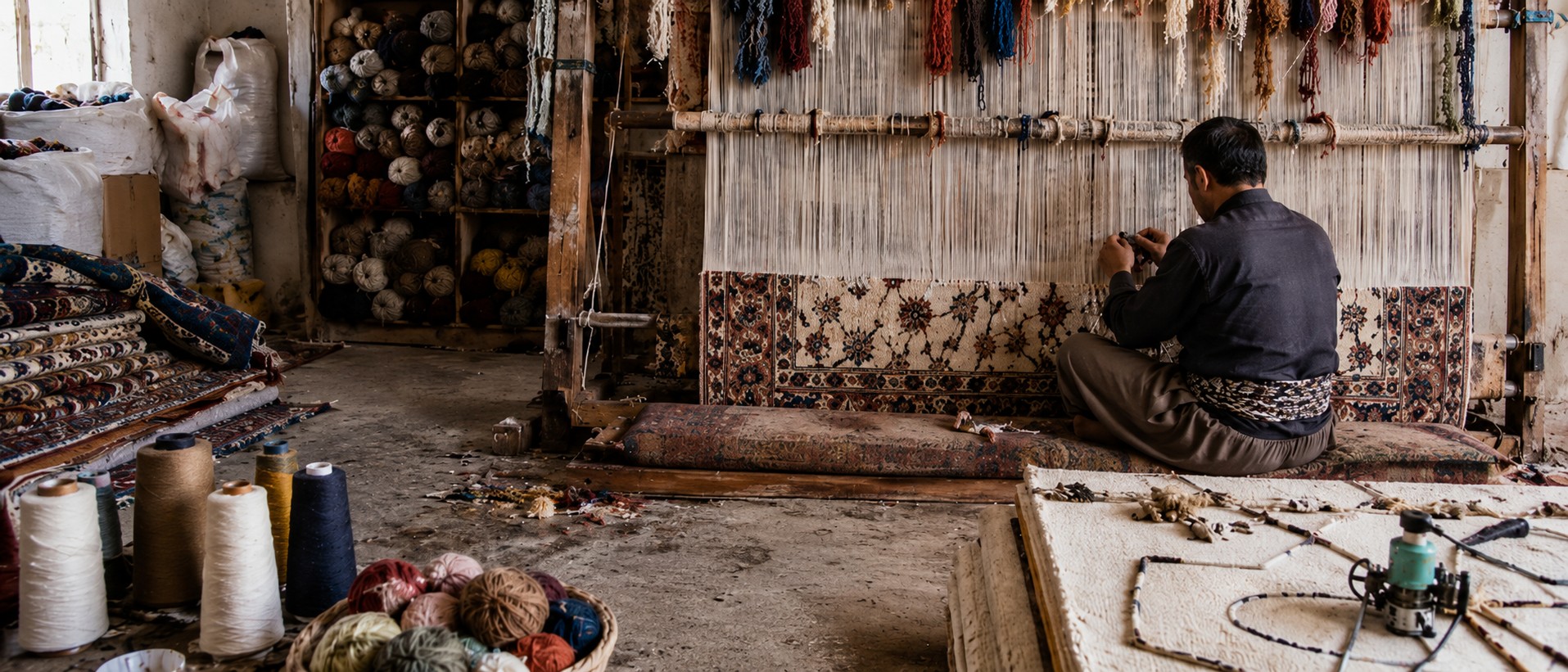
With knotting, each pile thread is tied individually around the warp threads. This produces thicker rugs with a soft pile. In oriental rugs, the two main knot types are the Persian Senneh knot, which is asymmetrical, and the Turkish Ghiordes knot, which is symmetrical. A hand-knotted Persian rug is therefore a prime example of this technique.
Hand-knotting takes time. Before the first row of knots comes wool gathering, washing, carding, spinning and plant dyeing. After that, the rug takes months to years to complete. An experienced knotter can tie several thousand to around ten thousand knots per day, depending on the fineness. A rug measuring 2 by 3 metres with 300,000 knots per square metre amounts to around 1.8 million knots in total. Depending on size and knot density, estimates range from around six months to several years.
Knot density is also the most important quality characteristic. A genuine hand-knotted rug can have 100,000 to over 1,200,000 knots per square metre. Very coarse pieces start at around 40,000 knots per square metre, while the finest rugs, such as a Tabriz 70 Raj, exceed one million. The more knots, the finer the pattern and the more valuable the rug. Because each fibre is individually and permanently connected to the warp, such rugs shed very little, often last for generations, and can be cleaned and repaired almost indefinitely.
How tufting works: from the yarn gun to velour or loop pile
In tufting, yarn is needled into a pre-made backing fabric using a yarn gun or by machine. The principle is based on the sewing machine and became established industrially in the 1950s. The needle pierces the material from the back; a loop forms on the front.
What happens to this loop next determines the appearance. If you cut it open, you get soft velour. If you leave it intact, you get loop pile. By alternating between cut and uncut loops, intricate patterns can be created, such as those found on Limited Edition rugs.
To stabilise them, the underside of tufted rugs is rubberised. This holds the pile in place but makes the pieces non-washable. Tufted rugs are produced more quickly and at lower cost than woven ones, while offering great design flexibility. A designer rug as a tufted piece is therefore a popular choice for modern interiors and current DIY trends.
The techniques compared: appearance, durability and effort
| Technique | Construction | Appearance & Feel | Durability | Effort & Cost |
|---|---|---|---|---|
| Weaving | Warp and weft interlaced, no pile | Flat, usable on both sides (kilim) | Robust, for heavily trafficked areas | Time and craftsmanship, higher price |
| Knotting | Each pile thread individually knotted | Thick pile, fine pattern | Very long-lasting, often for generations | Months to years, highest value |
| Tufting | Yarn needled into backing fabric, rubberised underside | Soft, velour or loop pile | Solid, rubberised and non-washable | Fast and cost-efficient |
In short: those seeking the highest quality will choose a hand-knotted rug. For natural living styles, a hand-woven piece is a great fit. And for modern design with plenty of creative scope, tufting is the obvious technique.
Pollutants and indoor climate: what certifications reveal about rugs
Alongside technique and appearance, many people wonder how a rug affects indoor air quality. Stiftung Warentest tested 50 carpet floors for odours and pollutants. In general, none posed a health risk; however, at least one in three floors still smelled unpleasant after four weeks. According to this test, synthetic fibre rugs emit virtually no pollutants and had no notable impact on indoor air quality.
For a new build, a synthetic fibre rug can therefore be a straightforward choice. Testing institutes such as the TFI in Aachen check rugs for odour neutrality and freedom from harmful substances, with certain substances such as pentachlorophenol being banned and limit values applying to others. The Deutsche Umwelthilfe recommends looking for the Blauer Engel label when purchasing, as it bans or restricts 51 of the 59 substances found in one study.
Choosing to suit your living style: robust, natural or modern
Ultimately, what matters is what suits your home, your budget and your expectations. The choice of material plays just as important a role as the technique.
Wool is regarded as the most popular natural fibre in rug-making. It is naturally dirt-repellent, thermally insulating, elastic and hardwearing. A wool rug has a positive effect on the indoor climate and can absorb around 33 per cent of its own weight in water without feeling wet. Some shedding is a natural characteristic of this natural product.
Other natural fibres: Cotton rugs are resistant to dirt, mostly washable and in some cases even machine-washable. Sisal has an antistatic effect, does not attract dust and provides good sound insulation underfoot. Sisal must not get wet, however, as it can lose its shape. Natural fibres such as wool, cotton and sisal are biodegradable.
Synthetic fibres excel through longevity. Polyamide makes fibres flexible and resilient; many polyester rugs are now made from recycled PET. Polypropylene repels water, dirt and stains, though it wears relatively quickly and is easily flammable.
A few concrete scenarios can help with the decision:
- Bedroom: A tufted rug with a rubberised underside is soft and design-flexible. Bear in mind that it cannot be washed.
- High-traffic hallway or hotel lobby: A woven rug shows its strengths here, because its structure is robust and long-lasting.
- New build: According to Stiftung Warentest testing, a synthetic fibre rug emits hardly any pollutants. Checking for the Blauer Engel label provides additional reassurance.
- Modern home: A designer rug as a tufted piece picks up on current forms and DIY trends.
Whether robust, natural or modern: when you know how a rug is made, choosing becomes easier, because you can recognise the effort behind the price, the appearance and the durability.
FAQ
What is the difference between a woven and a knotted rug?
A woven rug has no pile, whereas a knotted rug does. With weaving, warp and weft threads are interlaced with one another, producing a flat weave like a kilim. With knotting, each pile thread is tied individually around the warp threads, resulting in thicker rugs with a soft, upstanding pile.
Is a tufted rug inferior to a woven or knotted one?
No, it is simply different. Tufted rugs are produced more quickly and cost-efficiently and offer great design flexibility, which is why they are popular in living rooms, bedrooms and offices. Woven and hand-knotted rugs require more time and craftsmanship and are generally longer-lasting as a result. Which is the better fit depends on budget, appearance and intended use.
What do warp, weft and pile mean?
Warp and weft form the foundation weave. The warp runs lengthwise on the knotting loom; the weft runs across it, alternately over and under the warp. Together they give the rug its structure and are often made from cotton. The pile is the walkable surface of a knotted rug and consists of the upward-projecting ends of the knots.
Do rugs emit pollutants and what should I look out for?
In general, there is no acute risk. In a Stiftung Warentest study of 50 carpet floors, none posed a health risk, though at least one in three still smelled unpleasant after four weeks. Synthetic fibre rugs emitted virtually no pollutants. When purchasing, the Deutsche Umwelthilfe recommends looking for the Blauer Engel label, which bans or restricts numerous substances.
Why is a tufted rug usually not washable?
Because its underside is rubberised. In tufting, yarn is needled into a backing fabric. The back is rubberised to stabilise it and keep the pile firmly in place. This rubberisation makes the rug sensitive to water, which is why it is generally not washable.