Red Wine Stain on the Rug: First Aid, Home Remedies and What Really Works
The First Minute Counts: What You Need to Do Now
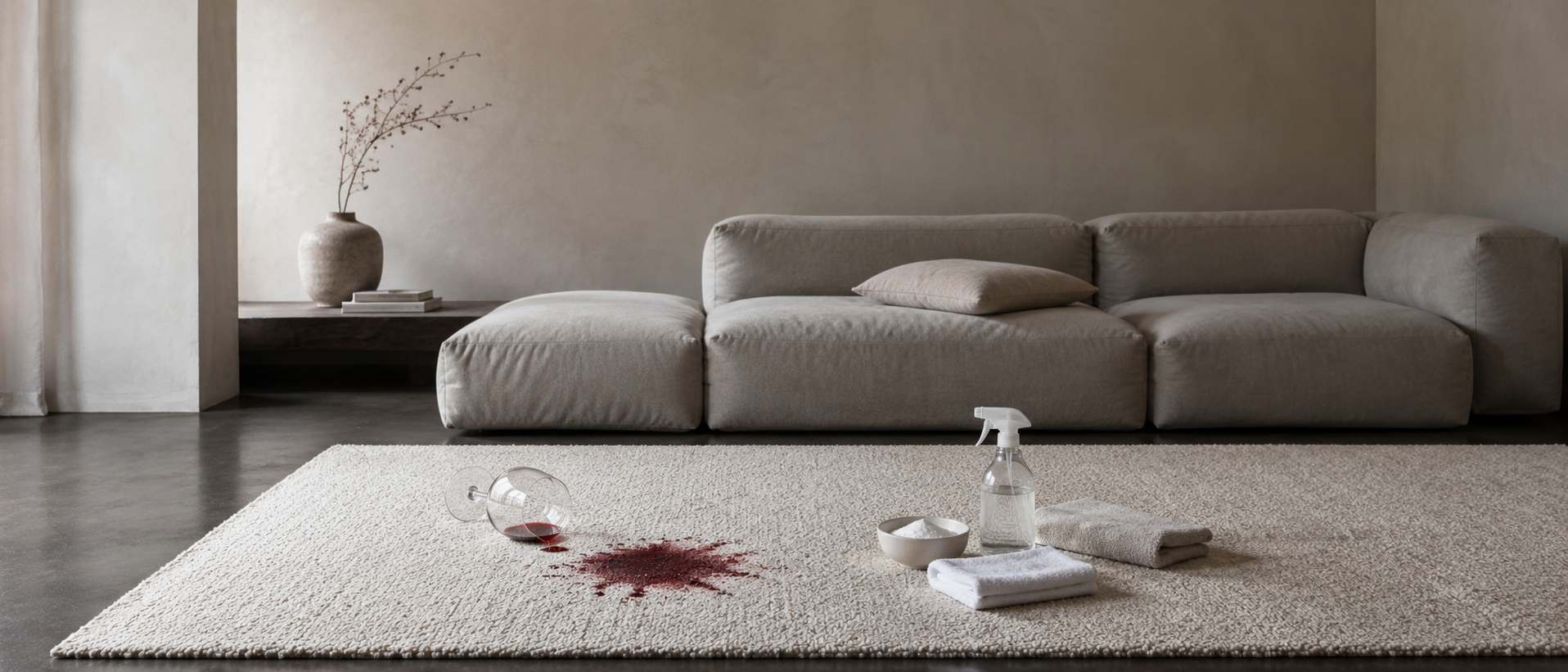
Glass knocked over, red wine lands on the rug. Before you think: blot, immediately. Take a white cloth or kitchen paper and absorb the liquid from the outside inwards. Press, lift, repeat. This prevents the red wine from spreading further and soaking deeper into the fibres.
Red wine contains tannins and intense colour pigments that anchor themselves more firmly in the material with every minute. The sooner you act, the more can be saved. Especially with a fluffy high-pile rug or a soft wool rug, quick and careful blotting is essential.
Five-Step Plan for Fresh Red Wine Stains
- Step 1: Blot. Press white kitchen paper or a light, clean cloth onto the stain and absorb the liquid. Work from the outside inwards so the stain does not spread.
- Step 2: Apply cold water. Pour a small amount of still or sparkling water directly onto the affected area. This dilutes the red wine concentration in the rug.
- Step 3: Blot again. Use a fresh cloth to absorb the dissolved colour. Repeat this process two to three times.
- Step 4: Apply an absorbent agent. Sprinkle a thin layer of bicarbonate of soda or baking powder loosely over the damp area. Leave to work for a few minutes, then hoover thoroughly.
- Step 5: Air dry. Allow the area to dry at room temperature. No hairdryer, no radiator, no direct heat source. Afterwards, check in daylight whether any residue remains.
Fresh Stain or Old Stain: Two Different Situations
With a fresh red wine stain, the approach described above can in many cases remove a large proportion of the colour. With a stain that has already dried, the situation is different: the dyes have bonded with the fibres and are harder to dissolve.
For old, dry stains, the following approach applies:
- Carefully moisten the dried stain with a little cold water and leave to work for one to two minutes.
- Then gently blot; no scrubbing.
- Test a suitable stain remover on an inconspicuous area first, before applying it to the visible area.
- For high-quality rugs (wool, silk, hand-knotted), arrange professional cleaning as early as possible.
An honest note: not every dried red wine stain can be completely removed. This depends on the depth of colour of the wine, the material and the time that has passed.
Home Remedies Compared: Effects and Limitations
Sparkling Water
One of the most useful first-aid remedies. The carbonation helps to loosen and dilute fresh stains. Suitable for most materials, gentle and quick to hand. Well suited for a robust low-pile rug in the dining room as well as for a softer living room rug.
Salt
Salt absorbs liquid and can help bind red wine at the surface with a very fresh stain. However, it alone can barely remove the colour pigments. Sprinkle salt loosely; never rub it in. Hoover thoroughly once dry so no residue remains in the fibres.
Bicarbonate of Soda and Baking Powder
Both agents are fine-grained and mildly alkaline. They absorb residual moisture and are suitable as a second step after blotting. Sprinkle on, leave to work, hoover up. No aggressive working in.
Vinegar and Lemon Juice
Broadly recommended in many guides, but to be approached with caution in practice. On light, non-sensitive synthetic fibre rugs these acids can work. On wool, silk, viscose and high-quality designer rugs they carry risks: they attack the fibre structure, can alter colours and weaken the material. Use only after a material test on a concealed area.
Specialist Cleaners
Commercially available rug cleaners formulated specifically for stains deliver the most reliable results when used correctly. Always test first; always use in a manner appropriate to the material.
Material Guide: What Your Rug Can Tolerate
Synthetic Fibre Rugs (Polypropylene, Polyester)
Synthetic materials are the easiest to care for. They absorb moisture more slowly and respond well to cold water and careful blotting. Outdoor rugs and flatweaves are among the most robust candidates.
Wool Rug
Wool has a natural resistance to dirt, but reacts sensitively to heat, acids and heavy soaking. For a wool rug the rule is: cold water only, pH-neutral or wool-suitable cleaning agent, gentle blotting, no scrubbing. For persistent stains, consider professional cleaning early on.
Silk and Viscose
Among the most sensitive rug materials of all. Both fibres can form water marks when damp and change structurally. Professional cleaning is the safest choice here.
Oriental Rugs and Hand-Knotted Rugs
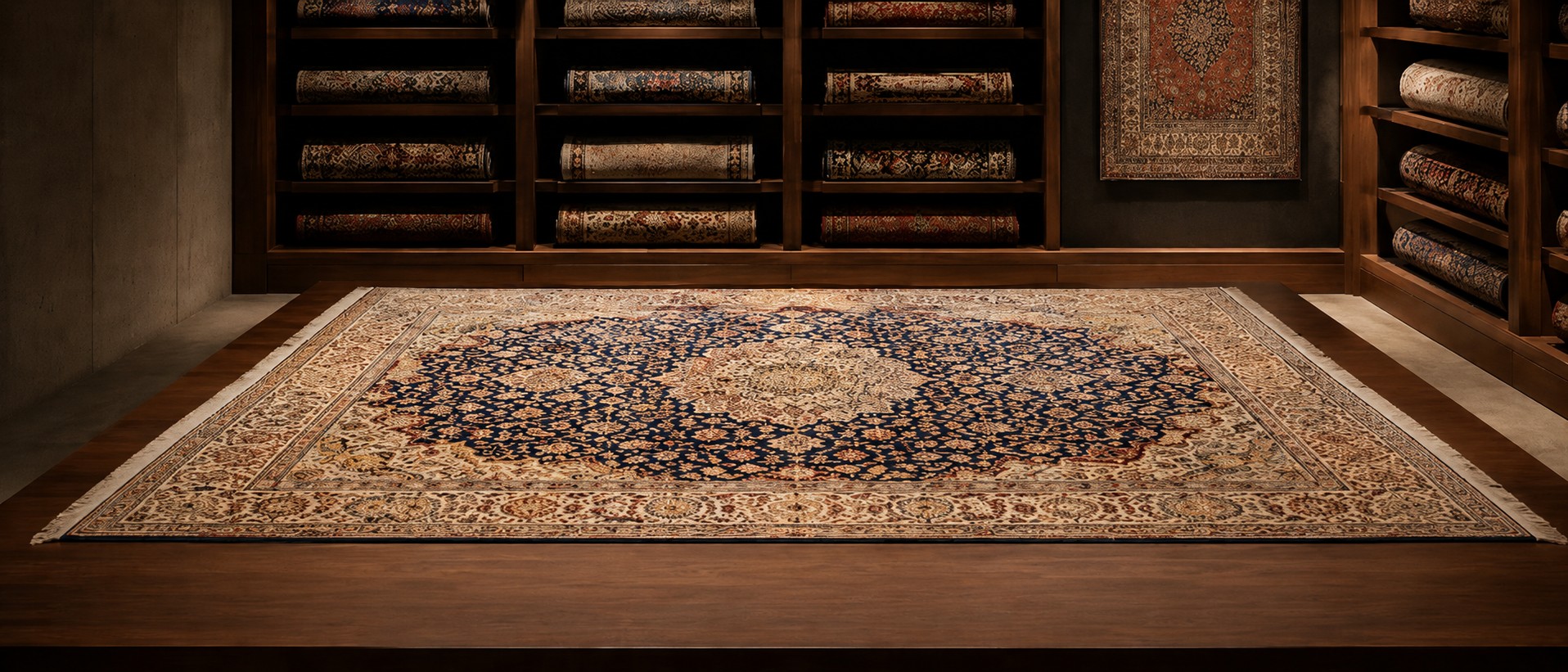
With antique or handmade pieces, the greatest restraint is called for. Home remedies can cause colours to run. Gently blot the stain, use as little moisture as possible and contact a specialist promptly.
Light-Coloured Rugs
Red wine is particularly visible on a light background. The basic rules apply here too. Additionally, take care not to use any agents that themselves leave discolouration: no coloured cloths, no bicarbonate of soda that has not been fully hoovered up.
Mistakes That Make the Damage Worse
- Rubbing instead of blotting: Spreads the red wine and pushes it deeper into the fibres.
- Hot water: Fixes the dyes permanently in the material.
- Hairdryer or radiator: Dries the stain in before it has been fully dissolved.
- Bleach: Destroys colours and fibres, especially with natural fibres and coloured rugs.
- Untested cleaners applied directly to a visible area: Always test on a concealed area first.
- Leaving the stain untreated for days: With every additional day, the chance of complete removal decreases.
When a Professional Is the Better Choice
Professional rug cleaning is recommended in these situations:
- Dried red wine stains on wool, silk or viscose
- Hand-knotted, antique or very high-quality rugs
- Stains that remain visible after several treatment attempts
- Large-scale soiling
A good rug cleaning service works in a material-specific manner and can dissolve stains that prove stubborn at home. For an expensive piece or a family heirloom, this is the wiser decision.
Prevention: How to Protect Your Rug Long-Term
An impregnation with a suitable protective spray forms a barrier on the fibre surface and buys valuable reaction time when the next mishap occurs. A high-quality rug underlay also ensures that moisture does not penetrate directly through to the floor.
Those who frequently entertain guests or lay the rug in a heavily used area benefit from an easy-care synthetic fibre rug or a robust flatweave. Regular hoovering and occasional professional care maintain the quality of every rug over the long term.
FAQ
What are the first steps with a fresh red wine stain on the rug?
Immediately press a white cloth or kitchen paper onto the area and blot up the liquid. Work from the outside inwards so the stain does not spread. Pour a small amount of cold water or sparkling water onto the area and blot again. Repeat the process two to three times until hardly any colour remains in the cloth. Allow the area to air dry; no hairdryer, no heat source.
Is salt an effective home remedy for red wine stains on the rug?
Salt absorbs liquid and can help bind red wine at the surface with a very fresh stain. However, salt alone can barely remove the colour pigments completely. Sprinkle salt loosely; never rub it in. Once dry, hoover thoroughly so no residue remains in the fibres. Use with particular care on sensitive materials such as wool or viscose.
How do I deal with a red wine stain that has already dried?
Carefully moisten the dry stain with a little cold water and leave to work for one to two minutes. Then gently blot; no scrubbing or rubbing. Test a stain remover on a concealed area before applying it to the visible area. For wool, silk, viscose or high-quality rugs, arrange professional cleaning early on. An honest expectation: not every old red wine stain can be completely removed.
Which agents are safe to use on red wine stains on a wool rug?
Use cold water only; no hot water. Use a clean, light cloth for blotting. Prefer a pH-neutral or wool-suitable cleaning agent. Avoid aggressive acids such as vinegar or lemon juice as well as bleach: they attack the fibre structure and can alter colours. Soak the rug as little as possible. For persistent stains, choose professional cleaning.
Which mistakes permanently fix a red wine stain in the rug?
Rubbing instead of blotting: spreads the red wine and pushes it deeper into the material. Hot water: fixes colour pigments permanently in the fibres. Hairdryer or radiator heat: dries the stain in before it has been fully dissolved. Bleach: attacks fibres and colours, especially with natural fibres. Untested cleaners applied directly to a visible area: always test on a concealed area first. Waiting: the longer the stain is left untreated, the more deeply it becomes embedded.