Rug for Holiday Let & Airbnb: durable, easy-care and still beautiful for the 20th guest
Picture guest number seven
The Müller family checks out. Four nights, two children, one dog and what feels like half a sandpit in their luggage. The next booking arrives in three hours. Your cleaner looks at the rug in the entrance area and sighs. This is exactly the moment that shows whether you made the right choice when buying, or whether you will be replacing the rug in two months.
Holiday lets and Airbnb properties are not ordinary living spaces. Here, usage rotates. Strangers arrive with unknown habits, street shoes, full glasses of wine and soaking wet swimwear. The rug carries all of that without complaint. Or it simply does not.
Think room first, then choose material
Many landlords start with the material. I recommend starting with the room, because the room defines the rug.
Entrance area
The toughest zone in the entire property. Suitcases roll in, shoes stay on, sand and dirt are guaranteed. Here you need a dark or flecked low-pile rug made from polypropylene or nylon, combined with a non-slip underlay. A good entrance mat in front of the door already halves the amount of dirt brought in before the first step.
Living room
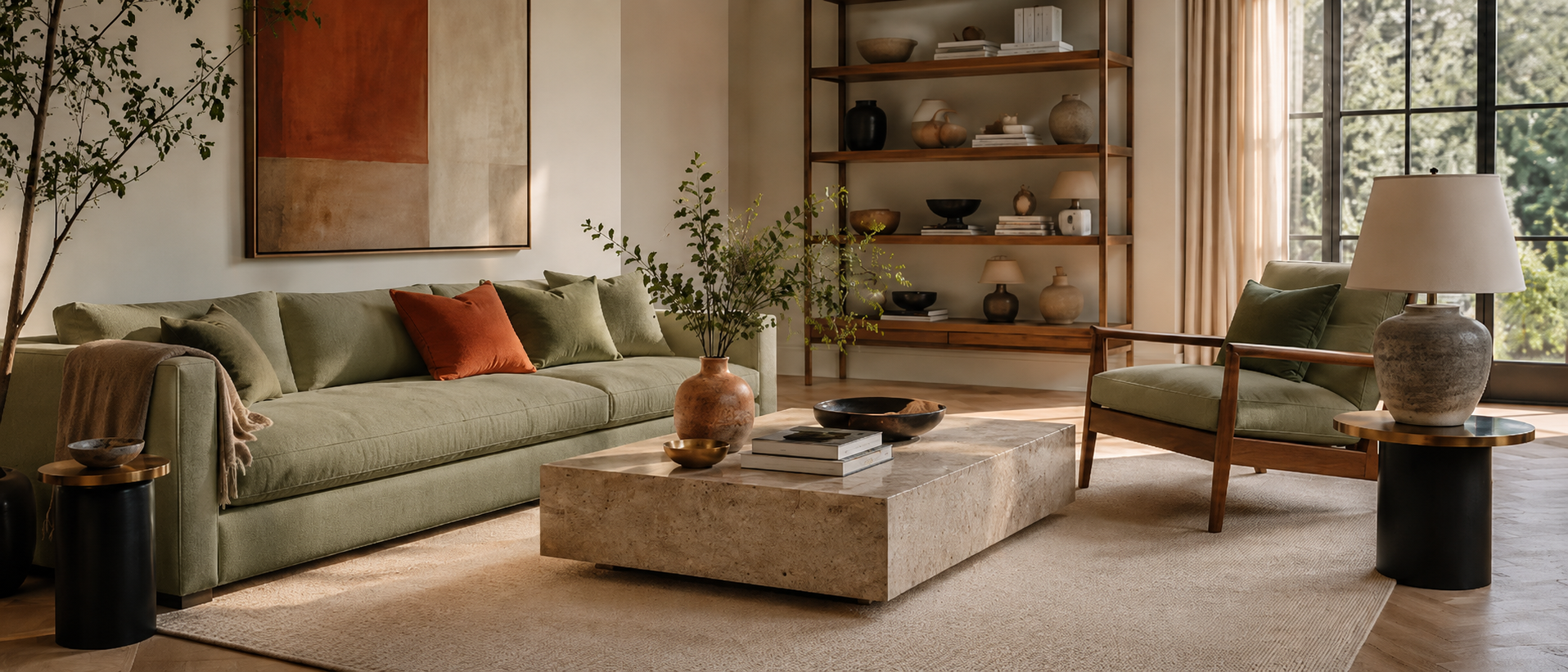
A little more scope for atmosphere, but no free pass for delicate materials. A flatweave performance rug in earthy tones or a subtle pattern delivers homeliness and can be vacuumed in two minutes. Those running an upmarket holiday let can use a high-quality wool rug here, provided the guest profile is quieter and the cleaning interval is longer.
Dining area
Red wine, olive oil, tomato sauce. Flat, synthetic, flecked: that is the only right answer. Chairs must glide easily, stains must be treatable immediately. Polypropylene plays its strongest cards here.
Bedroom
A moderate low-pile rug works reliably. In premium properties, wool is also an option here, provided the rest of the property is fitted with more robust materials.
Children's and family accommodation
For defined play areas, small washable rugs do a good job. For larger surfaces, it is better to opt for easy-care synthetic fibres: washing, drying and handling quickly become a burden with larger formats.
Materials in plain language
I had a client in Bavaria who furnished his holiday home entirely with cream-coloured deep-pile carpet. Visually a dream. After the second summer season, the living room rug looked like a country track. A fond memory. A poor decision.
Here is what really works:
- Polypropylene: Water- and stain-resistant, affordable, versatile. Coffee, sun cream, mud from the hiking trail: polypropylene takes it all in its stride. The only drawback is the look of cheaper variants. Those letting a property in the mid-price range will find the best value for money here.
- Nylon: Even more resilient than polypropylene, shape-stable and ideal for heavily trafficked walkways and hallways. Less common in the rug segment than in wall-to-wall carpeting, but well worth seeking out for particularly high-occupancy properties.
- Wool: High-quality, long-lasting and naturally dirt-repellent thanks to the fibre scale structure. A genuine asset for premium holiday lets with a quiet guest profile. In entrance zones, dining areas or accommodation with children and pets, wool quickly reaches its limits.
- Polyester: Affordable and visually appealing, but less resilient under intensive use. Useful for decorative accents in less frequently used rooms.
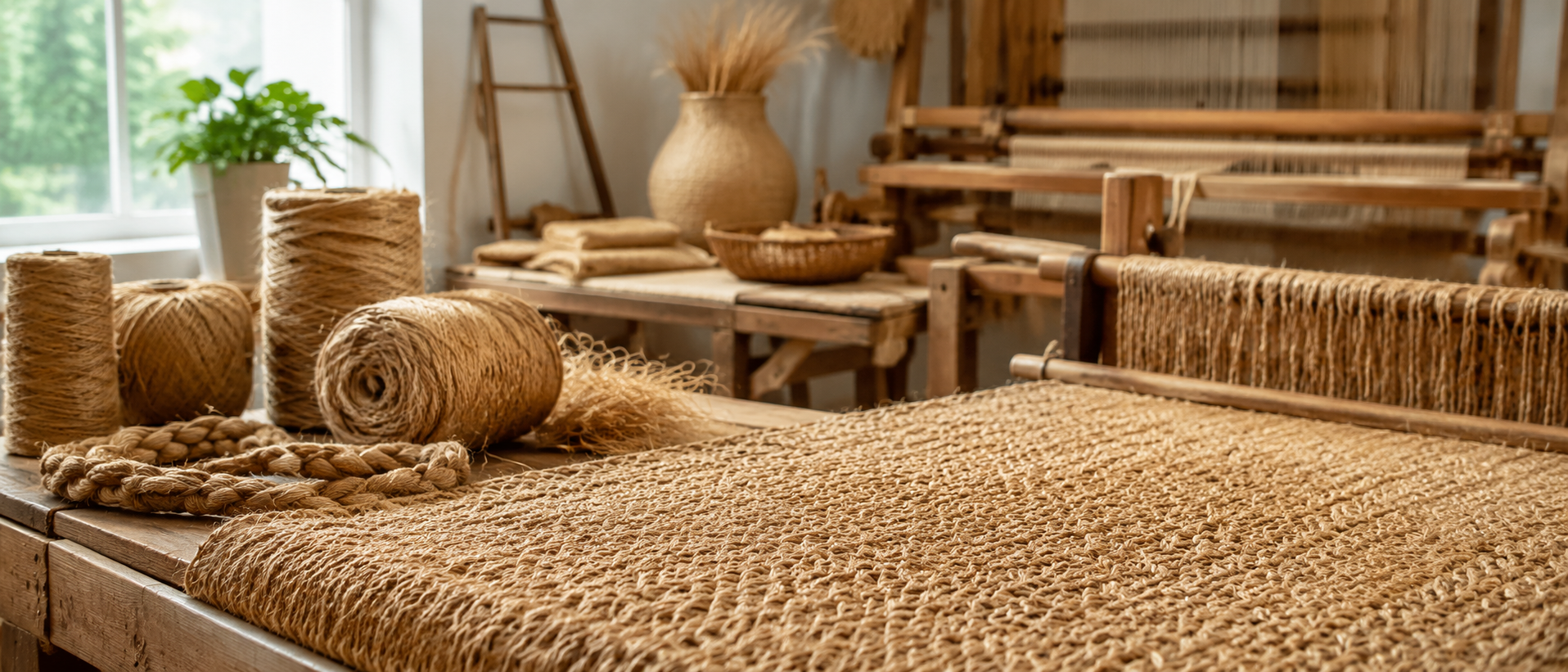
- Sisal and jute: Visually appealing for rustic holiday home concepts, but sensitive to moisture. Entrance areas, spots near the kitchen and balcony access are therefore unsuitable.
Low-pile and flatweave beat deep-pile
This is not a question of style, it is cleaning logic. A dense low-pile rug is vacuumed in two minutes. Deep-pile carpet archives crumbs, hair and dirt between its fibres like a diligent bookkeeper who never deletes anything.
Even better are flatweave rugs: virtually no pile, quickly vacuumed or swept, and visually up to date. For dining and entrance areas, my first recommendation.
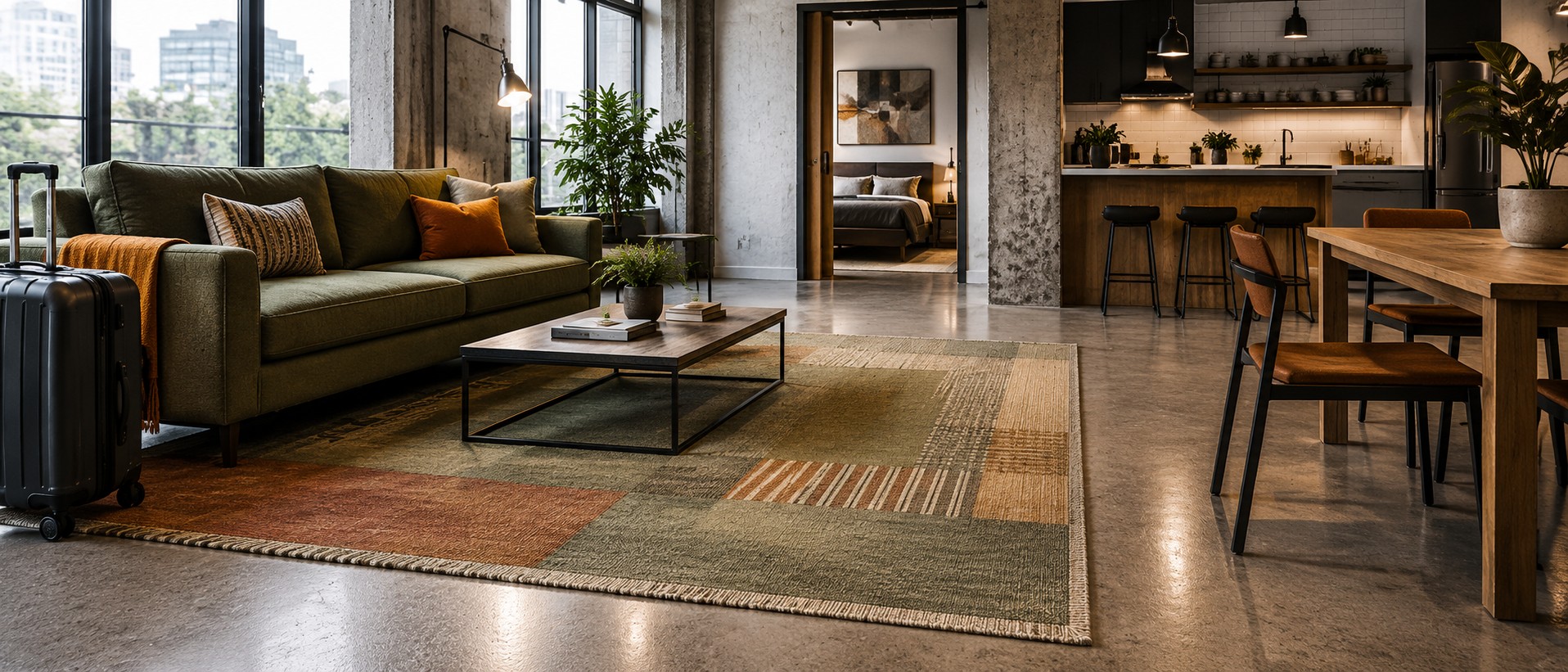
For those wanting more texture: choose a dense, structured weave. Flecked or patterned surfaces have a tangible advantage I pass on to every landlord: they conceal minor signs of wear and stains far better than light, plain-coloured rugs.
What you can safely leave out
Deep-pile and shaggy rugs look wonderful in product photos and are a reliable source of frustration in everyday letting. Viscose and silk-look options are unsuitable in heavily used areas: too sensitive to moisture, too demanding when it comes to stains. Very light, plain rugs in entrance areas and under the dining table are an invitation to early replacement.
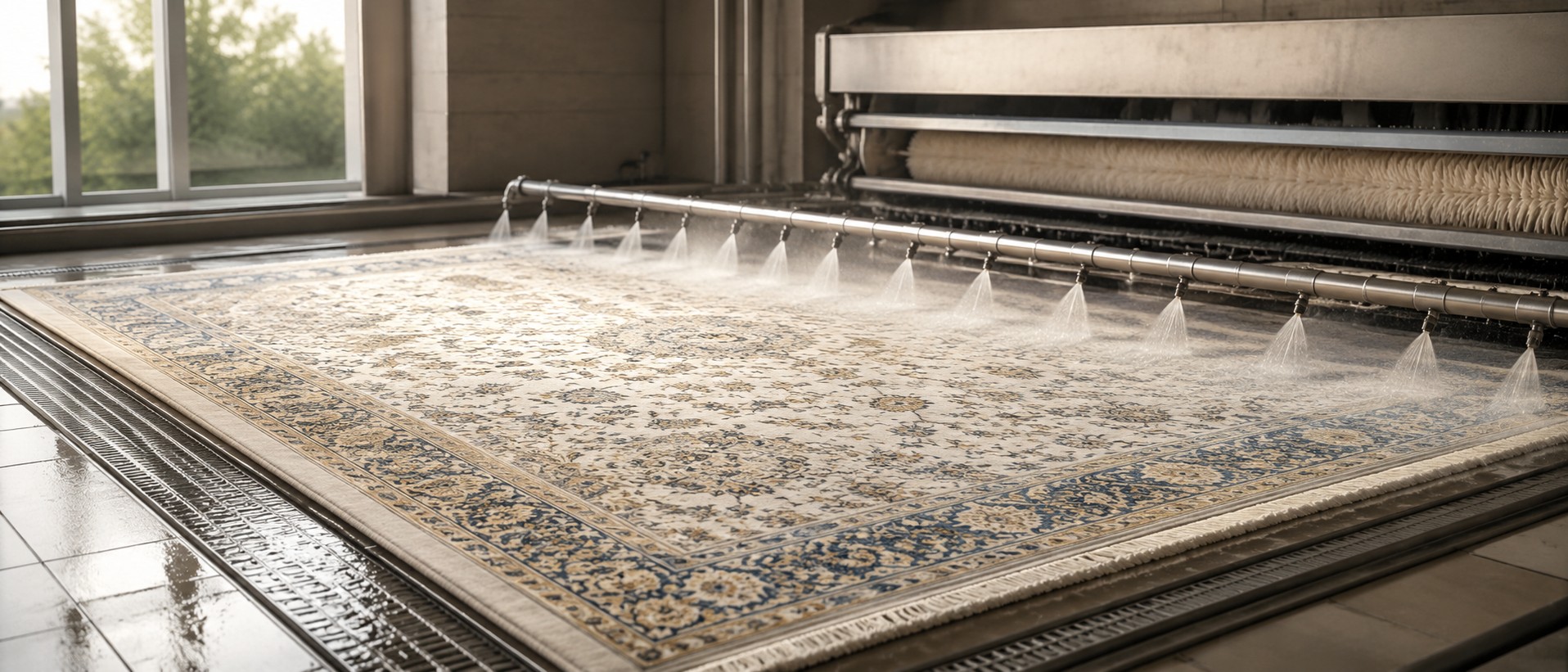
And rugs that can only be professionally cleaned? These have no place in a property where just four hours separate check-out from check-in.
Care is not a luxury, it is operational routine
The most robust rug in the world is of little use if the cleaning staff have no clear instructions. Three rules I pass on to every landlord:
- Treat stains immediately. Do not wait until the next check-out.
- Vacuum after every stay, especially in the entrance and dining area.
- Rotate rugs regularly so that traffic marks are distributed more evenly.
I also recommend a replacement rug concept from the outset: interchangeable rugs rather than fitted wall-to-wall carpet. Cleaning, airing or replacing a single rug is considerably easier than replacing an entire floor covering. This saves ongoing costs and keeps the property in good shape in the long term.
What counts in the end
Thirty guests later and the rug still looks well-kept. That is the benchmark. Anyone who achieves this has found the right combination of material, pile height, colour and weave density. There is no universal recipe, but there is a clear direction: low pile, synthetic or robust natural fibre, flecked surface, matched to the room and the guest profile.
FAQ
How do I find the right rug for my holiday let?
Prefer low-pile or flatweave: quick to vacuum, little dirt accumulation. Material: polypropylene or nylon for heavily used areas. Colour and pattern: choose flecked or medium-dark tones so that signs of wear are less noticeable. Formula: dense weave, synthetic fibre, structured surface.
Why is polypropylene so well suited to Airbnb rugs?
Water- and stain-resistant: coffee, wine and sun cream are easy to remove. Frequent guest turnover causes little wear. Good value for money, especially for properties in the mid-price range. Equally suitable for the dining area, living room and entrance zone.
Are wool rugs worthwhile in a rented property?
Yes, in premium holiday lets with a quiet guest profile: wool delivers a tactile quality and atmosphere that synthetic fibres can rarely match. The natural fibre scale structure makes wool inherently dirt-repellent. Well suited to quiet bedrooms and low-traffic living areas. In entrance zones, dining areas or accommodation with children and pets, more robust synthetic fibres are the safer choice.
Which rug types are unsuitable for holiday lets?
Deep-pile and shaggy: high cleaning effort, dirt settles deep into the fibres. Very light, plain rugs in entrance and dining areas: every stain is immediately visible. Viscose and silk-look: too sensitive to moisture and intensive use. Sisal and jute in moisture-prone zones: entrance areas, spots near the kitchen or balcony access are critical. Rugs that can only be professionally cleaned when little time remains between two bookings.
When does a washable rug make sense in an Airbnb property?
Well suited to small, easily accessible areas, for example children's rooms or play corners. Practical in family accommodation or properties with pets. With larger formats, handling becomes demanding: washing, drying and laying the rug back down takes time that is often short between two bookings. Check quality and care instructions before buying, as durability varies considerably. A useful complement to a robust main rug, but less suitable as the sole solution for large surfaces.