Jute Rug: Properties, Care and Which Rooms It Really Suits
Buying Decision Jute: Where the Material Excels and Where It Reaches Its Limits
Anyone looking for a rug that brings naturalness, texture and a warm feel to a room will sooner or later come across jute. The plant-based bast fibre has established itself in recent years as a firm favourite in Boho, Coastal and Scandi interiors. A closer look is worthwhile: jute scores in the living room and bedroom with its organic character and good value for money. In damp rooms and under intensive everyday use, however, the material shows clear weaknesses. This guide sets out what a jute rug can really do and helps you make an informed buying decision.
Origin and Production: Where Jute Comes From
Jute originates from South Asia. India and Bangladesh are by far the most significant growing countries, with West Bengal in particular and large parts of Bangladesh having been regarded as classic jute regions for centuries. The plant, botanically Corchorus, thrives in a warm, humid, tropical climate with high rainfall and, under good conditions, reaches harvest maturity within just a few months.
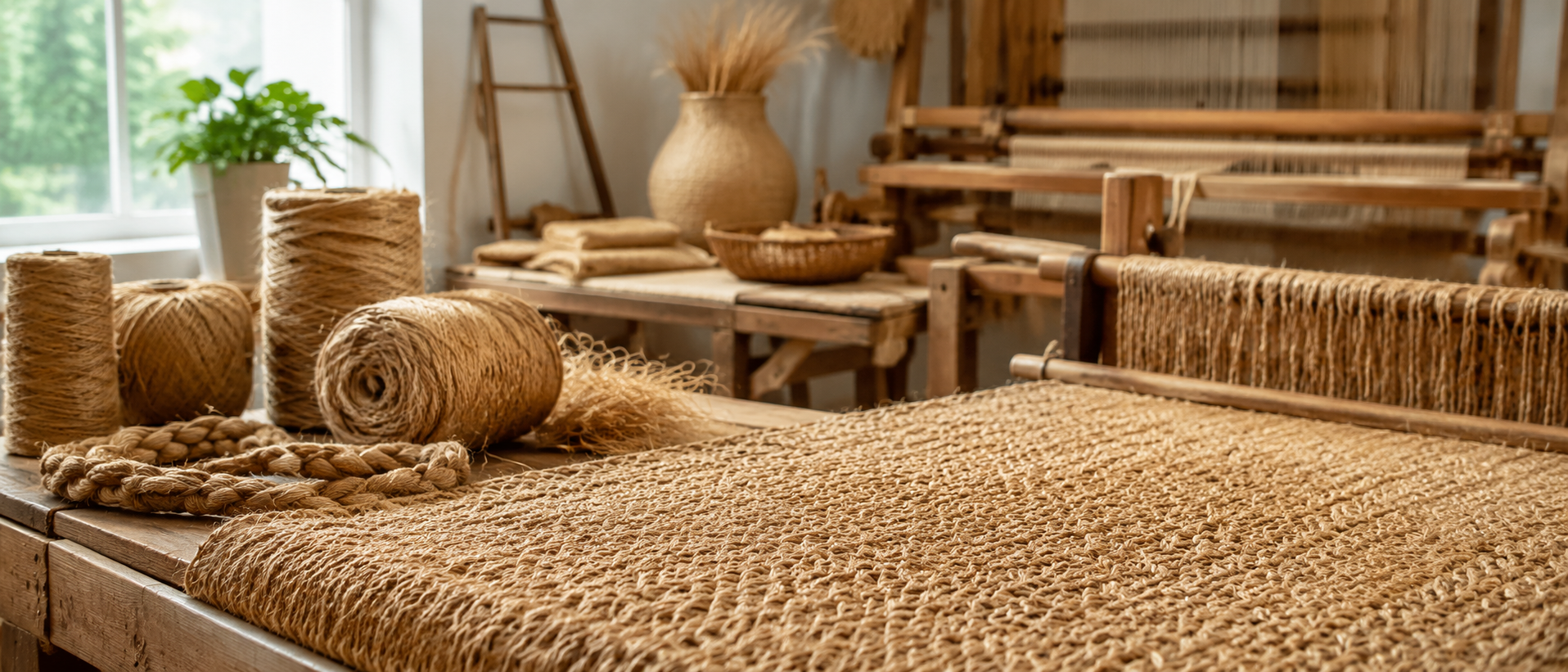
Fibre extraction is labour-intensive: the stalks are first harvested and then soaked in water for several days, a process known as retting. This loosens the fibres from the remaining plant material. After cleaning and drying, they are spun into coarse yarns. Jute secures an income for many smallholder farmers in South Asia and is of great economic importance there.
The Material: Fibre, Structure and Processing
Jute is classified as a bast fibre and consists predominantly of cellulose and lignin. This composition gives it a firm, grippy structure. At the same time, it limits elasticity: jute absorbs compressive loads less effectively than wool and can wear prematurely under prolonged intensive use.
The characteristic golden-brown tone is produced directly from the plant fibre without additional dyeing. In Bangladesh, jute is therefore traditionally known as the "golden fibre". For rugs, the fibre is woven, braided or processed in blends with cotton, wool or synthetic materials. Pure jute rugs are the most natural in appearance and feel; blended fabrics often improve softness and ease of care.
Appearance and Room Effect: What Jute Brings to an Interior
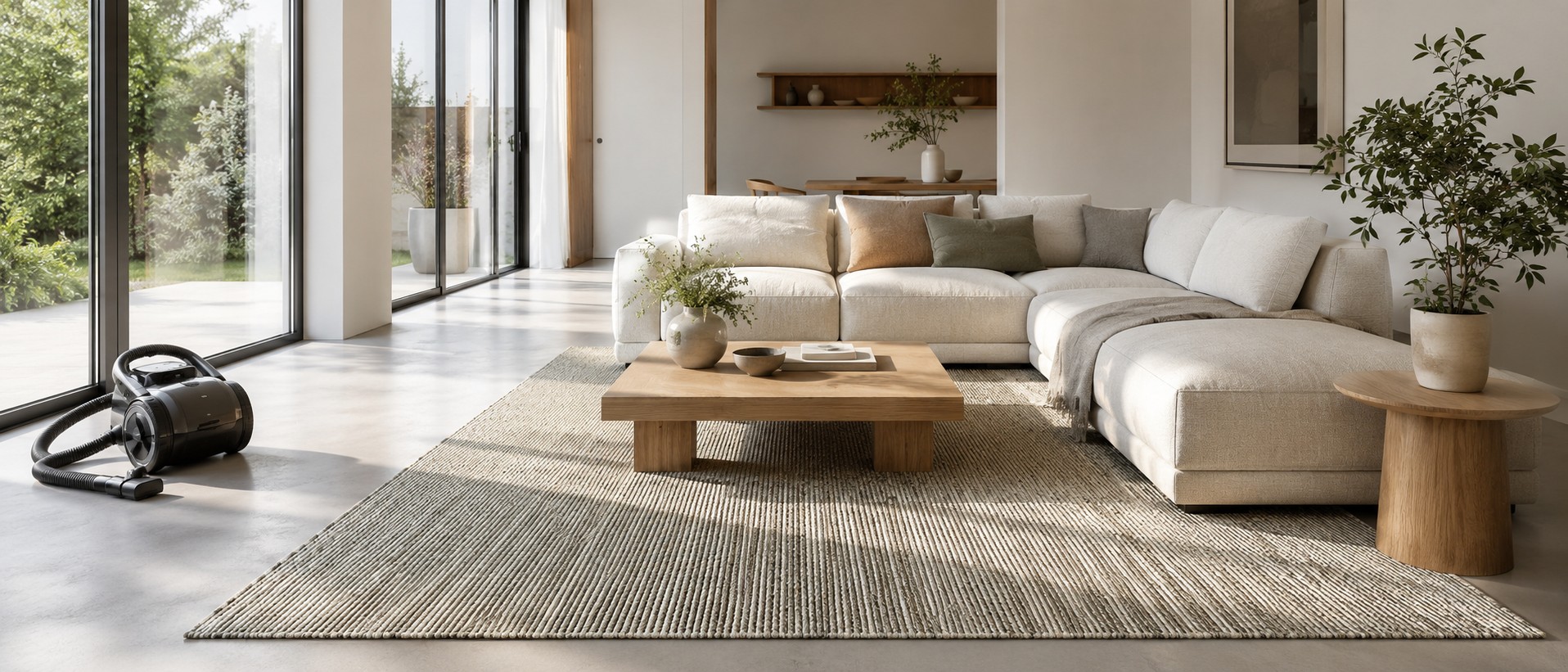
The coarse, handcrafted woven structure of a jute rug works as a quiet foundation in a room. Beneath a wooden table, in front of a linen sofa or in a seating area with natural stone, jute gives the floor depth and warmth without visually pushing itself to the fore. This quality makes the material particularly valuable in interiors that prioritise calm and organic character.
In terms of colour, jute is versatile: the warm sandy tone harmonises with light and dark wood, linen, bouclé, natural stone, leather as well as shades of white, beige, greige and bold black. Boho, Scandi, Coastal and minimalist interiors all benefit equally from this neutrality.
In terms of feel, jute sits between sisal and wool. A sisal rug is generally rougher and more robust. Jute feels more pleasant underfoot, without being as soft as cotton or wool. For very sensitive skin, for example with young children who spend a lot of time on the floor, the texture can feel slightly scratchy.
Strengths of Jute Rugs at a Glance
- Natural fibre: Jute in its raw form contains no synthetic additives.
- Antistatic: The fibre builds up very little static electricity, which is advantageous for allergy sufferers and sensitive skin.
- Design versatility: The earthy natural tone suits many interior styles and materials.
- Affordable entry price: Compared to high-quality wool rugs, jute rugs are often considerably more affordable while offering a similarly natural character.
- Biodegradable: Pure jute can be composted at the end of its useful life.
Weaknesses of Jute Rugs at a Glance
- Sensitivity to moisture: Water can cause water stains, mould growth and structural damage.
- Difficult stain removal: Grease, drinks and food residues are difficult to remove completely from jute.
- Limited compression elasticity: With very frequent and intensive use, jute wears more quickly than wool.
- Shedding during the break-in period: New jute rugs shed in the first few weeks. This phase subsides on its own.
- Natural odour: Fresh jute rugs smell of plant fibre. Sufficient airing usually causes the smell to disappear.
Room Check: Where Jute Works and Where It Does Not
Living Room and Bedroom
The living room is the strongest area of use for jute. Use is predominantly dry, demands are moderate, and the rug can fully develop its decorative effect. In the bedroom, jute is particularly well suited as a calm underlay beneath the bed, where it is exposed to very little direct wear.
Dining Room
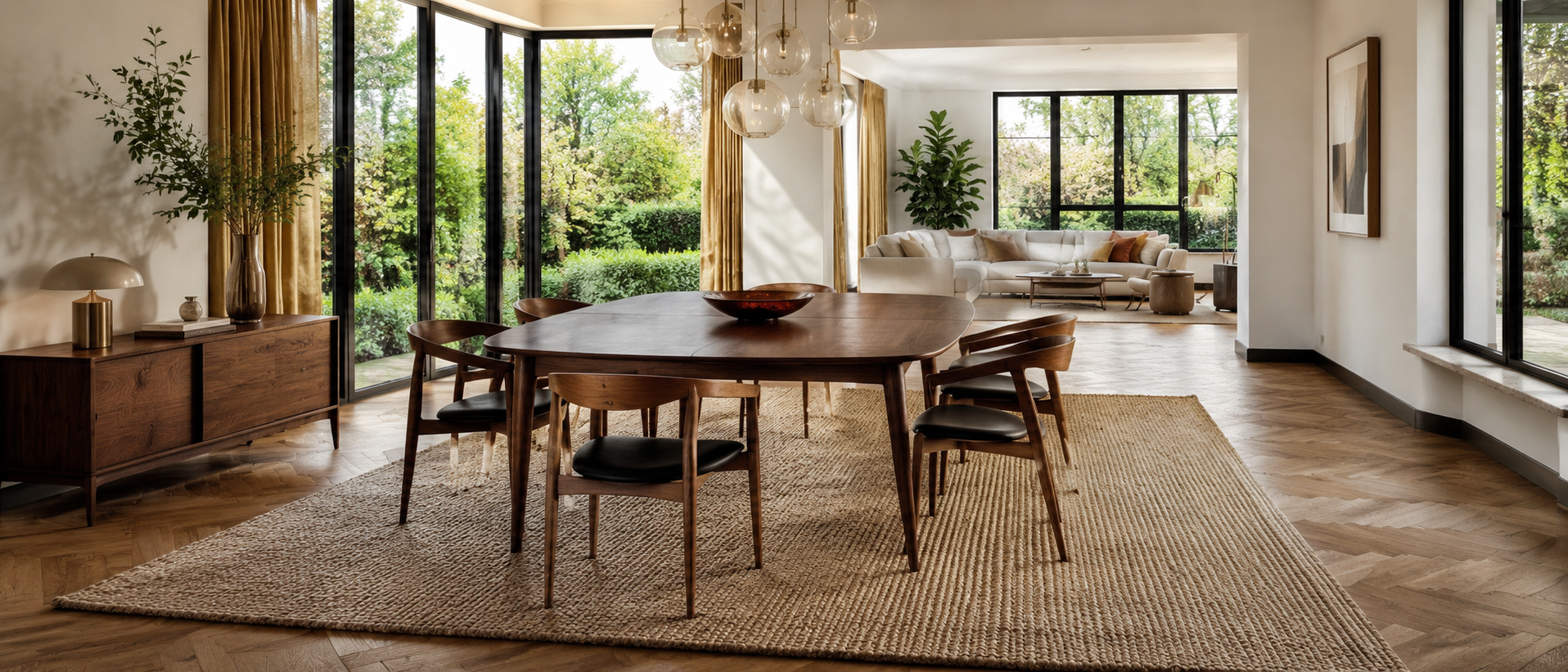
Caution is advisable in the dining room. Drinks and food residues are problematic for jute, because aggressive cleaning agents attack the fibre. Anyone who still opts for jute in the dining room should look for a particularly dense weave structure and blot spills immediately with a dry cloth.
Hallway and Corridor
In the hallway and corridor, suitability depends greatly on the specific conditions. A dry, well-ventilated entrance area with moderate use is certainly realistic. As soon as wet footwear, sand or snow is regularly brought in, however, the fibre suffers noticeably. For heavily used corridors, a blended fabric or a more robust material is recommended.
Kitchen, Bathroom and Outdoors
These areas are not suitable for pure jute rugs. Persistent moisture, splashing water and intensive cleaning cycles permanently damage the fibre. Anyone who likes the visual appearance of jute in these zones would do better with specially treated blended fabrics or synthetic alternatives with a jute look.
Material Comparison: Jute, Sisal, Wool and Cotton
- Jute vs. sisal: A sisal rug surpasses jute in robustness and durability. However, it feels rougher. Those who prioritise homeliness are better suited to jute. For high-traffic areas, sisal is the more resilient choice.
- Jute vs. wool rug: A wool rug is more elastic, longer-lasting and more resistant to dirt, but costs considerably more. Jute offers a comparable natural character at a lower price, but is only suitable for quieter, dry living areas.
- Jute vs. cotton: Cotton is softer, often machine-washable and easier to care for. It looks less textured and less rustic-natural. Those seeking texture and organic character choose jute. Those who place comfort and easy care first opt for cotton.
Care and Cleaning: How to Keep a Jute Rug Looking Its Best
The care of a jute rug is decisive for its lifespan. The following principles apply:
- Vacuum regularly when dry: Dust and sand should be removed regularly before they work deep into the fibres. A vacuum cleaner without a rotating brush is the gentlest option.
- Act immediately on spills: Blot liquids immediately with a clean cloth, working from the outside inwards. Rubbing spreads the stain and pushes it deeper into the fibre.
- Use as little water as possible: Limit damp cleaning to the absolute minimum and allow the rug to dry completely in the air afterwards.
- Choose mild cleaning agents: Solvents, bleach and harsh chemicals damage the fibre. pH-neutral products are the only sensible choice.
- Call in a professional: For stubborn or large stains, a rug-cleaning service specialising in natural fibres is recommended.
Buying Guide: Size, Quality and Blended Fabrics
Size and Shape
In the living room, a practical guideline is: the rug should be large enough to accommodate the front legs of all seating. For an average living room, 200 × 300 cm or larger is recommended. Round jute rugs make a deliberate statement as an accent beneath a coffee table or in a corner seating arrangement.
Quality Features
Good quality is recognisable by a dense, even weave structure, neatly finished edges, substantial weight and a shape-retaining construction. A non-slip underlay extends the lifespan and prevents slipping on smooth floors.
Pure Jute or Blended Fabric?
Pure jute rugs are the most natural in appearance and feel, but are the most sensitive to moisture and soiling. A blended fabric of jute and cotton or jute and wool improves softness and stain resistance without completely sacrificing the natural character. For areas subject to occasional moisture or heavier use, a blended fabric is the safer long-term choice.
Sustainability: Facts Rather Than Promises
According to the Food and Agriculture Organisation of the United Nations (FAO), jute is regarded as a versatile, environmentally friendly natural fibre that requires comparatively small amounts of fertiliser and pesticides when grown. As a renewable raw material that is biodegradable, it has real ecological advantages over synthetic fibres. The actual balance of a jute rug also depends on further factors: transport routes from South Asia to Germany, dyeing and treatment agents used, social production conditions and the actual length of use. Those who take sustainability seriously should look for relevant certifications and prioritise the most durable quality possible.
Conclusion: For Whom a Jute Rug Is the Right Choice
A jute rug is ideally suited to quiet, dry living areas where natural materials, texture and a warm atmosphere take centre stage. In the living room and bedroom, the material fully develops its strengths. In the hallway, dining room or corridor, the conditions of use should be carefully considered before purchasing. Those who require maximum robustness, the simplest possible care or complete moisture resistance will find a more suitable solution in a sisal rug, a wool rug or a blended fabric.
FAQ
Which plant does jute come from?
Jute comes from the stalks of the Corchorus plant, a fast-growing tropical plant. It belongs to the group of bast fibres and consists predominantly of cellulose and lignin. These produce firm, grippy yarns that are woven or braided into rugs. The golden-brown tone is natural and arises without additional dyeing. This gives every jute rug a warm, textured appearance.
In which countries is jute mainly grown?
The most important growing countries are India and Bangladesh. The plant requires a warm, humid, tropical climate with high rainfall. West Bengal and large parts of Bangladesh have been regarded as classic jute regions for centuries. Extraction is labour-intensive: stalks are harvested, soaked in water, the fibres are loosened, then cleaned and dried. Jute provides an important source of income for many smallholder farmers in South Asia.
Are jute rugs really environmentally friendly?
Jute is a renewable raw material and is biodegradable. According to the FAO, the plant requires comparatively small amounts of fertiliser and pesticides when grown. These are real advantages over synthetic fibres. The full sustainability balance also depends on processing, dyeing, transport routes and the actual length of use. For those who want to be certain: look for certifications and buy durable quality.
In which rooms does a jute rug make sense?
Living room and bedroom: Ideal areas, dry use, full decorative strengths available. Dining room: Only conditionally suitable. Drinks and food residues are difficult to remove from jute. Hallway and corridor: Possible with dry, moderate use. With moisture or sand, opt for a blended fabric instead. Kitchen, bathroom, outdoors: Not suitable for pure jute rugs. Persistent moisture permanently damages the fibre.
What should you bear in mind when caring for a jute rug?
Vacuum regularly when dry, preferably without a rotating brush, to protect the fibre. Blot spilt liquids immediately from the outside inwards; never rub. Keep damp cleaning to a minimum and allow the rug to dry completely afterwards. Use only mild, pH-neutral cleaning agents. No solvents or bleach. For stubborn stains, commission a rug-cleaning service specialising in natural fibres.