Rug Material Sisal: Origin, Properties and Uses
Why do so many interior designers reach for sisal?
Anyone who explores rug materials in depth will inevitably come across sisal. The agave fibre is regarded as one of the most classic natural raw materials in the floorcovering sector: structured, hard-wearing and with a clear, earthy look that suits both modern and traditional interior styles. This article provides the facts that truly matter before making a purchase decision.
What sisal is: material and production in detail
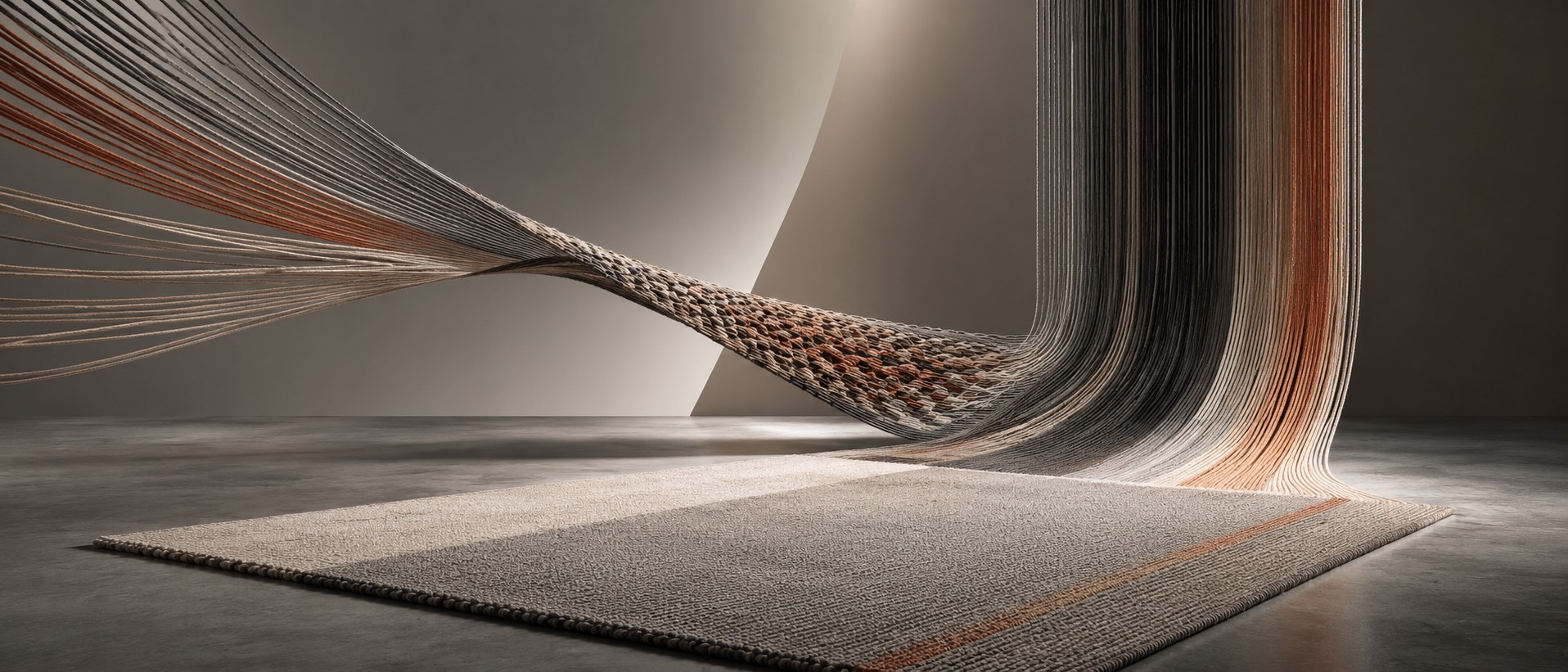
Sisal comes from the leaves of the agave sisalana, a succulent plant with long, sword-like leaves. Dense fibre bundles run through these leaves; they are extracted by mechanical beating and scraping, then washed and dried. The dried fibres are brushed and spun into yarns, from which rugs are woven or braided. The entire process remains largely mechanical and requires no synthetic additives.
The result is a fibre with a distinctive character: firm, slightly rough and naturally held in warm beige and sand tones. Sisal rugs are predominantly flatwoven, which gives them their typically grainy, structured surface. In direct comparison to high-pile or wool, sisal feels dry and grippy. Therein lies its design appeal, though it is also an important consideration for barefoot areas.
Origin and cultivation: from Mexico to the tropics of the world
The name of the fibre refers back to the port of Sisal on the Mexican Yucatán Peninsula, through which the agave fibre was first shipped on a large scale in the 19th century. Botanically, south-east Mexico is considered the region of origin of the agave sisalana. From there, the plant was introduced to tropical and subtropical regions worldwide.
Today the most significant growing areas are no longer in Mexico, but primarily in East Africa: Tanzania and Kenya are among the largest producers. Other important regions are found in Brazil, Madagascar and parts of South-East Asia. The agave places few demands on the soil and manages with little rainfall, which allows it to be cultivated on poor, dry soils. For a complete life-cycle assessment of a finished rug, however, processing routes, dyestuffs used, backing material and transport also play a role.
Properties: strengths and limitations of sisal
Durability and abrasion resistance
Historically, sisal served as a raw material for ropes, cables and mats because the fibre ranks among the strongest plant-based materials of all. This property transfers directly to the rug. A sisal rug withstands heavily used walkways for years without showing visible wear. As a hallway rug or in an entrance area, sisal is therefore one of the most tried-and-tested materials.
Dimensional stability and flat structure
Sisal lies flat and stays flat. There is no buckling, no fluff, no compression under furniture. The flatwoven structure makes sisal rugs practical under dining tables or office chairs as well.
Look and interior style
The natural, creamy base tone of sisal blends harmoniously into nature-inspired, minimalist and architecturally restrained interiors. A living room rug in sisal sets a calm texture that enhances other materials such as wood, leather, concrete or linen without drawing attention to itself.
Moisture sensitivity
Sisal absorbs moisture. This is the key limitation: liquids that are not removed immediately can cause staining, wave formation and permanent discolouration. Sisal is therefore unsuitable for kitchens, bathrooms, balconies or as an outdoor rug. For damp outdoor areas, synthetic outdoor fibres that are permanently resistant to moisture and UV radiation are recommended.
Uses: where sisal finds its place
- Hallway and entrance area: Classic application. The abrasion resistance handles daily foot traffic with ease.
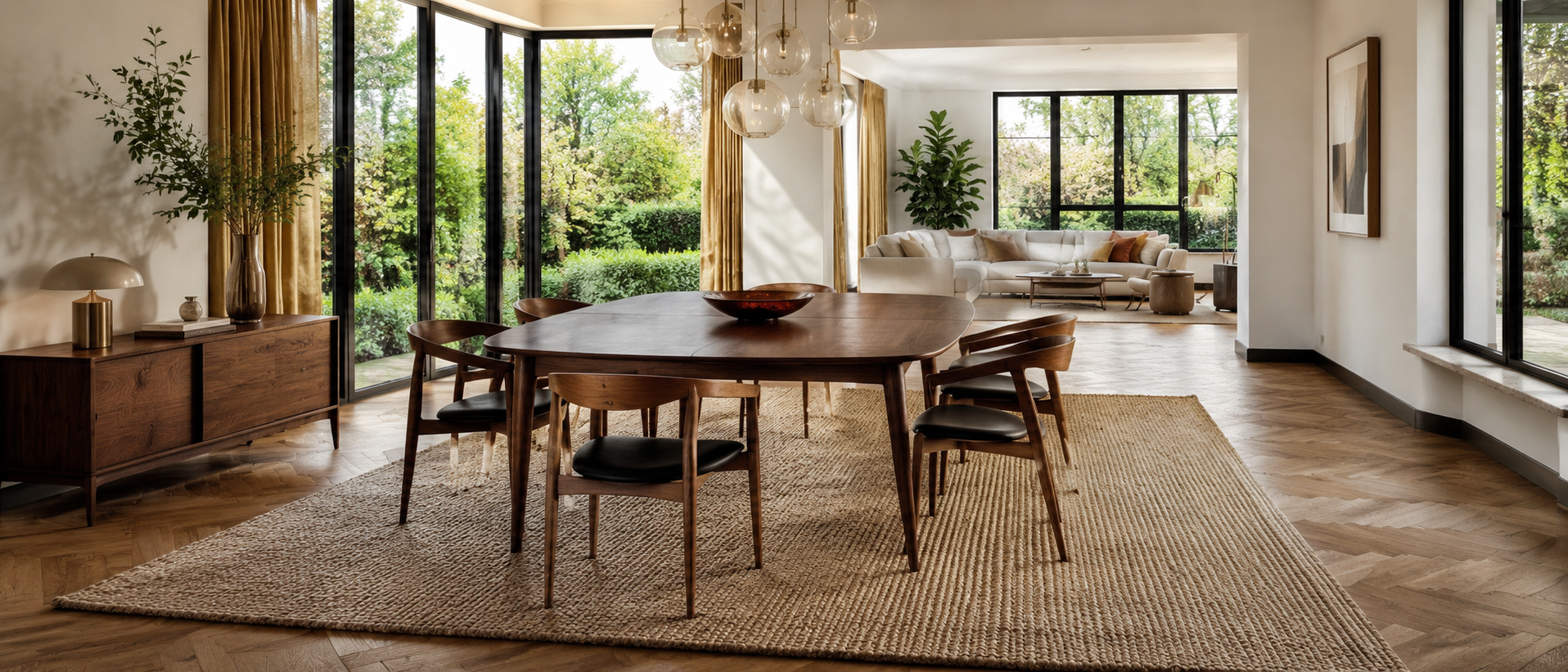
- Dining room: The hard surface performs well under chairs and remains dimensionally stable even after frequent movement.
- Home office and study: The calm, structured look creates a focused working environment.
- Living room with a clear, nature-inspired interior: Sisal as a textile design element rather than a comfort accessory.
Bedrooms and children's rooms require a considered decision: those who expect soft underfoot comfort when barefoot are better served by wool or another soft material. Those who use sisal as a deliberate style element and are happy to forgo maximum warmth underfoot will be satisfied there too.
Sisal or jute? The key differences
Sisal and jute look similar at first glance but differ noticeably in their properties. A jute rug is generally softer and lighter than a comparable sisal product, yet less abrasion-resistant. Jute is better suited to quiet rooms with low foot traffic. Sisal is the harder, more hard-wearing choice for intensively used areas. Both materials are plant-based natural fibres, biodegradable and with a similar natural look, but with clearly different behaviour in everyday use.
Care: what sisal tolerates and what harms it
In dry conditions, sisal is an easy-care material. Dust and dry dirt can be vacuumed regularly without damaging the fibre. The challenge begins with liquids: blot spills immediately, never rub, and work from the outside inwards. Wet cleaning methods, steam cleaners and wet shampoos are risky because excess moisture can cause waves, discolouration and odour. Many retailer sources describe sisal as simply "easy to care for". More precisely: excellent to maintain when dry, considerably more demanding when wet than synthetic alternatives.
FAQ
What raw material is a sisal rug made from?
Sisal is a plant-based natural fibre obtained from the leaves of the agave sisalana. The fibre bundles are extracted mechanically, dried and spun into yarns. These yarns are used to produce mostly flatwoven rugs with a firm, structured surface. The fibre is naturally beige to sand-coloured and biodegradable.
In which countries is sisal grown today?
Botanically, the agave sisalana originates from south-east Mexico; the port of Sisal on the Yucatán Peninsula gave the fibre its name. Today the largest growing areas are in East Africa, primarily in Tanzania and Kenya. Other significant producers include Brazil, Madagascar and parts of South-East Asia. The plant thrives on dry, nutrient-poor soils with little rainfall.
Which rooms are best suited to a sisal rug?
Hallway and entrance area: ideal due to high abrasion resistance under intensive foot traffic. Dining room: dimensionally stable surface withstands chair movement over time. Home office and study: calm texture supports focused working. Living room with a clear, nature-inspired interior: sisal provides architectural accents. Not suitable for kitchens, bathrooms, balconies or as an outdoor rug, as the fibre is sensitive to moisture.
How do you clean a sisal rug properly?
Regular vacuuming reliably removes dust and dry dirt. Blot spilt liquids immediately, never rub them in, and always work from the outside inwards. Steam cleaners, wet shampoos and excessive moisture can cause waves, stains and discolouration. Dry or minimally damp cleaning methods are the safest choice for sisal.
Where does sisal reach its limits?
The grippy structure is not a soft surface for bare feet: for bedrooms or children's rooms where comfort underfoot matters, soft materials such as wool are more suitable. Moisture is the greatest weakness: stains and deformation caused by wetness are difficult to remedy. Sisal is unsuitable for kitchens, bathrooms, balconies and outdoor areas; synthetic outdoor fibres are the right choice there. In strong sunlight or persistently high humidity, the fibre loses quality more quickly.