Synthetic Fibre Rugs: Benefits, Material Comparison and Buying Guide
Function first: Why many households choose synthetic fibre
Red wine on the dining room rug, muddy paw prints in the hallway, grains of sand on the patio: everyday life places very real demands on rugs. This is exactly where synthetic fibres such as polypropylene, polyester and polyamide prove their worth. This guide sets out the strengths that synthetic fibres bring, where they reach their limits, and which material is the right choice for which room.
The strengths of synthetic fibre rugs at a glance
Easy cleaning and stain resistance
Synthetic fibres absorb significantly less moisture than many natural fibres. Spills can often be blotted up before they penetrate deep into the pile. Polypropylene and polyester are considered particularly dirt-repellent and tolerate regular vacuuming without any trouble. This makes them the first choice wherever cleaning effort is a genuine factor.
Durability for heavily used areas
Hallways, stairs, kitchens and dining rooms place considerable daily demands on a rug. Polyamide (nylon) is one of the most abrasion-resistant textile materials available and withstands intensive use for years. Polypropylene impresses with solid dimensional stability, polyester with a soft feel and rich colours, even if it loses some ground to nylon under very high mechanical stress. For holiday lets and rental properties, the combination of durability and a favourable entry price offers a clear advantage.
Attractive pricing and design variety
High-quality wool rugs or hand-knotted natural fibre products come at a price. Synthetic fibre rugs allow a more affordable entry point while offering a broad choice of colours, patterns and formats. Whether a rug looks premium depends less on the fibre material than on pile weight, weave density, surface sheen and edge finishing. A well-constructed synthetic fibre rug can look distinctly modern and homely.
Outdoor suitability: balcony, terrace and more
Many synthetic fibres made from polypropylene or polyethylene are water-repellent, dry quickly and withstand the elements. This makes them at home on the balcony or terrace, where sensitive natural fibres such as jute or sisal quickly sustain damage. Anyone choosing a rug for outdoor use should ensure that the product is expressly labelled as outdoor-suitable. UV resistance, a quick-drying construction and a ventilated underlay are key considerations.
Allergy sufferers: pile height over fibre material
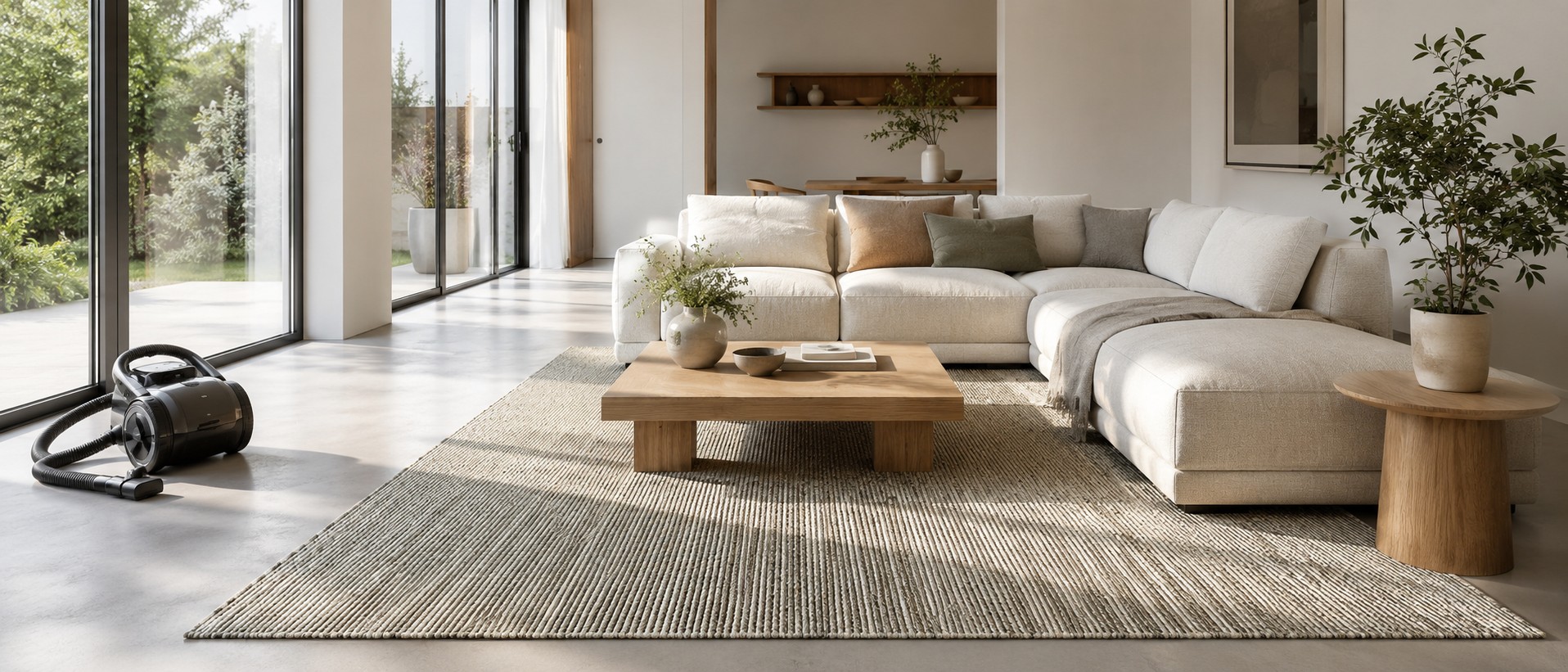
Rugs bind dust and allergens rather than distributing them through the room air. The decisive factor is pile height: low-pile, densely woven rugs can be vacuumed more thoroughly and offer allergens less space to settle. A quality that has been tested for harmful substances and carries a recognised certificate such as the Oeko-Tex Standard 100 is also recommended, alongside regular vacuuming with a suitable appliance.
Material comparison: polypropylene, polyester and polyamide
- Polypropylene (PP): Very moisture-resistant, dirt-repellent and UV-stable. Ideal for kitchens, hallways, balconies and terraces. The feel is rather firm; everyday practicality is high.
- Polyester (PET): Soft, colour-rich and pleasant underfoot. Well suited to living rooms and bedrooms. Partly made from recycled PET bottles. Less abrasion-resistant than nylon under very high stress.
- Polyamide (nylon): The most robust synthetic fibre material. Abrasion-resistant, dimensionally stable and long-lasting. Slightly higher price, but particularly recommended for heavily trafficked rooms such as hallways or dining rooms.
- Viscose: Technically a man-made fibre, but moisture-sensitive and more care-intensive than the classic synthetic fibres. Suitable for decorative, lightly used areas. It should not be equated with robust polyester or nylon rugs.
Synthetic fibre or natural fibre: a balanced assessment
Wool, cotton, jute and sisal possess undeniable qualities: they are renewable, often particularly pleasant to the touch and bring a natural warmth to a room. Synthetic fibres are produced industrially, so they are not automatically the more ecological choice. Their advantage lies in longevity, low maintenance requirements and, in some cases, the use of recycled raw materials such as PET. There is no blanket answer as to which fibre is more sustainable: production, transport, lifespan and maintenance requirements all play a role.
For a statement living room rug with a natural feel, there is much to be said for wool. For hallways, kitchens, balconies, children's rooms or heavily used family areas, a high-quality synthetic fibre often delivers the functionally superior solution.
Who are synthetic fibre rugs particularly suited to?
- Families with children: Stain resistance, straightforward cleaning and high durability are the priorities. Short-pile, dense qualities are best suited.
- Households with pets: Animal hair and dirt are considerably easier to remove from short-pile, tightly woven rugs. For cats that tend to scratch, surfaces with a closed construction and no open loops are advisable.
- Balcony and terrace: Water-repellent synthetic fibres such as polypropylene are the first choice for outdoor use.
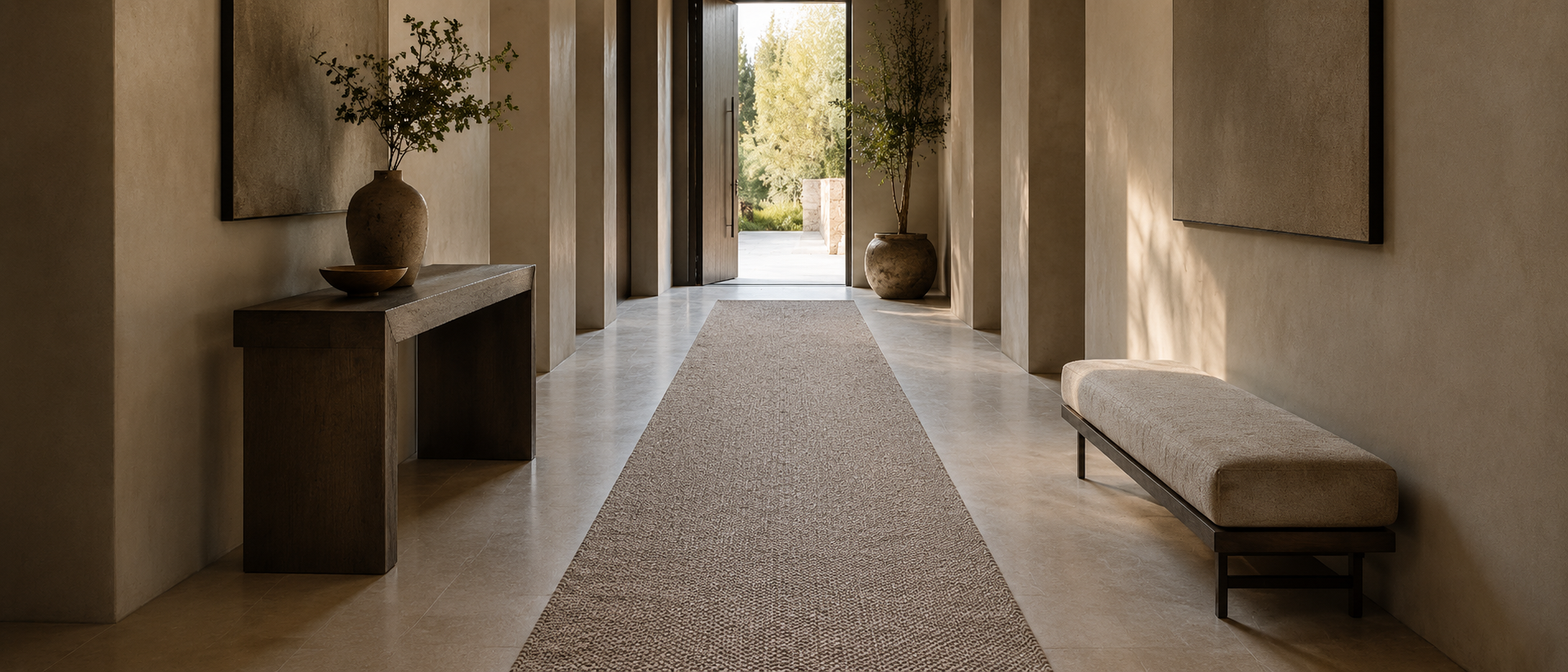
- Hallway and kitchen: Abrasion resistance and easy cleaning make synthetic fibre a sound choice for heavily trafficked zones.
- Rental and holiday properties: Good value for money, high durability and straightforward care make a clear case for synthetic fibre rugs.
Where synthetic fibre rugs reach their limits
Synthetic fibres can develop static charge in dry indoor air. With intensive use, some qualities show pressure marks or a surface sheen that does not suit every taste. The feel can be somewhat cooler than wool or cotton, depending on the fibre and construction. Anyone who places sustainability at the top of their buying criteria will find more suitable options among certified natural fibres or rugs made entirely from recycled materials. Within synthetic fibres, the quality range is wide: construction quality, pile height, weave density and backing material ultimately determine quality and longevity just as much as the material itself.
FAQ
What speaks in favour of synthetic fibre rugs?
Easy care: Low moisture absorption makes cleaning considerably easier. Robustness: Depending on the fibre (particularly polyamide), very abrasion-resistant and long-lasting. Value for money: More affordable entry point than many natural fibres, with a wide choice of designs and colours. Outdoor suitability: Polypropylene qualities are excellent for balconies and terraces. Dimensional stability: No sensitivity to moisture as found with jute or sisal.
Are synthetic fibre rugs suitable for households with children or pets?
Short-pile, densely woven variants are more stain-resistant and easier to vacuum thoroughly. Animal hair stays less deep in the pile and is easier to remove. For cats that tend to scratch, rugs with a closed surface are preferable. Polypropylene and polyester stand up particularly well to high everyday demands.
Polypropylene, polyester or polyamide: which material is suited to what?
Polypropylene: Dirt-repellent, moisture-resistant, UV-stable. First choice for kitchens, hallways, balconies and terraces. Polyester: Soft, colour-rich, pleasant feel. Well suited to living rooms and bedrooms; partly made from recycled PET. Polyamide (nylon): Highest abrasion resistance, dimensionally stable, very long-lasting. Ideal for heavily trafficked rooms under high stress.
Can allergy sufferers benefit from synthetic fibre rugs?
Low-pile, densely woven rugs can be vacuumed more thoroughly and offer allergens less surface area to settle. Regular vacuuming with a suitable hoover is essential. Qualities tested for harmful substances and carrying the Oeko-Tex Standard 100 certificate are particularly recommended for allergy sufferers. The fibre material alone is less decisive than pile height, density and cleaning discipline.
What limitations should one be aware of with synthetic fibre rugs?
Feel: Depending on the fibre and construction, cooler and less naturally warm than wool or cotton. Static charge: Some materials tend towards electrostatic buildup in dry indoor air. Pressure marks: With intensive use, pressure marks may appear depending on pile height and density. Sustainability: Synthetic production is not automatically more ecological than natural fibres. Quality differences: The range is wide. Weave density, pile weight and backing material strongly influence quality.