Rug in the Hallway: the Guide to Hall Runners, Mats and Rugs
Every home begins with this one square metre
Hardly any room is entered as often and designed as rarely as the hallway. Yet it is precisely this first step into the home that determines how the rest feels. A well-chosen rug does double duty here: it keeps dirt, moisture and grit off the floor and gives the entrance area character at the same time. Whether a narrow corridor, a generous entrance hall or a small vestibule right at the front door: there is a suitable solution for every layout and every level of use.
Which type of rug suits your entrance?
The right choice depends on the nature of the entrance area and the role the rug is expected to play there. A rough classification by usage type helps with orientation.
Doormat directly at the door
The doormat stands at the very beginning of the dirt-defence line. Flat-woven, hard-wearing and easy to clean, it catches the coarsest dirt before it reaches the actual entrance area. Its strength lies in its function rather than its appearance.
Hall runner for the long corridor
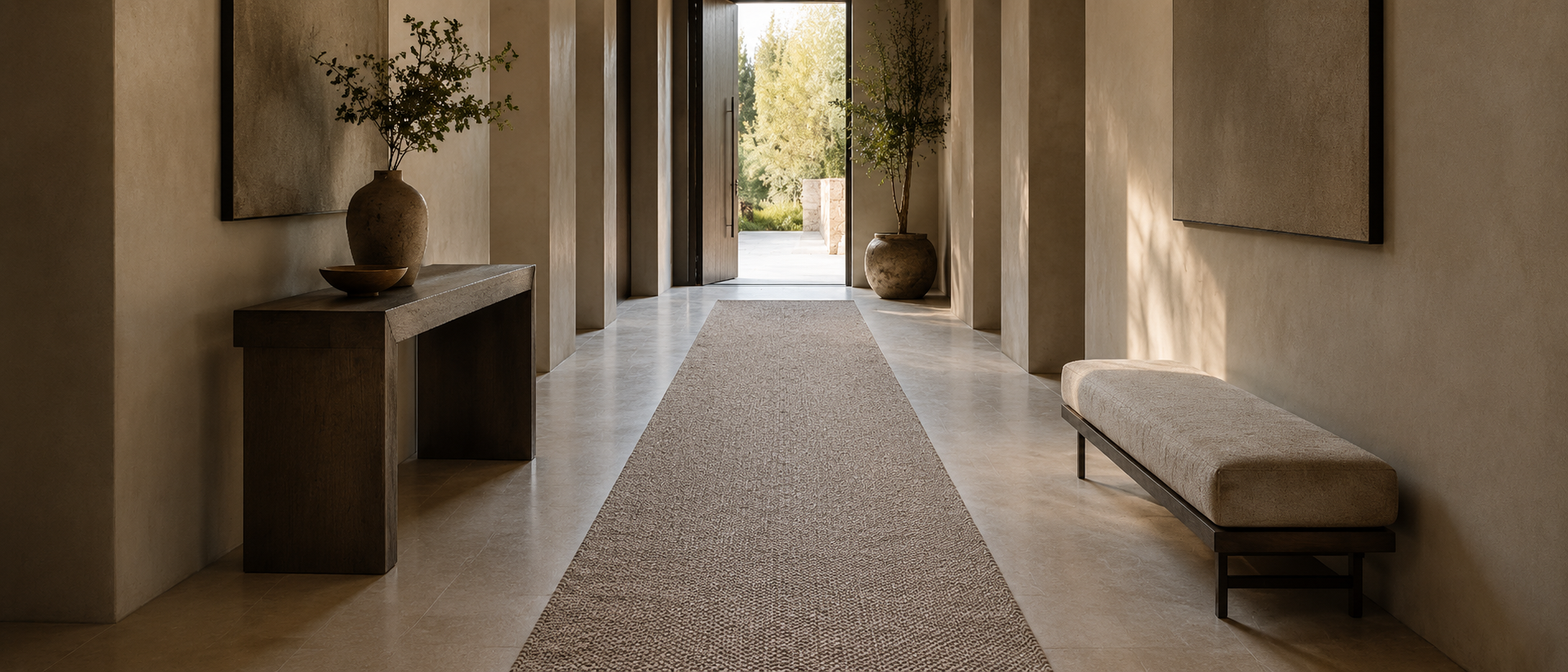
A hall runner is the most elegant answer to an elongated entrance. It follows the natural direction of movement, structures the corridor visually and protects the floor along the entire length of the walkway. Common dimensions are 70 × 250 cm or 80 × 300 cm. Approximately 10 to 20 cm of floor should remain visible on either side so that the runner looks deliberately placed.
Washable rug for families and pets
Those living with children, dogs or in a household with a lot of wet outerwear benefit from a washable model. Machine washing at the touch of a button keeps the rug lastingly fresh and hygienic. Always follow the manufacturer's care instructions, particularly regarding the maximum temperature.
Outdoor rug for heavily used zones
Outdoor rugs made from moisture-resistant synthetic fibres were originally developed for terraces, but they prove equally reliable in the entrance area. They are flat-woven, dirt-repellent and can be wiped down with a damp cloth or rinsed off outdoors. Ideal for entrances with direct contact to the exterior door.
Designer rug for a prestigious entrance
A dry, generously sized entrance area may well have the same ambitions as the living room next door. A high-quality short-pile rug or a patterned runner gives the entrée depth and personality while remaining suitable for everyday use.
Material: what really counts in the hallway
The choice of material determines how durable and easy to care for a rug in the entrance area remains. The basic rule is: the higher the moisture and dirt exposure, the more robust the fibre should be.
Synthetic fibre: polyamide, polypropylene, polyester
Polyamide (nylon) is considered the most robust choice for heavily used areas. The fibre is abrasion-resistant, easy to care for and retains its shape even under heavy use. Polypropylene absorbs almost no moisture and is dirt-resistant, making it the preferred choice for entrances close to the outdoors. Polyester is softer and easy to care for, well suited to mats with moderate use. All three synthetic fibre variants tolerate frequent vacuuming and retain their colour vibrancy for a long time.
Wool rug: high quality and homely
A wool rug brings warmth and natural elegance to the hallway. For dry, prestigious entrance areas it is an excellent choice with a long lifespan. With direct contact from wet shoes and high moisture exposure, wool requires more care as it dries more slowly than synthetic fibre.
Natural fibres: jute, viscose, Tencel
Jute, viscose and Tencel are visually appealing and suit many interior styles. In a dry, well-ventilated corridor they come into their own. In entrances with high moisture exposure, however, these fibres should be used with care, as they are more sensitive to dampness than synthetic fibre.
Determining the right size
An incorrectly chosen size can turn even the most beautiful rug into a tripping hazard or make the room feel cramped. These rules of thumb will help:
- Measure the door clearance before buying: the rug must allow the door to open and close freely.
- In the hallway, choose a runner that follows the natural direction of movement rather than covering the entire floor.
- Leave approximately 10 to 20 cm of floor visible on each side of the runner so the space feels open.
- Do not extend the rug right up to the walls, as this makes narrow hallways appear even narrower.
- Mark the desired dimensions on the floor with painter's tape beforehand to assess the effect before purchasing.
Safety in the entrance area
Wet shoes, socks on smooth parquet or laminate: the entrance area is one of the slip-prone zones in the home. A non-slip underside or a separate rug underlay between the rug and the floor provides a secure footing. Flat-woven models without raised edges additionally reduce the risk of tripping, which is especially important for children, older people and pets.
Everyday care
The entrance area carries the highest dirt load in the entire home. These measures will keep the rug lastingly well maintained:
- With heavy use, vacuum at least twice a week.
- Allow moisture to dry immediately to prevent mould from forming.
- Place a doormat directly at the door: it catches the coarsest dirt before it reaches the rug.
- Mottled colours and patterned designs conceal everyday marks far better than plain light-coloured surfaces.
- Washable models are the most hygienic choice for families and pet owners.
Style advice: which rug suits which entrance?
The rug in the entrance area connects the architecture of the building with the interior style of the home. A few points of guidance:
- Small entrance area: Light, understated colours make the space feel more generous. Low pile height, minimal pattern.
- Narrow corridor: Lengthways stripes or linear patterns visually extend the space in depth.
- Dark floors: A rug with a contrasting colour or warm natural tones creates an effective accent.
- Light floors: Mottled or patterned rugs are more practical to maintain than purely light-coloured options.
- Prestigious entrance: High-quality patterns, muted colours and a low pile height look timelessly elegant.
Quick overview: which entrance needs which solution?
- High dirt and moisture: Synthetic fibre (polypropylene, polyamide) or outdoor rug, washable preferred.
- Prestigious front entrance: High-quality short-pile rug or classic runner, wool rug also possible.
- Narrow hallway: Runner in a suitable length, floor visible on left and right.
- Family with children and pets: Washable, non-slip, flat-woven, easy-care synthetic fibre.
FAQ
What are the most important criteria when choosing a rug for the hallway?
Flat construction: doors open freely, no tripping edges. Robust material: synthetic fibre such as polyamide or polypropylene for heavy use; wool rug or short-pile rug for dry, prestigious areas. Non-slip protection: either a non-slip underside on the rug itself or a separate rug underlay. Easy care: for heavy use, prefer washable models or moisture-resistant outdoor materials.
How do I find the right rug size for my entrance area?
Measure the door clearance: the rug must not impair opening and closing the door. In the hallway, choose a runner that follows the direction of movement rather than covering the entire floor. Leave approximately 10 to 20 cm of floor visible on either side of the runner. Do not extend the rug right up to the walls. Mark the desired dimensions on the floor with painter's tape and assess the effect beforehand.
Which fibre lasts longest in the hallway?
Polyamide (nylon): particularly abrasion-resistant, ideal for heavily frequented entrance areas. Polypropylene: insensitive to moisture and dirt-resistant, well suited to zones close to the outdoors. Polyester: easy to care for and soft, suitable for mats with moderate use. Wool: long-lasting and homely, best used for dry, prestigious entrances. Jute, viscose, Tencel: visually attractive, but use with restraint in areas with high moisture exposure.
How do I clean a rug in a heavily used entrance area?
With intensive use, vacuum at least twice a week. Allow tracked-in moisture to dry promptly to prevent mould from forming. Place a doormat directly at the front door: it keeps the coarsest dirt away from the rug. Put washable rug models in the machine regularly, especially in households with children or pets. Choose mottled or patterned colours: they show everyday marks far less than plain light-coloured options.
What can I do to stop the hallway rug from slipping?
Buy a rug with a non-slip underside or use a separate rug underlay. On smooth floors such as parquet, laminate or porcelain tiles, anti-slip protection is especially important. Prefer flat-woven models: they have no raised edges and present less of a tripping hazard. Heavy rugs or wide runners lie more stably in place than narrow, lightweight mats.