Light or dark rug: how to make the right choice for your room
Picture your living room for a moment
Morning sunlight falls in at an angle, the sofa is sand-coloured, the floor is light-oiled. Now you place a deep dark rug in black underneath it. The result: the room suddenly gains tension, feels structured and refined. Sounds good? It genuinely can be. Whether it works for your room depends on four factors: light, room size, flooring and furniture. Anyone who understands these four variables will never buy a rug with an uneasy feeling again.
Care first: the honest side of colour choice
Let us start with the topic everyone thinks about and hardly anyone addresses directly: care. Because, honestly, many people decide first on the basis of "what can I keep clean?" and only then on aesthetics.
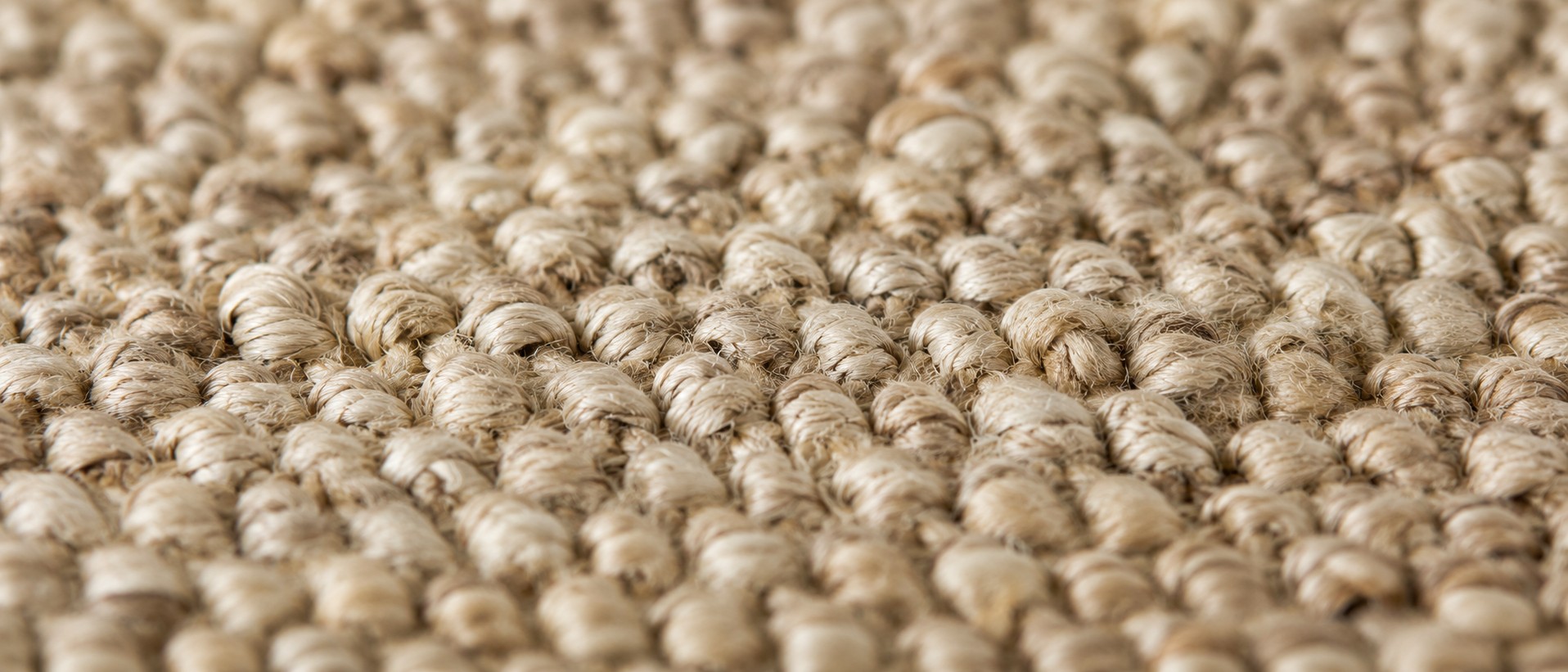
Very light rugs in pure cream or white show everyday marks visibly. Every splash of red wine, every shuffling cat paw leaves a story behind. That does not mean light rugs are impractical. A beige or greige rug with a subtle tone-on-tone texture conceals everyday marks surprisingly well, because the pattern visually breaks up dirt.
Dark rugs in brown, anthracite or dark blue absorb stains, but show dust, fluff and light pet hair all the more clearly. Anyone who has a white cat and buys a black rug knows what I mean.
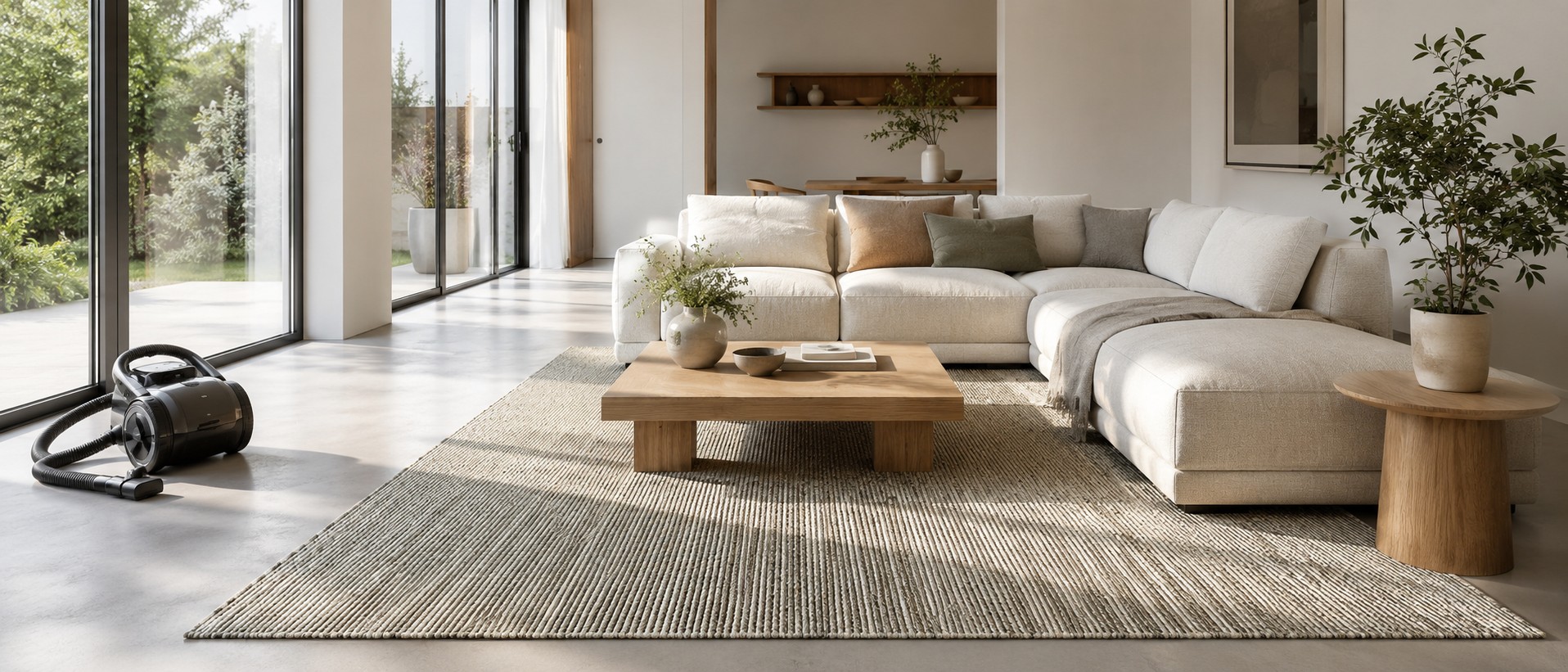
The lowest-maintenance choice: medium-toned, slightly melange rugs. They hit the sweet spot and forgive everyday life the most.
Room size and light: the two most important parameters
Now to the room effect. The old rule of thumb goes: light makes a room bigger, dark makes it smaller. It is not wrong, but it is about as complete as "exercise makes you healthy". True in principle, but it does not win any medals on its own.
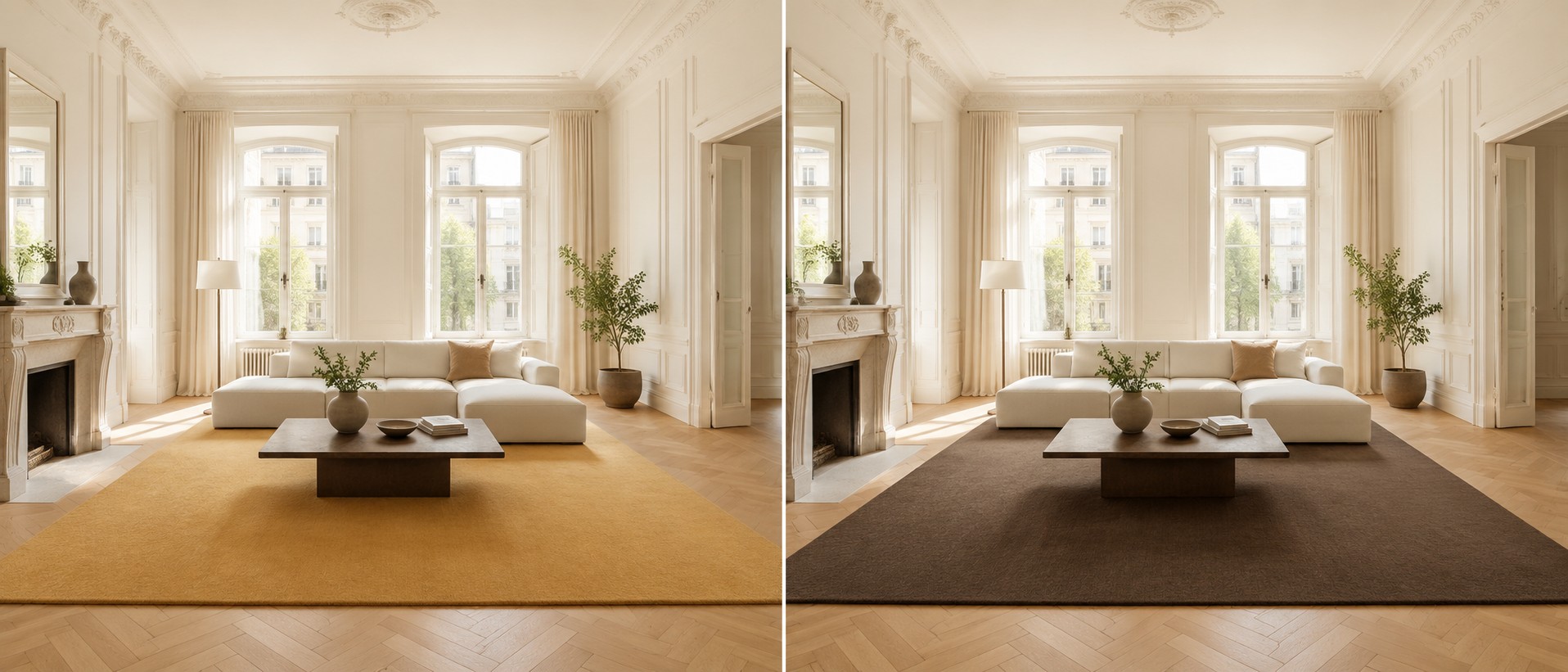
Light rugs in cream, sand, beige or light grey reflect light and give a room visual space. The eye glides across the surface, the room feels calmer and more open. Particularly in narrow bedrooms or small living spaces without generous windows, this can make a perceptible difference.
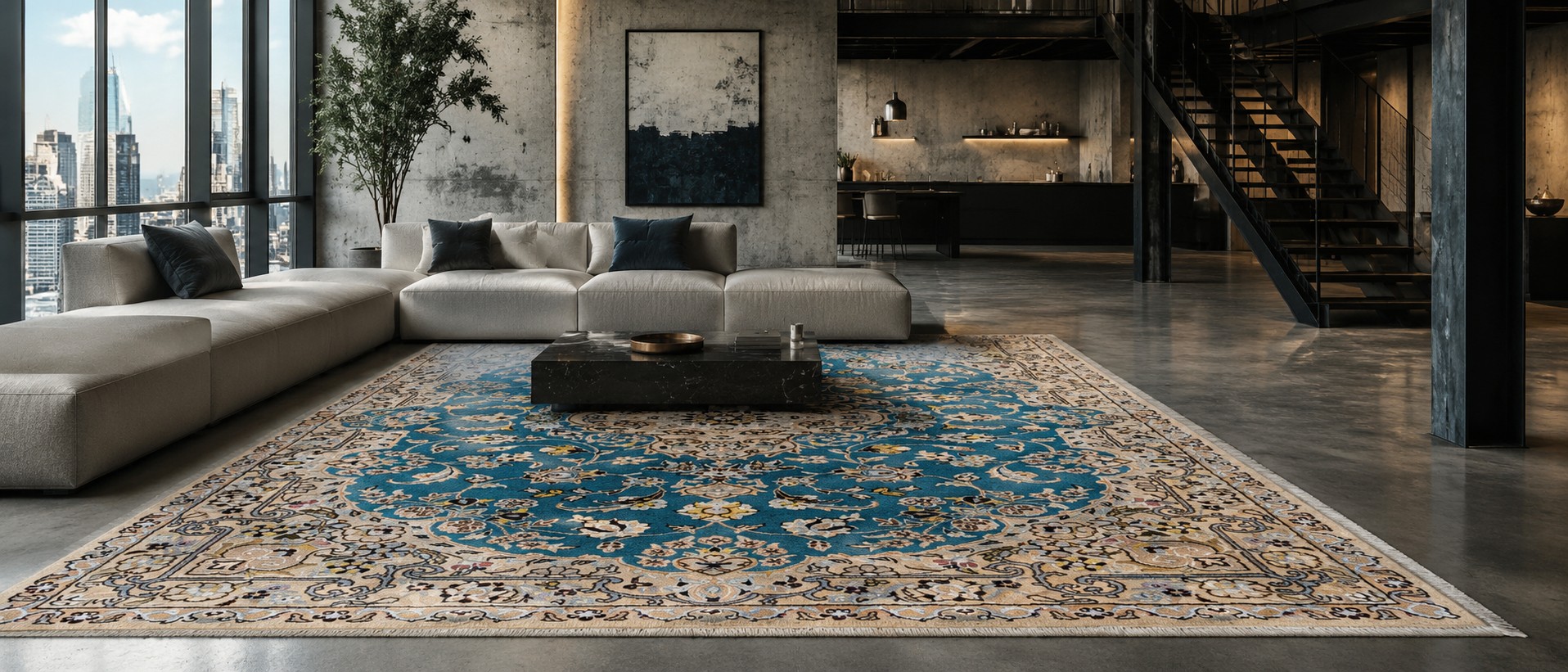
Dark rugs ground a room. Furniture gains anchorage, zones are defined more clearly, and a generous, light-flooded living room gains exactly the warmth through a deep tone that it otherwise lacks. A rug in a rich brown or dark green can transform a showroom space into a real home.
In short: small or dark rooms almost always benefit from lighter rugs. Large, bright rooms can carry dark rugs and gain character as a result.
Floor colour: the underestimated player
I recently had a customer with dark-stained oak parquet. Almost black. She was set on laying a dark grey rug on top of it, "because it looks so dramatic". I recommended a warm sand tone. She was sceptical. Three weeks later she sent me a photo: the room looked like it was from an interiors magazine.
Dark floor plus light rug works almost every time. The contrast creates brightness and lightness. Anyone who places a dark rug on a dark floor needs a very clear concept and plenty of daylight, otherwise everything feels heavy and oppressive.
A light floor is the most accommodating starting point. Almost any rug colour works here. Dark tones set bold accents, natural tones such as taupe or muted brown feel elegant and timeless.
Furniture: contrast or harmony?
Two quick rules that work in practice almost every time:
- Light sofa: A darker rug creates contrast and gives the seating area anchorage. An equally light rug feels soft and harmonious, but can quickly become shapeless.
- Dark sofa: A light rug lightens the visual weight. A dark rug works, but needs enough natural light and a clear overall plan.
Anyone who shies away from contrasts should reach for natural tones. Greige, taupe, sand, ivory, wool white: these colours work with almost any furniture style, any floor and any wall colour. They remain the right choice even when the sofa is replaced after five years.
Size: the mistake that happens more often than the wrong colour
Here is an aside that has nothing to do with light or dark and yet decides everything: rug size. A rug that is too small fragments the room. It looks cheap, even if it was expensive. It is better to go one size up. A generous format brings the furniture together as a unit, defines zones clearly and makes the entire area look higher quality. Even the most beautiful colour cannot save that if the rug stops halfway across the space.
Decision matrix: which rug suits which situation?
- Small room, little light: Light rug, calm colour, little pattern, low pile.
- Large room, plenty of light: Mid-tone or dark possible, ideal for depth and zoning.
- Dark floor: Light rug for contrast; dark rug only with plenty of light and a clear concept.
- Light floor: Free choice; dark accents add tension, natural tones look timelessly elegant.
- Children or pets: Melange mid-tone, textured, easy to care for.
- Calm, understated look: Tone-on-tone, light neutrals, low pile.
- Dramatic, high-end look: Contrast, dark tone, generous format.
FAQ
How does a light rug affect the perceived size of a room?
Light rugs in cream, beige or sand reflect more light. The floor area looks more open and calm. Particularly helpful in small or poorly lit rooms. Bear in mind: a light rug in the wrong size can visually fragment the room, so it is better to choose generously.
Are dark rugs really problematic in small rooms?
Dark rugs feel visually heavier and more compact, but do not automatically make a room smaller. In large, bright rooms they create a refined, cosy effect. In small or dark rooms a lighter tone is recommended, but a dark rug with plenty of light and a considered concept can work there too.
Which rug colour suits almost any living room?
Warm neutral tones such as greige, beige, taupe, sand or warm grey. They combine brightness with a homely depth and fit into almost any interior style. Hard black-and-white contrasts are stylistically striking, but less flexible when the rest of the décor changes.
Which rug colour forgives everyday dirt the most?
Medium-toned and melange rugs are the most straightforward choice for everyday life. Dark rugs conceal stains well, but show dust and light pet hair more clearly. Very light plain rugs in white or pure cream are more sensitive to everyday marks. A beige or greige rug with a subtle texture strikes the best balance.
Rug colour or rug size: which has more impact on how a room feels?
Both matter, but size is more frequently underestimated. A rug that is too small almost always looks restless and cheap, regardless of the colour. A generous format brings furniture together as a unit, defines zones clearly and makes the living area look higher quality. Recommendation: establish the right size first, then match the colour to the overall look.