Outdoor Rug Materials Compared: Polypropylene, Polyester, PET and Natural Fibre
The material decides whether a rug holds up outdoors
With an outdoor rug, the most important decision comes before the look: the fibre determines how the rug handles rain, sun and moisture. Knowing the differences between the materials means choosing for your own spot rather than by instinct. This comparison sets the four relevant material groups side by side and ranks them by the criteria that really matter outdoors.
The materials at a glance
The table below sums up how polypropylene, polyester, recycled PET and natural fibres behave on the key points:
| Material | Weather resistance | UV resistance | Drying | Care | Price level |
|---|---|---|---|---|---|
| Polypropylene (PP) | Very high | High (model-dependent) | Very fast | Very easy, hose-washable | Budget to mid |
| Polyester | High | Medium to high | Fast | Easy | Mid |
| PET (recycled) | High | Medium to high | Fast | Easy | Mid |
| Natural fibre (jute, sisal) | Low, covered only | Low | Slow | Sensitive | Mid to high |
Polypropylene: the standard for open areas
Polypropylene is the benchmark for real outdoor use. The synthetic fibre stores virtually no moisture, so a polypropylene rug dries much faster after a shower than any natural fibre. Add high stain resistance and, in many ranges, proven UV resistance, and it becomes the most reliable choice for uncovered balconies and terraces. For an overview, see the outdoor rugs.
Polyester and PET: weatherproof, softer, often more sustainable
Polyester and PET, made from recycled plastic bottles, are barely behind polypropylene in weather resistance. Both synthetics dry well, clean easily and often bring a softer feel, with PET adding a sustainable angle. For strongly sunlit spots, check the model's stated UV resistance. The suitable qualities are found among the synthetic-fibre rugs.
Natural fibres: inviting but tied to place
Jute, sisal and coir bring a warm, natural texture. On a covered balcony or in a loggia they work, since direct rain stays out. Once genuine natural fibre meets lasting moisture, it soaks up water, dries slowly and reacts badly to standing damp. For the natural look outdoors, a weatherproof synthetic imitation beats real jute.
The weave plays its part
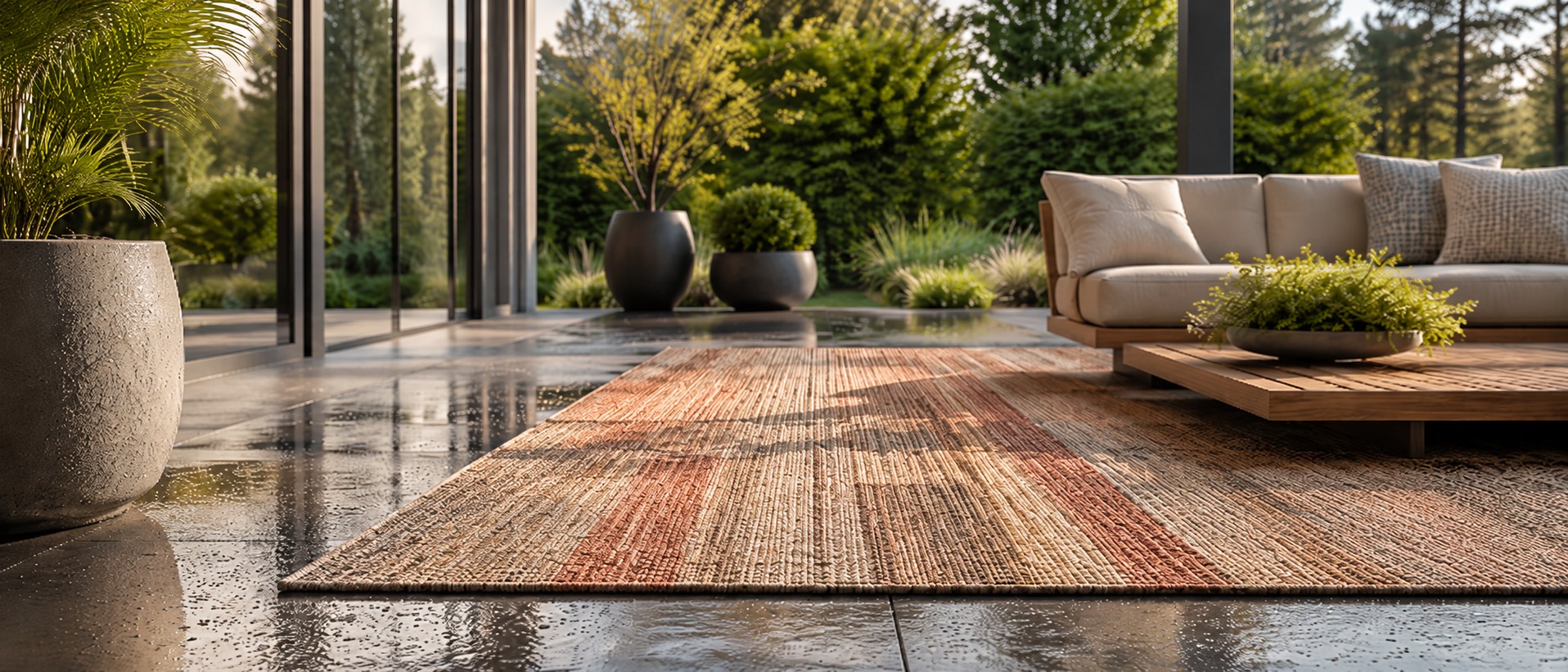
Material alone is not enough. How densely and how high the rug is woven matters just as much. Flat-woven models without pile let water run off and air circulate, cutting drying time and mould risk. High-pile qualities hold moisture in their loops and stay wet longer after rain. The best combination outdoors is therefore a moisture-resistant synthetic in a flat, open weave.
Which material for which situation?
- Open south balcony, west terrace: polypropylene with stated UV resistance, flat-woven.
- Terrace with seating and chair movement: polypropylene or polyester in a robust, dense weave.
- Covered loggia, sheltered balcony: polyester, PET or a natural-fibre look for more texture.
- Sustainable priority: recycled PET as a weatherproof, resource-friendly option.
For permanent outdoor use, the weatherproof rugs category gathers the right models. Choosing the material to match the spot means investing once and enjoying the rug for many seasons.
FAQ
Which material is best for an outdoor rug?
For open areas, polypropylene is the most reliable choice: water-repellent, quick-drying and, in many models, UV-resistant. Polyester and recycled PET are similarly weatherproof and often feel a touch softer. Natural fibres such as jute or sisal suit covered areas only, as they store moisture and dry slowly.
Which outdoor material dries fastest?
Polypropylene and polyester dry fastest because they absorb almost no water. The weave matters too: flat-woven models let water run off and dry far quicker than high-pile qualities, which hold moisture in their loops.
Are all synthetic rugs UV-resistant?
Not every synthetic is automatically colourfast. Polypropylene and polyester usually offer better UV protection than natural fibres, but the actual light-fastness depends on the dyeing and the manufacturer. For south- and west-facing spots, the product data sheet is the binding reference.
Are natural fibres like jute suitable for outdoors?
Only in a natural look. Rugs that imitate jute or sisal are often made from synthetic fibre and are then suitable for outdoor use. Genuine natural fibres cope poorly with lasting damp and belong under cover. The material label shows whether it is real natural fibre or a weatherproof imitation.
How do the materials differ in price?
Polypropylene offers the best balance of price and weather suitability and is usually budget to mid-range. Polyester and PET sit in the middle, while genuine natural fibres and their weatherproof imitations often cost a little more. Over the lifespan the price evens out: a UV-resistant flat weave lasts many seasons.