Weatherproof Outdoor Rug: The Right Choice for Balcony, Terrace and Garden
Three Common Mistakes When Buying an Outdoor Rug
Many buyers decide first on appearance, then on price. The material comes third. This is precisely where problems arise later: the balcony rug smells musty after a period of rain, the terrace rug loses its colour after just one summer, or the fabric stays damp for days. A truly weatherproof outdoor rug stands or falls by the combination of fibre type, weave structure and the specific location of use. Those who consider these three points from the outset invest once and enjoy the result for many seasons.
This guide therefore proceeds in the following order: material first, then weave, then the differences between balcony, terrace and covered loggia. Style and colour come last, as a welcome addition to an already sound fundamental decision.
Material Choice: The Fibre Determines Whether the Rug Can Withstand the Outdoors
Polypropylene: First Choice for Open, Unprotected Surfaces
Polypropylene is regarded as the benchmark material for genuine outdoor use. The synthetic fibre stores virtually no moisture, which means: after a rain shower, a polypropylene rug dries considerably faster than any natural fibre. Added to this is high stain resistance and, in many product lines, proven UV resistance. The price-to-performance ratio makes polypropylene the most reliable recommendation for open balconies and uncovered terraces.
Polyester and PET: Weatherproof and Often More Sustainable
Polyester and PET, derived from recycled plastic bottles, are barely inferior to polypropylene in terms of weather resistance. Both synthetic fibres dry well, are straightforward to clean and often impress with a slightly softer feel. Those who value a sustainable approach will find PET rugs a worthwhile option. For locations with strong sun exposure: pay close attention to the UV resistance stated for the specific model, as this varies depending on the manufacturer and dyeing process.
Natural Fibres: Homely, but Location-Dependent
Jute, sisal, coir and cotton bring a warm, natural atmosphere. On a covered balcony or in a loggia they work well, because direct rainfall is absent. As soon as a garden rug or balcony rug made from natural fibre is exposed to prolonged moisture, it absorbs water, dries slowly and reacts sensitively to waterlogging. For open, unprotected surfaces, natural fibres are therefore not a reliable choice.
Wool: High Quality, but Unsuitable for Outdoor Use
Wool belongs indoors. Outside, it absorbs moisture, dries slowly and becomes susceptible to odours and mould when used permanently outdoors. Beautiful wool rugs deserve a protected place inside the home.
Weave and Pile Height: Why Construction Determines Drying Behaviour
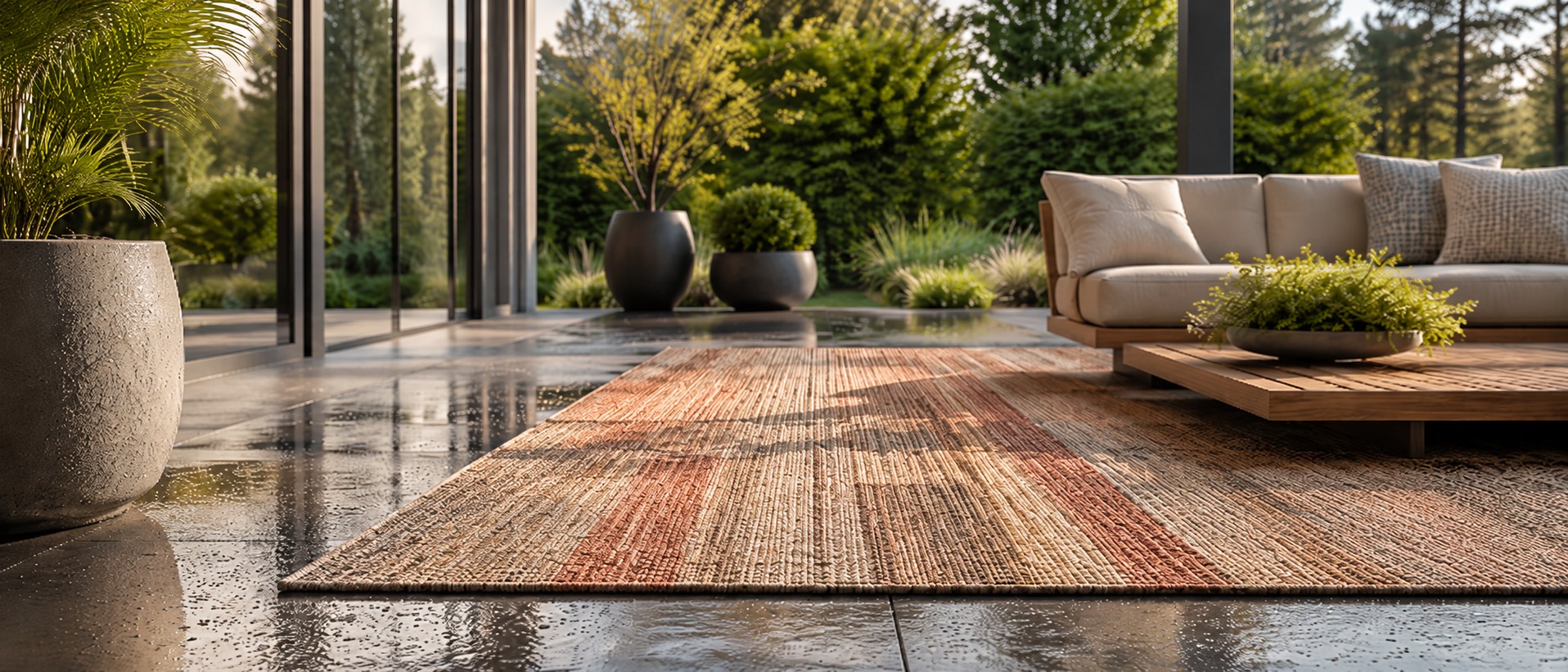
The material alone is not enough. Equally important is the question of how densely and how high the rug is woven. Flat-woven models without a pile allow water to run through quickly and air to circulate. The result: short drying times and a significantly lower risk of mould.
High-pile rugs store moisture in their dense loops. After heavier rainfall, such an outdoor rug can remain damp for hours. The combination of low pile, open structure and moisture-insensitive synthetic fibre is clearly the better choice outdoors.
Can an Outdoor Rug Stay Outside Permanently?
For polypropylene and polyester rugs, the clear answer is: yes, under normal rain and weather conditions. An important prerequisite is that the surface allows drainage and that air can circulate beneath the rug. If the terrace rug lies permanently on wet tiles or sealed concrete without any air circulation, the risk of dirt deposits and moisture build-up increases even with weather-suitable fibres.
During prolonged periods of bad weather, frost or snow, the following is recommended: roll up the rug, allow it to dry completely and store it in a well-ventilated place. This one routine measure noticeably extends its lifespan.
Mould Prevention: Ventilation Beneath the Rug Beats Every Specialist Product
Mould requires permanently trapped moisture. With outdoor rugs made from synthetic fibre, the risk is low as long as a few simple habits are maintained:
- Lift the rug regularly so that the surface underneath and the back of the rug can dry out.
- Keep the surface clean: leaves, soil and organic debris beneath the rug retain moisture and accelerate mould growth.
- On smooth floors such as tiles or paving slabs, ensure adequate ventilation underneath, for example by using a structured anti-slip underlay with air channels.
- After heavy periods of rain, prop the rug up or hang it over a chair back until both sides are completely dry.
- At the first signs of a mouldy smell: apply a mild soapy solution, leave it to act, rinse thoroughly and allow to dry completely in the open air. Stubborn patches can be treated carefully with a diluted vinegar solution.
UV Resistance: Colour Fastness as a Purchase Requirement, Not a Bonus
On a south-facing balcony or an uncovered terrace with a westerly aspect, direct sunlight reaches the rug for hours. Intense UV radiation attacks colours, particularly in cheaper products without the appropriate protective treatment. Polypropylene and polyester generally offer better UV protection than natural fibres, but the precise light fastness depends on the dyeing method and the individual manufacturer.
Practical tip: Mottled, muted or earthy tones show minor colour changes caused by sunlight less visibly than bold solid colours. Those opting for vivid shades should explicitly look for a UV resistance specification in the product data sheet.
Balcony Rug, Terrace Rug, Loggia: What Distinguishes the Three Situations?
Balcony Rug: Size, Weight and Non-Slip Safety
A balcony rug relies on a precisely fitting size. Rugs that are too small look lost; rugs that are too large create trip hazards, which are particularly dangerous on a balcony. Smooth floors made of tiles or coated concrete require a non-slip backing or a separate anti-slip underlay. Lightweight rugs shift in the wind, so heavy garden furniture helps keep the rug in position. A flat, unobtrusive woven edge at the borders reduces the risk of tripping.
Terrace Rug: Generous Sizes, Robust Weave
On a terrace, considerably larger sizes can be used, clearly defining a seating zone and giving the outdoor space the feel of an interior room. As terraces are often uncovered and more exposed to the sun, UV resistance is especially important here. Those who use chair castors beneath terrace furniture benefit from a flat, dense weave that can withstand mechanical stress.
Loggia and Covered Balcony: More Flexibility with Material and Texture
Under a solid roof or canopy, direct rainfall is absent. Here, a balcony rug with a little more texture or a more homely pattern can also work well. Even natural fibres become a realistic option in this configuration, as permanent waterlogging does not occur. Nevertheless, the following applies: moisture travels through the air, and a quick-drying synthetic fibre rug remains the more carefree choice even on a loggia.
Care: Keep It Simple, Do It Regularly
The great argument for an outdoor rug made from synthetic fibre is its straightforward maintenance. A solid care routine looks like this:
- Weekly: shake out or vacuum, remove dirt and leaves.
- As needed: rinse with the garden hose; for stains, apply a mild soapy solution, leave to act, rinse off.
- Always afterwards: allow to dry completely before laying the rug flat on the floor again.
- Seasonally: roll up dry before the winter break and store in a well-ventilated place.
Harsh cleaning agents, pressure washers used at close range and machine washing are unsuitable for most outdoor rugs and can permanently damage fibres and colours.
Buying Checklist: What a Weatherproof Outdoor Rug Should Offer
- Fibre type: polypropylene, polyester or PET for full weather suitability.
- Weave: flat-woven or low pile for quick drying.
- UV resistance: explicitly stated, especially for south- and west-facing locations.
- Non-slip: non-slip backing or anti-slip underlay on smooth floors.
- Size: tailored to the area, with a border allowance for furniture legs.
- Easy care: can be rinsed down, quick-drying, no specialist products required.
- Natural fibres: exclusively for covered areas fully protected from rain.
FAQ
Which materials genuinely hold up on balconies and terraces?
Polypropylene: water-repellent, stain-resistant, often UV resistant, attractively priced. First choice for open, unprotected surfaces. Polyester and PET: likewise suitable for all weather conditions, often slightly softer to the touch, and also sustainable in recycled versions. Flat-woven models in both synthetic fibres dry fastest, because water is not trapped in dense fibres. Natural fibres (jute, sisal, coir): suitable only for covered areas; problematic with direct rainfall.
Can an outdoor rug stay outside permanently?
Polypropylene and polyester rugs withstand normal rain and weather conditions without any problem. A prerequisite is that the surface allows drainage and that air circulates beneath the rug. During prolonged rain, frost or snow: roll up the rug, allow it to dry completely and store it in a dry place. This seasonal routine noticeably extends the lifespan and preserves colours considerably longer.
How can I tell whether an outdoor rug is UV resistant and colour-fast?
Look for an explicit manufacturer statement on UV resistance in the product data sheet. Polypropylene and polyester generally offer better UV protection than natural fibres. Mottled or muted tones tolerate minor colour changes from sunlight more forgivingly than bold solid colours. For south-facing balconies or west-facing terraces: UV resistance is not a comfort option but a purchase requirement.
What can I do to prevent mould forming beneath the outdoor rug?
Lift the rug regularly so that the underside and the surface beneath can dry out. Keep the surface clean: leaves and organic dirt retain moisture. On smooth floors (tiles, concrete), ensure adequate ventilation underneath. After heavy rainfall, prop the rug up or hang it until both sides are dry. If a mouldy smell appears: apply a mild soapy solution, rinse off and allow to dry completely in the open air.
What is the easiest way to clean an outdoor rug?
Regularly: shake out or vacuum. For heavier dirt: rinse with the garden hose. For stains: apply a mild soapy solution, leave to act briefly, rinse thoroughly. Always afterwards: allow to dry completely before laying the rug flat again. Pressure washers, harsh cleaning agents and machine washing are unsuitable for most outdoor rugs.