TENCEL Rugs: Material, Properties and Use
The Feel of a Room as a Starting Point: Why TENCEL Is Special in Rugs
Anyone who walks barefoot across a TENCEL rug notices it immediately: the surface is extraordinarily fine, smooth and warm at the same time. This immediate impression explains why the material is increasingly sought after in designer rugs. TENCEL stands for a combination of silky sheen, intense colour depth and a tactile quality that differs clearly from wool, cotton or synthetic fibres. This article looks at what lies behind it, how the material is produced and for which living situations it is suitable.
TENCEL: A Brand Fibre, Not a Generic Term
TENCEL is a registered brand name of the Lenzing Group, headquartered in Austria. In rugs, TENCEL almost always refers to TENCEL Lyocell, a regenerated cellulose fibre of plant-based origin. The raw material is wood pulp, which is processed into fine, uniform fibres through a solvent-based process. The result is a fibre with a plant-based origin and technically precise production.
Lyocell belongs to the same fibre family as viscose and modal, but differs from these in its production process and the resulting material properties. For the TENCEL Lyocell process, Lenzing uses a so-called closed-loop process, in which the solvent used is recovered and reused to a very high degree. This makes the process more resource-efficient than conventional viscose methods.
Natural, Artificial or Both? An Honest Assessment
TENCEL can be classified precisely: plant-based origin, industrial production. The raw material, wood pulp, comes from renewable sources and can be sourced from certified, sustainably managed forests. However, processing into the finished fibre takes place in a technical process. TENCEL is therefore a so-called regenerated fibre: closer to natural materials than petroleum-based synthetic fibres such as polyester or polypropylene, but not a natural material in the sense of wool or sisal.
For a realistic sustainability assessment: the production process is a strong argument, but not a blanket guarantee. Dyeing methods, transport routes, day-to-day care requirements and service life all influence the overall ecological footprint at least as strongly as the raw material itself.
How TENCEL Works in a Rug: Sheen, Softness, Colour Depth
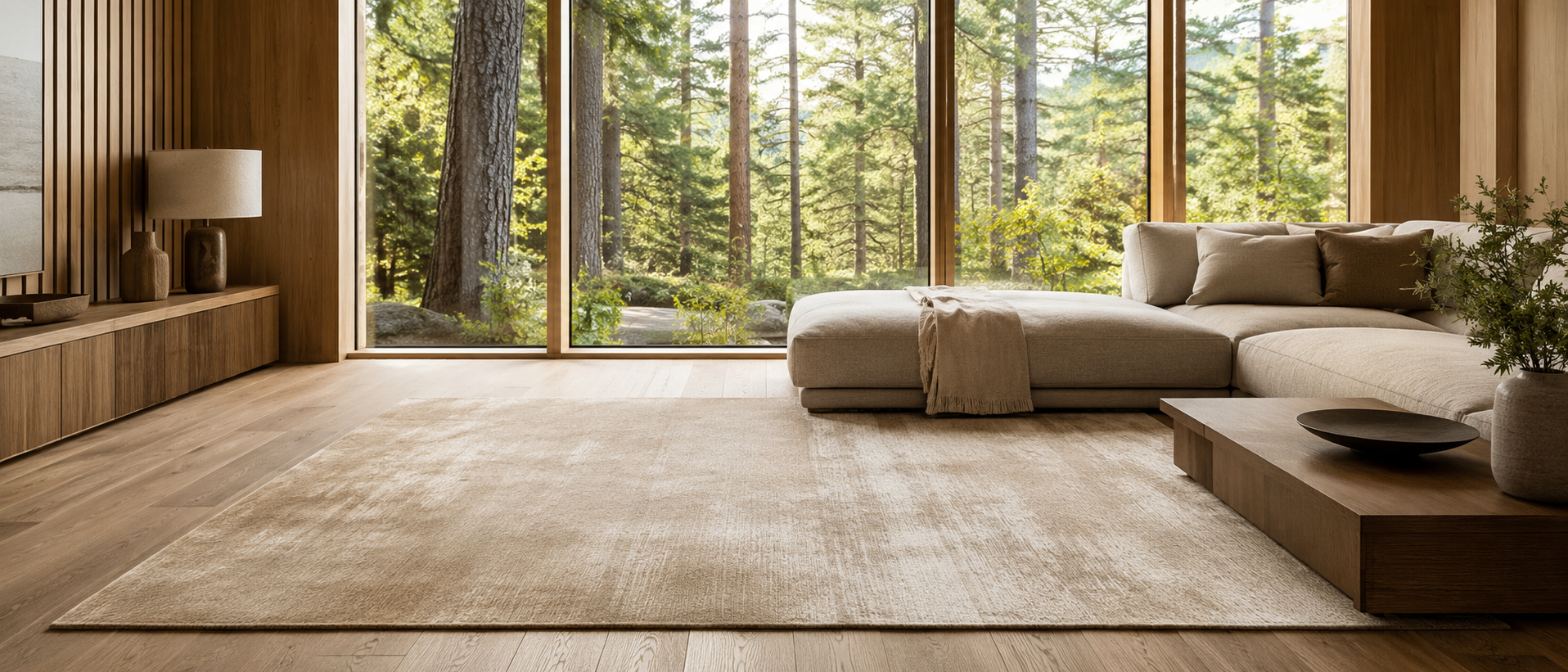
In a rug, TENCEL unfolds three characteristic qualities. First: an extraordinarily soft, smooth feel. The fibre lies fine and even, without the slight roughness of wool or the cool smoothness of synthetic fibres. Second: a silky, luminous sheen. The pile reflects light in a way that immediately lends a room elegant depth. Third: intense, clear colour impact. TENCEL absorbs colours well; tones appear vibrant and saturated.
Together, this creates a material that shows its strengths best in calm, modern rooms. TENCEL feels less earthy than wool or sisal and less technical than pure synthetic fibres. It is a material for rooms where atmosphere and tactility are set with intention.
Advantages of TENCEL Rugs at a Glance
- Extraordinarily soft feel: particularly pleasant underfoot, ideal for quietly used rooms.
- Silky sheen: lends floors an elegant, high-quality appearance.
- Intense colour impact: colours appear deep, clear and saturated.
- Plant-based raw material: cellulose from wood, no petroleum-based origin.
- More considerate production: closed-loop process with high solvent recovery.
- Premium design character: ideal for rooms where aesthetics and atmosphere are the priority.
Limitations and Restrictions: Where TENCEL Reaches Its Limits
TENCEL is not an all-round flooring option for every household. Moisture is the most critical factor: dampness can temporarily cause the fibres to swell, leading to rippling or structural changes. Liquids must therefore be blotted dry immediately and without rubbing.
Under heavy mechanical abrasion, TENCEL shows signs of wear more quickly than more hardwearing materials such as wool. Heavy furniture with hard castors, regular through-traffic or intensive use by children and pets will overstrain the material. For hallways, kitchens and dining rooms, more robust alternatives are better suited.
Caution is also required when cleaning: aggressive cleaning agents, heavy soaking or brushing can permanently damage the pile. For high-quality pieces, professional cleaning is recommended.
Caring for a TENCEL Rug: Dos and Don'ts
- Vacuuming: regularly with a brush-free suction nozzle or a soft roller brush, in the direction of the pile.
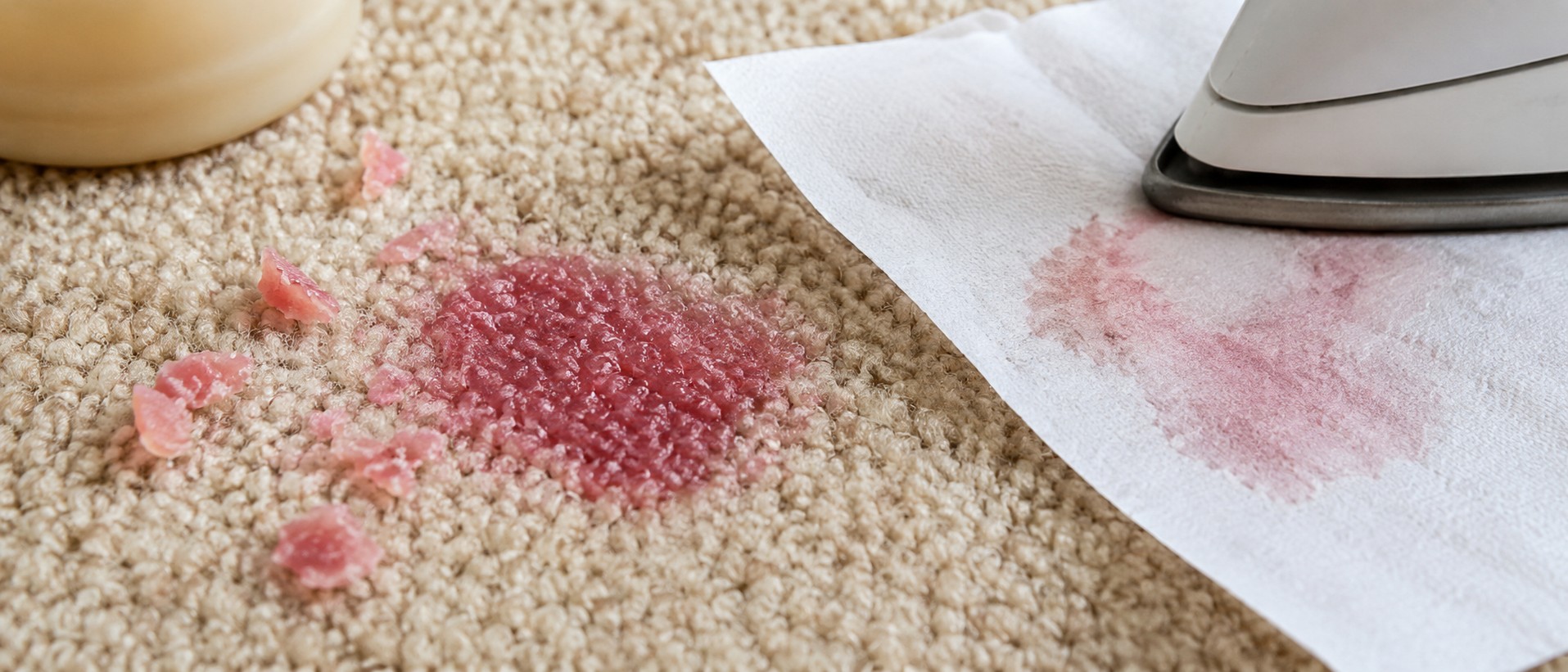
- Treat stains immediately: blot liquid dry, working from the outside inwards, without rubbing.
- Limit moisture: avoid heavy soaking, including during cleaning.
- Choose cleaning products: exclusively pH-neutral products; no household remedies such as vinegar or bicarbonate of soda.
- Professional cleaning: the safest option for larger stains or heavy soiling.
- Use an anti-slip underlay: protects the rug and prevents it from slipping on smooth floors.
TENCEL in Material Comparison
TENCEL and Viscose
Both fibres are derived from cellulose and are visually similar. Viscose is produced using a more complex, less closed process and performs less well in terms of environmental impact and processing quality. TENCEL Lyocell is generally more durable, clearer in its sheen and more precisely processed. Both materials share a sensitivity to moisture.
TENCEL and Wool
Wool clearly surpasses TENCEL in robustness, elasticity and suitability for everyday use. For family households, pet owners or heavily used living areas, wool is the more reliable choice. TENCEL, on the other hand, offers a smoother, finer surface and a more elegant, contemporary appearance. The decision depends on whether durability or atmosphere takes priority.
TENCEL and Silk
Silk achieves a sheen and fineness that TENCEL does not fully match. However, TENCEL is more accessible in price, easier to care for and more widely available. For rooms that sit between everyday living and luxury, TENCEL can be a very convincing alternative.
TENCEL and Synthetic Fibres
Compared with polyester, polypropylene and similar synthetic fibres, TENCEL feels significantly more natural and premium. Synthetic fibres score on durability and straightforward care. TENCEL convinces on feel, sheen and the desire for a material with a plant-based origin.
Room Recommendations: Where a TENCEL Rug Finds Its Best Place
Intensity of use is the deciding factor. Very well suited:
- Bedroom: quiet use, focus on feel and a sense of wellbeing.
- Dressing room and walk-in wardrobe: minimal abrasion, high design standards.
- Lounge and reception areas: representative setting, moderate use.
- Quiet living rooms without children or pets and with restrained use.
Conditionally suitable for living rooms with normal everyday use, provided intensive wear is not expected.
Less suitable for hallways, dining rooms, kitchens and children's rooms. Here, wool, sisal or robust blended fabrics are the more appropriate choice.
Who Benefits from a TENCEL Rug?
A TENCEL rug is aimed at people who make conscious material choices when furnishing and who place value on atmosphere, tactility and an elegant room effect. Design-conscious buyers who treat their rug with care and use it in quietly used rooms will be very satisfied with TENCEL.
Anyone looking for a hardwearing material for intensive everyday use, children or pets is better advised to choose wool or a robust blended fabric. TENCEL rewards careful and considered treatment of the material. Those who bring these qualities to it will receive a rug that lends a room genuine depth and elegance.
FAQ
How does TENCEL differ from other rug materials?
TENCEL vs. viscose: Same plant-based origin, but TENCEL Lyocell is produced using a more considerate closed-loop process and is generally more durable and clearer in its sheen. TENCEL vs. wool: Wool is more robust and better suited to everyday use. TENCEL offers a finer, smoother surface and a more elegant silky sheen. TENCEL vs. silk: Silk surpasses TENCEL in luxury status; TENCEL is easier to care for and more affordable. TENCEL vs. synthetic fibres: TENCEL feels more natural and premium, but is more sensitive than polyester or polypropylene. In short: TENCEL is the premium path between nature and technology, with a clear focus on elegance and feel.
Does TENCEL come from natural or synthetic sources?
Raw material: wood pulp, a plant-based, renewable origin. Production: industrial solvent process, not a purely natural treatment as with wool or sisal. Category: regenerated fibre, plant-based in origin, technical in production. Distinction: no petroleum-based raw material like polyester, but also not a natural material in the conventional sense.
How good is the ecological footprint of a TENCEL rug?
Strongest argument: the closed-loop production process recovers solvents to a very high degree and is more resource-efficient than conventional viscose processes. Wood sources: TENCEL Lyocell can be sourced from certified, sustainably managed forests. Staying realistic: dyeing, transport, care requirements and service life also shape the overall footprint considerably. Conclusion: TENCEL is a strong ecological argument, but not a blanket sustainability guarantee.
What makes TENCEL special as a rug material?
Feel: extraordinarily soft and fine, particularly pleasant underfoot. Sheen: silky, luminous shimmer that lends rooms elegant depth. Colour impact: colours appear deep, clear and saturated. Appearance: modern, calm premium character, neither rustic nor clinical. Origin: plant-based raw material, more considerate production process compared with standard viscose.
In which rooms is a TENCEL rug a sensible choice?
Very well suited: bedroom, dressing room, lounge and quiet living areas with moderate use. Conditionally suitable: living room without children or pets and with restrained everyday use. Less suitable: hallway, dining room, kitchen and children's room. Here, wool, sisal or robust blended fabrics offer greater reliability for everyday use. Rule of thumb: the quieter and more controlled the use, the better TENCEL fits.