Outdoor Rug Guide: Choosing, Caring for and Using Rugs on Balcony, Terrace and Garden
A signpost through the key outdoor questions
An outdoor rug turns a balcony, terrace or garden into a second living space. To keep it looking good across many seasons, several decisions work together: the right material, an honest read on weather resistance, a suitable format and a simple care routine. This guide arranges the topics and leads from the first choice through to winter storage. Each section sums up the essentials and points to the matching category.
Where the choice begins: the material
The fibre decides whether a rug can hold up outdoors. Polypropylene is the benchmark for open, unprotected areas: water-repellent, stable, quick-drying and, in many ranges, UV-resistant. Polyester and PET are close behind and often add a softer feel, with PET made from recycled material. Natural fibres such as jute or sisal bring warmth but belong under cover, as they store moisture. For an overview of suitable qualities, see the synthetic-fibre rugs and the full range of outdoor rugs.
Weatherproof does not mean right for every spot
Weather resistance is not a single property but the interplay of fibre, weave and location. Flat-woven models let water run off and dry fast, while high-pile ones hold moisture longer. On a south-facing balcony or a west-facing terrace, UV resistance becomes a condition of purchase rather than a bonus. For qualities built for permanent outdoor use, the weatherproof rugs category is the place to look.
Balcony, terrace, garden: three settings, three needs
The location shapes format and construction. A short overview:
- Balcony: an exact fit with a slim border, a non-slip backing on smooth tiles, a lighter format. The balcony rugs lead to the selection.
- Terrace: generous formats that clearly define a seating zone, plus a robust weave for chair movement. The terrace rugs offer the right sizes.
- Garden: stable, quick-drying qualities for changing surfaces. The garden rugs give an overview.
The right size and shape
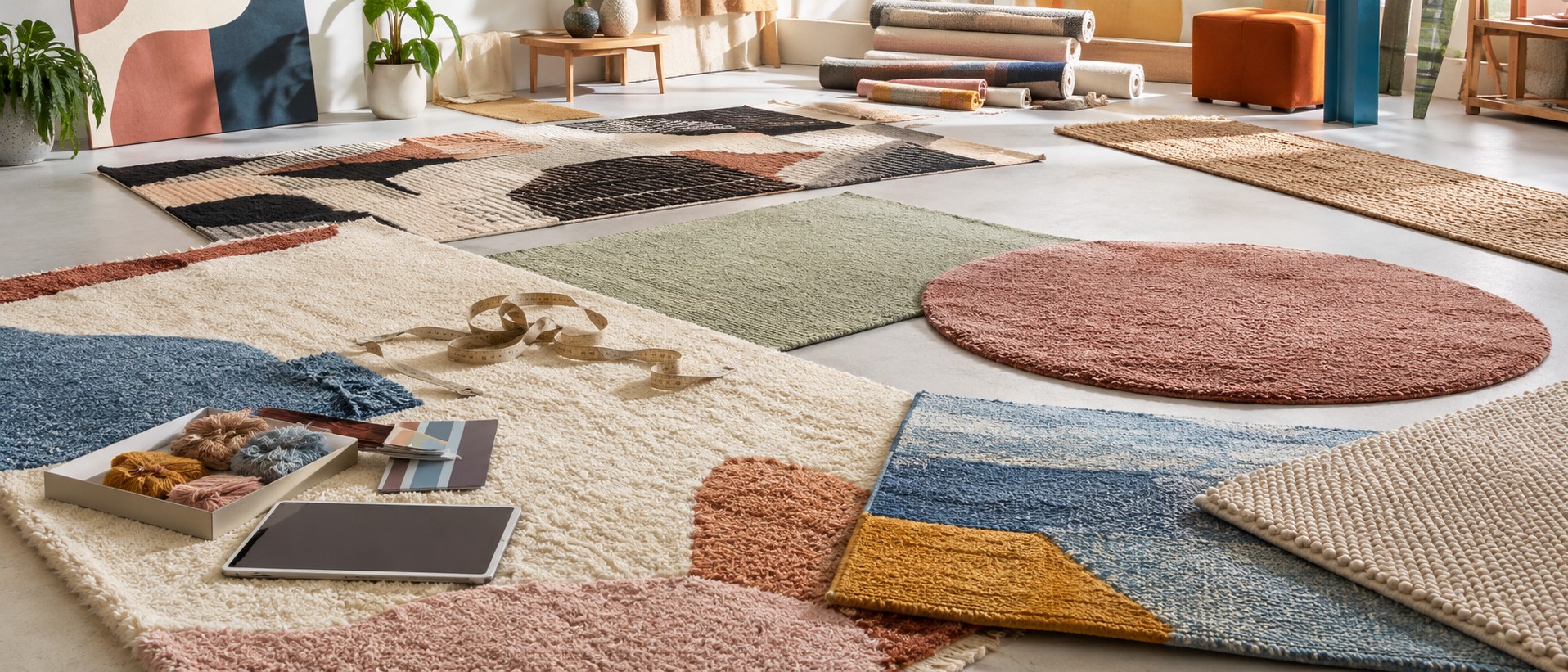
A rug that is too small looks lost; one that is too large creates trip edges. The rule for a terrace: the seating group stands with all its legs on the rug, or at least the front ones. For a space around three by four metres, a format from 200 by 300 centimetres works well. Round formats loosen lounge corners and bistro sets and break the strictness of rectangular layouts. Marking the area with tape beforehand shows the effect before the rug is ordered.
Everyday care and cleaning
The strong argument for synthetic outdoor rugs is their easy care. A simple rhythm is enough:
- Shake out or brush down regularly with a soft brush.
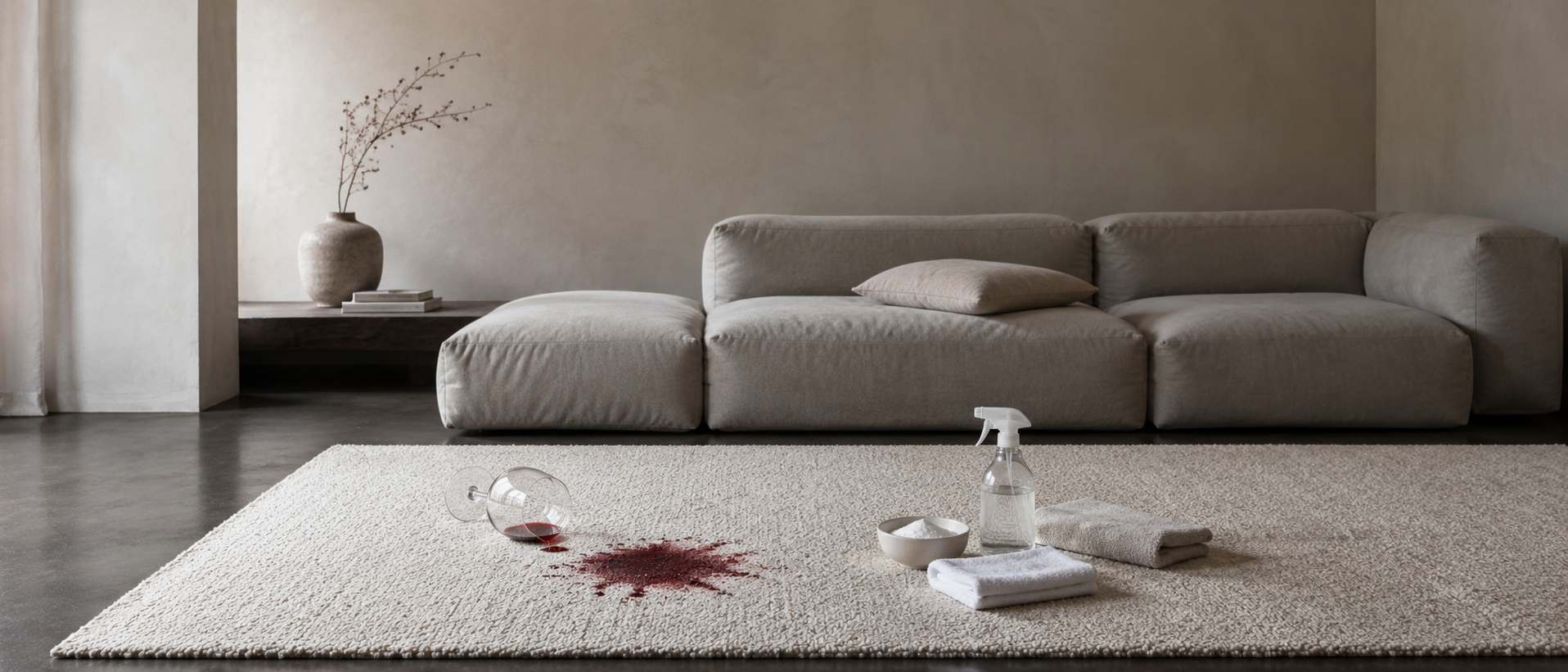
- When needed, rinse with a garden hose and a little mild soap, then rinse the soap out fully.
- Always let it dry completely before the rug lies flat again.
- After heavy rain, lift it so the underside can air.
Harsh cleaners, a pressure washer at close range and machine washing damage most fibres for good and remain the exception.
Preventing mould and storing for winter
Mould is first of all a moisture problem. It forms where damp sits for long, organic debris collects and air is missing. The most effective prevention is under-ventilation: lift the rug regularly, keep the surface free of leaves and ensure air can circulate on smooth floors. Before the winter break, the rug is cleaned, dried fully, rolled up loosely and stored in a dry, airy place. Damp cellars and airtight film are unsuitable.
Colours, patterns and style
Once the basics are sound, the look follows. Muted earth tones, sand and greige harmonise with wood, stone and planting and cope better with sunlight. Graphic and geometric patterns turn the rug into a design element and work best in calmly furnished outdoor areas. For warmth in the seating corner, terracotta, cognac or a soft green does the job. That is how a weatherproof floor covering becomes a rug that makes the outdoor space as liveable as the living room.
FAQ
Which outdoor rug suits a balcony, terrace or garden?
It comes down to location and fibre. Open balconies and uncovered terraces call for synthetics such as polypropylene, polyester or PET, because they barely absorb moisture and dry quickly. Covered areas and loggias also suit natural-look fibres. A garden setting additionally needs a stable weave and a surface that allows drainage.
How do I recognise a truly weatherproof outdoor rug?
A genuinely weatherproof rug combines three things: a moisture-repellent synthetic fibre, stated UV resistance and a flat weave that lets water run off. The manufacturer's care label is the binding reference. Muted, heathered colours cope with sunlight better than bold, solid shades.
What size should an outdoor rug be?
The rule of thumb: the rug should define the area in use, not merely fill it. On a terrace, all the legs of the seating group ideally sit on the rug, or at least the front ones. For a space around three by four metres, a format from 200 by 300 centimetres works well. On a balcony, an exact fit with a slim border avoids trip edges.
How do I care for an outdoor rug correctly?
Shake or brush it out regularly, rinse with a garden hose and mild soap when needed, then always let it dry fully. After heavy rain, lift the rug so the underside can air. Pressure washers, harsh cleaners and machine washing are unsuitable for most outdoor rugs.
Can an outdoor rug stay outside all year round?
Weatherproof synthetics can stay outside permanently, as long as the surface drains and air circulates beneath the rug. During lasting frost, snow or prolonged rain, rolling it up and storing it dry is the safer choice. This seasonal routine protects colours and fibres and clearly extends the rug's life.