Getting rid of an old rug: bin, bulky waste or a second life?
Up to 400,000 tonnes of carpet end up in the bin in Germany every year, and almost none of it gets recycled. When your old rug is lying in front of you, though, the first question is a practical one: where does it go, and what does it cost? The second, and arguably the bigger one: does it have to be thrown out at all? This guide sorts both. First the ways to pass a decent rug on or repurpose it, then how to dispose of it properly, with the German rules from household waste to the recycling centre.
Before you bin it: is there still life in it?
Not every rug that has served its time is waste. As long as it is clean and intact, a second home is waiting for it somewhere else. It only becomes a disposal case when stains, a flattened pile and a musty smell say otherwise. That order runs through the whole guide, from passing it on to the bin.
Household waste, bulky waste or the recycling centre?
For a whole rug there are three clean routes in Germany, and which one fits depends mostly on size and condition.
- Household waste, small pieces only. Small rugs and offcuts may go in the residual-waste bin, and only if they fit. Cut anything bigger into manageable pieces; a rough rule of thumb is around 1.20 metres per piece. Glued-down carpet, on the other hand, does not belong in household waste.
- Bulky waste, the standard route. A whole, rolled-up rug counts as bulky waste, known as Sperrmüll. You register it with your local council and collection usually follows within about three weeks. Many councils include one free collection per household per year, larger cities sometimes more. Beyond that, a pickup costs roughly 20 to 60 euros.
- The recycling centre, if you drive it yourself. Dropping off one or two medium-sized rugs is often free; larger amounts attract a fee. For fitted carpet, expect around 3 to 5 euros per square metre loose-laid and 5 to 12 euros glued. If more than about 20 per cent adhesive or screed residue is stuck to it, it is often reclassified as construction rubble and costs more.
All the figures are guide values. What you actually pay, and how many free collections you get, is set by your council, so a quick look at their waste page saves surprises.
Too good to bin: pass it on
A rug with plenty of wear left is wasted on bulky waste. Moving it on is quick.
- Sell or give it away. On classifieds sites you tend to find a taker fast, and a free listing goes even quicker. Good daylight photos and clear measurements help.
- Donate it. Charity shops, social department stores and organisations like Caritas take well-kept rugs. The condition has to be clean and undamaged; a worn-out piece is no help to anyone there.
Is an old rug actually recycled?
The blunt answer: barely. In Germany only around three per cent of rugs are recycled; the bulk is incinerated or, at best, downcycled into simpler products such as buckets or plant pots. The cause is the build-up. A rug bonds its wear layer, backing fabric and a latex or adhesive base firmly together, and once different fibres are mixed, the material can no longer be sorted cleanly.
There is no nationwide take-back scheme for private households. The well-known circular programmes run by big manufacturers target carpet tiles in the commercial and contract sector, not the living-room rug. For you that means banking on working recycling is a dead end; passing the rug on or repurposing it does far more for the environment. One point from materials science helps: natural fibres such as wool, sisal and jute rot down in the end, which is more than polyester and polypropylene will ever do.
Upcycling: turn old into useful
Even a worn rug usually has usable areas left. Four ideas that need no special tools.
- A scratching mat for the cat. A piece of sisal or jute rug screwed to a board saves the pricey scratching post from the pet shop. Cats take to the coarse texture.
- A door or entrance mat. A hard-wearing offcut in doorway width, hemmed and backed with anti-slip tape, keeps the dirt on the threshold from now on.
- Floor protection for the cellar, garage or boot. In a workshop, shed or car, an old rug serves as a tough underlay for years.
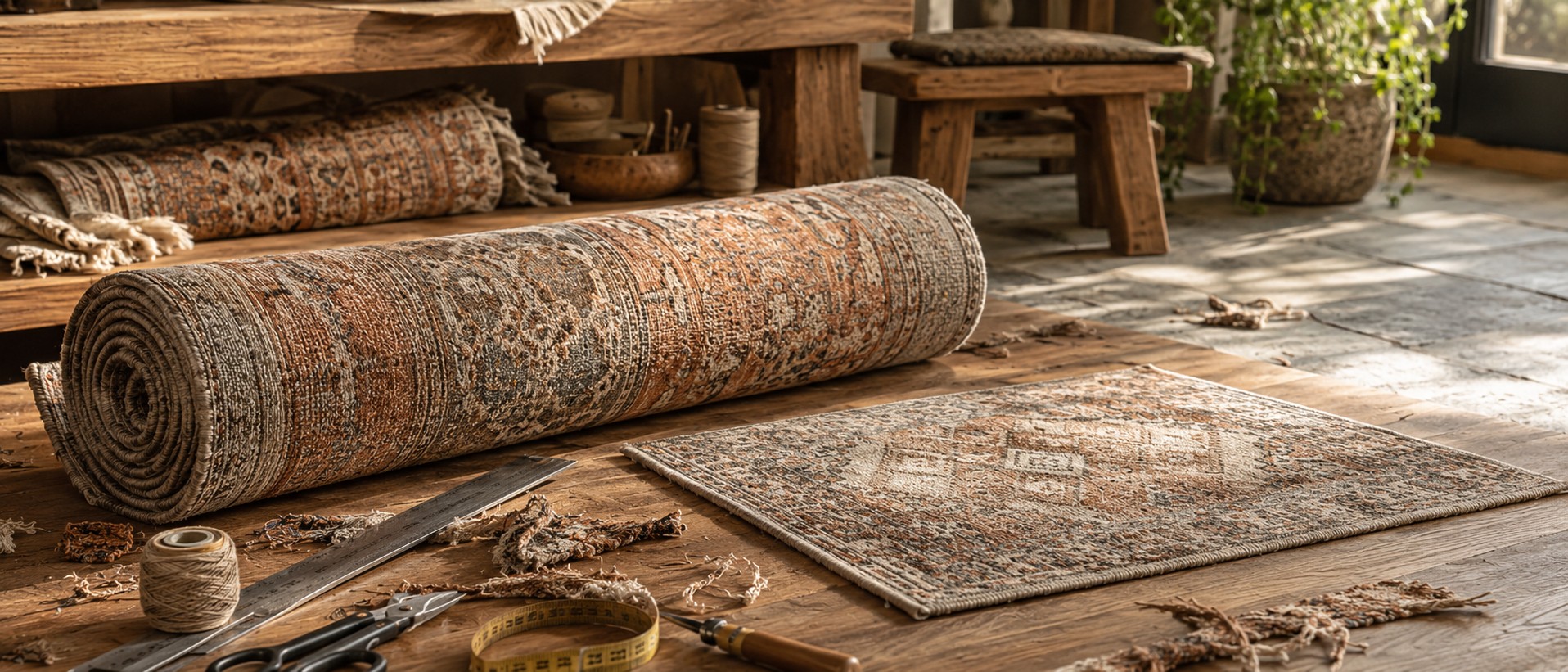
- Cut a runner. If only one corner is worn through, the rest still holds a slim runner for the hall or kitchen. Fix the edges and the good part stays in use.
A bit more adventurous but doable: hung on the wall an offcut dampens sound on the side, and a strip under the door keeps out draughts.
From best to last resort
If you keep one rule, keep this ranking.
- Keep using it, whether in another room or in someone else's hands.
- Give away or sell via classifieds or a charity shop.
- Upcycle it into a mat, an underlay or a runner.
- Dispose of it properly through bulky waste or the recycling centre.
The higher up you land, the better for the environment and your wallet. Disposal is the emergency exit, not the front door.
The bottom line
The quickest route is rarely the best, and with a rug the better one costs hardly any extra effort. A good piece finds a new home through classifieds, a tired one still earns its keep as a scratching mat or a cellar underlay, and if disposal really is all that is left, it goes there in order through bulky waste or the tip. What matters in the end is not how fast the rug is gone, but that it does not get burned for nothing.
FAQ
Does an old rug go in household waste or bulky waste?
A whole, rolled-up rug is bulky waste, collected after you register it. Only small rugs or cut offcuts that fit go in the residual-waste bin. Glued-down carpet belongs in neither and goes to the recycling centre.
What does rug disposal cost?
Many councils collect bulky waste free once a year; each further pickup costs roughly 20 to 60 euros. At the recycling centre small amounts are often free, while fitted carpet runs about 3 to 12 euros per square metre. Your council sets the exact rates.
Can I cut a rug up to dispose of it, and how small?
Yes; for the residual-waste bin cut it into manageable pieces, a rough rule being around 1.20 metres. That only applies to small rugs and offcuts, though; a large rug stays bulky waste.
Are old rugs really recycled?
Barely. In Germany only around three per cent are recycled; the rest is burned or at best downcycled. The reason is the firm mix of fibre, backing fabric and base coat. There is no take-back scheme for private rugs.
Where can a still-good rug go?
Classifieds sites and neighbourhood apps find a taker fast, and giving it away is quicker still. Charity shops and Caritas also accept well-kept rugs. The one condition is a clean state without major damage.