7 Compelling Reasons for a Rug
The room echoes, the furnishings look somehow unfinished, the parquet floor suffers under chairs and furniture: many home problems share the same solution. Those looking to buy a rug will find here seven factual arguments that go far beyond aesthetics and show why a high-quality rug ranks among the most effective investments in the home.
1. Craftsmanship and Quality: A Piece of Living Culture
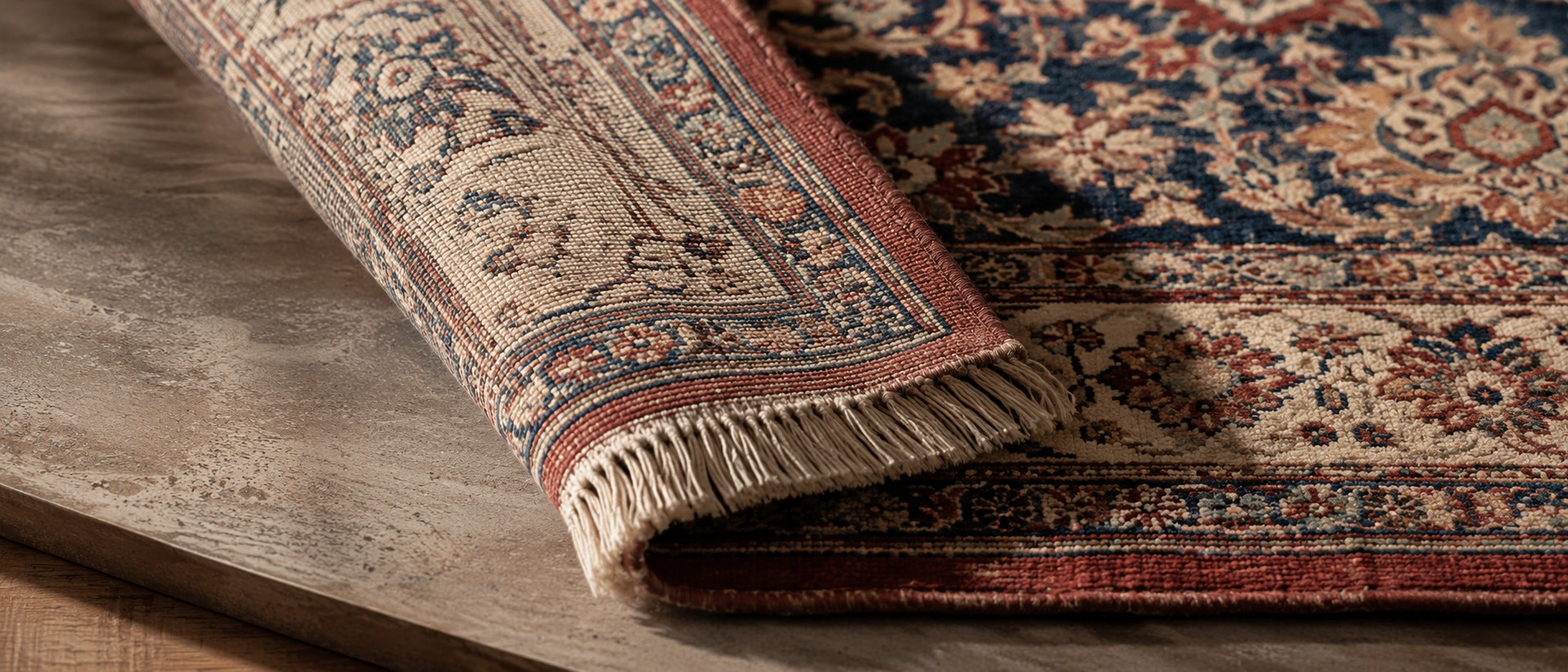
Hand-knotted rugs from Nepal, Persia or Morocco carry stories that no machine-made accessory can tell. Pattern, material and workmanship make every piece unique. A silk rug with fine knotting or an elaborately woven wool rug from sustainable production acts in a room as an object with its own character, timeless and unmistakable.
Longevity reinforces this value: well-maintained rugs made from wool or silk last for decades and can be passed from generation to generation. This sets them fundamentally apart from short-lived furnishing items.
2. Improving Acoustics: Less Echo, More Calm
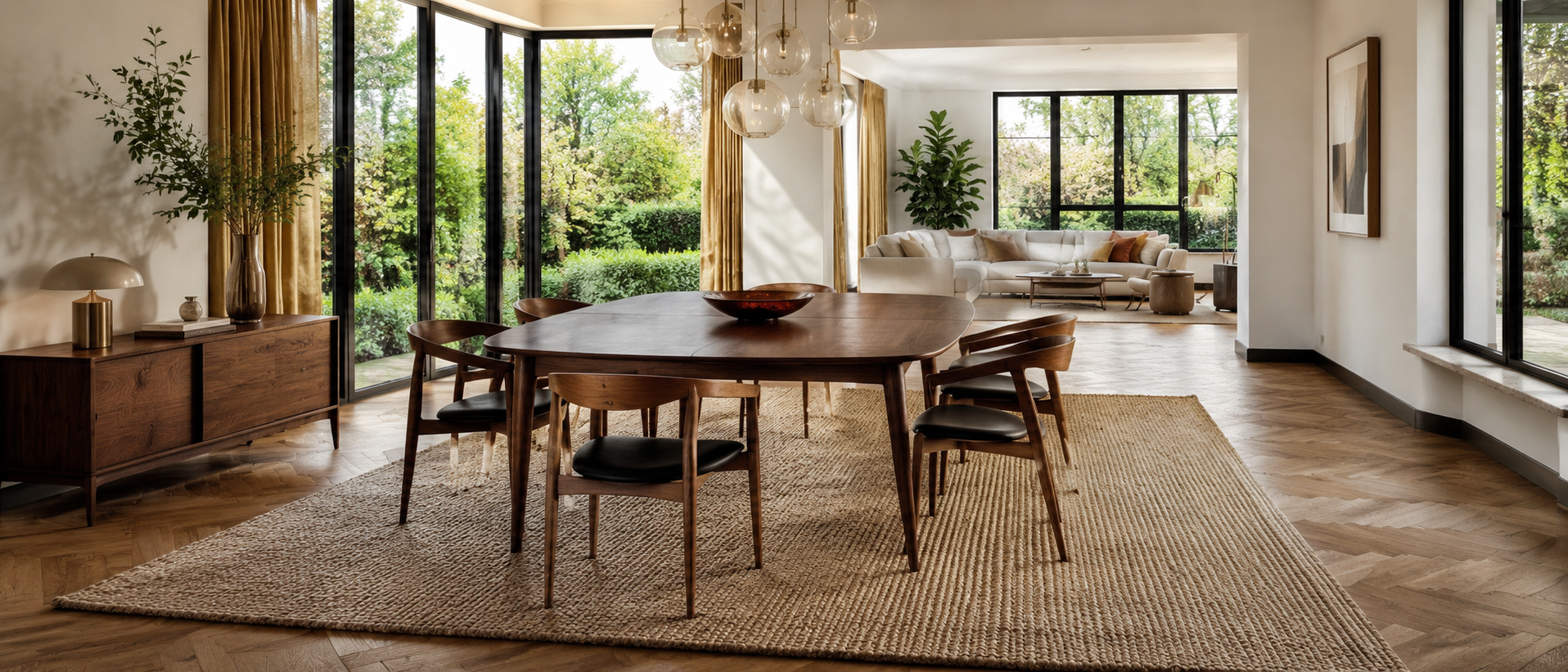
Parquet, concrete, natural stone and large glass fronts reflect sound. The result is echoing rooms that sound loud and restless. A rug absorbs sound waves, dampens footfall noise and creates a noticeably calmer room atmosphere. This effect is particularly pronounced in open-plan layouts or flats with high ceilings.
A dense wool rug with a high pile achieves the strongest acoustic results, as wool naturally possesses sound-absorbing properties. An additional rug underlay enhances the effect and simultaneously improves the stability of the rug.
3. Room Effect and Zoning: Structure at a Glance
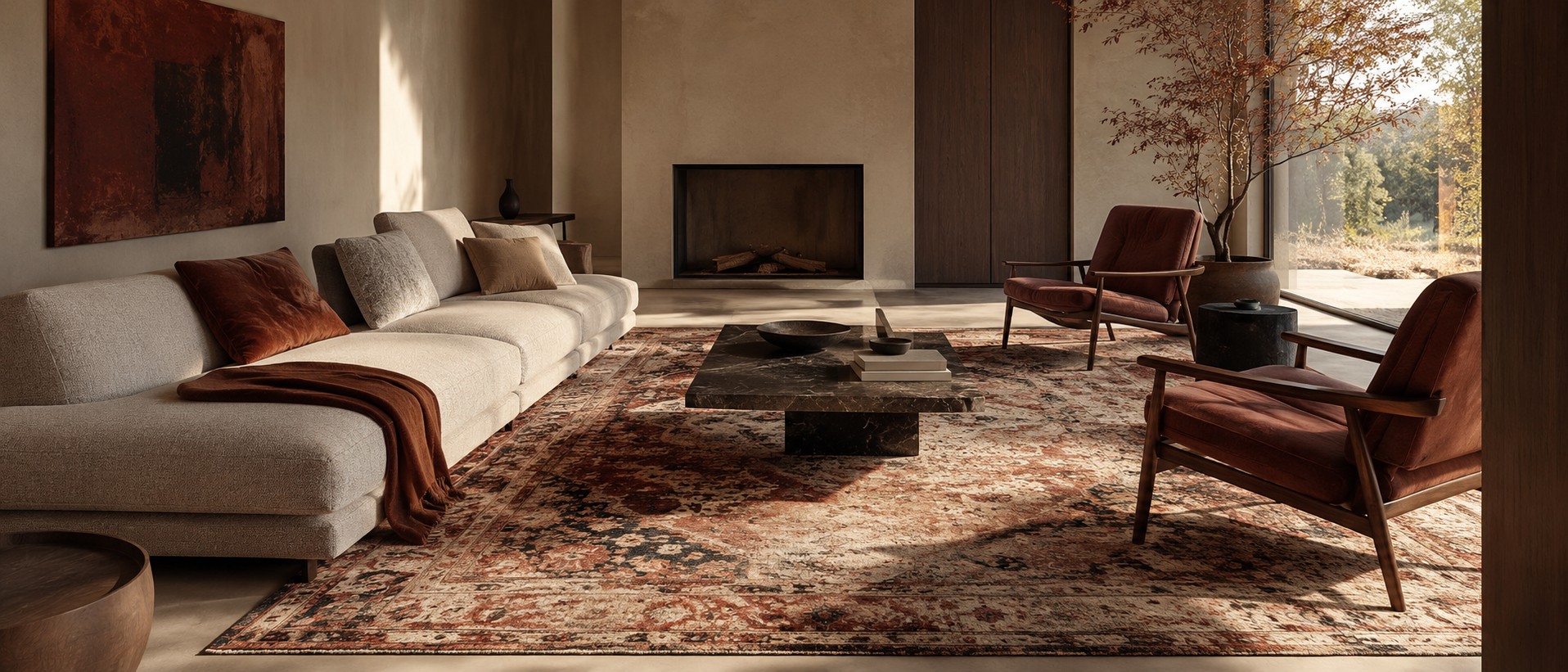
Open living areas gain immediate legibility from a rug. It defines seating, dining or working zones and gives groups of furniture a shared visual anchor. A sofa, coffee table and armchair on a shared rug surface form a cohesive unit rather than a loose collection of furniture.
Large-format rugs act like a soft architectural layer: the room appears more considered, higher in quality and self-contained. The room effect of a rug is created above all by the right size, a well-chosen colour and the consistent integration of the furniture.
4. Feel and Comfort: Experienced Barefoot
Anyone who walks barefoot over a high-quality rug in the morning feels the difference compared to any hard floor immediately. Softer, warmer, more pleasant: the experience depends greatly on the material.
- Wool provides warmth, cushioning and remains hardwearing even with intensive use.
- Silk offers a cool, smooth touch and a characteristic sheen.
- Viscose and Tencel feel silkily soft and reflect light in a distinctive way.
- Sisal and other natural fibres impress with a robust, earthy texture and a natural appeal.
Comfort starts at floor level. A rug changes the entire relationship with a room and makes it tangibly more homely every day.
5. Floor Protection and Preservation of Value
Parquet, natural stone and high-quality design floors are costly investments. Wear tracks, furniture scratches and localised abrasion leave permanent damage on unprotected surfaces. A rug protects precisely the zones that are subjected to the most stress every day.
The argument is purely rational: those who spend a great deal of money on a floor significantly extend its lifespan with a rug. Particularly under dining tables, sofas and in thoroughfare areas, this protective effect pays off over the long term.
6. Style Anchor in Interior Design: Furniture Becomes a Concept
Sofa, sideboard, armchair, coffee table: without a unifying element, even high-quality individual pieces of furniture appear disconnected. A rug takes on the role of style anchor. It picks up colours, sets contrasts or repeats patterns from textiles and accessories.
A silk rug with a fine pattern instantly gives a plain room depth. A flat wool rug in earthy tones harmonises different wood tones and textiles into a coherent overall look. The right rug makes the difference between an assembled interior and a considered interior concept.
7. Hygiene and Indoor Air: Maintenance Is Decisive
The assumption that rugs are inherently unhygienic does not hold up to objective scrutiny. Short-pile, densely woven rugs bind dust particles rather than stirring them up with every step. On smooth hard floors, by contrast, house dust circulates through the room again with every movement.
For allergy sufferers, the key factors are: short pile, a dense surface structure and regular vacuuming with a powerful machine. There is no blanket recommendation, but with consistent maintenance a rug fits seamlessly into a hygienic living environment.
Conclusion: Seven Reasons for a Sound Decision
Whether echoing rooms, furnishings that look unfinished, sensitive floors or a lack of homeliness: those who know the seven reasons for rugs make their purchasing decision on a factual basis. The decisive factors are the right size, the appropriate material and a quality that stands the test of time and is perceptible every day.
FAQ
What speaks in favour of getting a rug?
Rooms appear more structured and higher in quality through clear zoning. Echo on hard floors is noticeably reduced. Barefoot comfort increases significantly thanks to soft, warm surfaces. Sensitive floors such as parquet or natural stone are protected from wear. Individual pieces of furniture come together to form a coherent interior concept.
What properties must a rug have in order to dampen sound?
Large surface area: the more floor area is covered, the more sound is absorbed. Dense, high pile absorbs footfall noise more effectively than flat, loosely woven structures. Materials such as wool or heavy natural fibres are naturally sound-absorbing. A rug underlay further enhances the acoustic effect.
How suitable are rugs really for allergy sufferers?
Short-pile rugs with a dense structure bind dust particles rather than stirring them up. Regular vacuuming with a powerful machine is essential. Occasional deep cleaning maintains hygiene over the long term. There is no blanket guarantee: maintenance and choice of material are the deciding factors. With consistent care, a short-pile rug is a practical everyday solution.
How large should a rug in the living room be as a minimum?
Plan generously: all the main pieces of furniture in a seating group should have at least their front legs on the rug. Rugs that are too small make furniture appear visually disjointed and look lost. When in doubt, go one size larger: the room gains calm, structure and a sense of space. Before buying, measure out the dimensions in the room using masking tape or newspaper.
Why is an expensive rug worth its price?
High-quality materials such as wool, silk or Tencel age more gracefully and feel better over time. The service life is significantly longer than with lower-priced alternatives. Dense weaving, rich colours and refined surfaces have a stronger impact in a room. Handcrafted pieces are individual: no two examples are exactly alike. Long-lasting handmade rugs can be used and passed on over decades.