Buy a rug bridge: small rug, clear impact
Buy a rug bridge: clarify the term first, then decide
Before you set out to buy a rug bridge, a brief clarification is worthwhile. Many people use the words rug bridge, runner, and hallway runner interchangeably, and the wrong format ends up in the basket. A rug bridge is a small, elongated rug. It bridges open floor areas or gaps between larger rugs and is used in the hallway, the bedroom, and the living area.
Anyone who grasps this one point will find choosing much more straightforward. It is about a compact rug for a specific area, not a large surface that covers an entire room.
Rug bridge vs runner: where the line falls
The difference between a runner and a rug lies primarily in the shape. Runners are elongated and narrow; classic rugs are wider and mostly rectangular. Larger rugs cover whole rooms, while narrow runners are typically found in kitchens or hallways.
And the rug bridge? A runner is usually used in hallways and longer corridors. The smaller rug bridge serves a targeted purpose: bridging bare floor areas between living zones. A useful image: you have two room rugs and an empty stretch of floor in the passageway between them. The bridge closes exactly that gap. A runner, by contrast, accompanies you over a longer stretch, such as along a corridor.
Formats at a glance: 60x100, 70x140, and metre-cut lengths
When it comes to dimensions, the rug bridge stays deliberately compact. Two formats appear again and again in retail:
- 60x100 cm: a common standard size for small-format rugs and runners.
- 70x140 cm: considered the classic rug bridge size. It structures the floor visually without overwhelming the room.
- Metre-cut lengths: rug runners available by the metre can also be cut to a shorter length to serve as a rug bridge.
Keep 70x140 cm in mind as the upper limit. Once it gets noticeably larger, you are talking about a different type of rug.
| Format | Typical use |
|---|---|
| 60x100 cm | Small transitions, mats, short passageways |
| 70x140 cm | Classic bridge in the hallway, in front of the bed, in a passageway |
| Metre-cut lengths | Individual length to measure |
Rug bridge in the hallway: dirt-catcher and eye-catcher at once
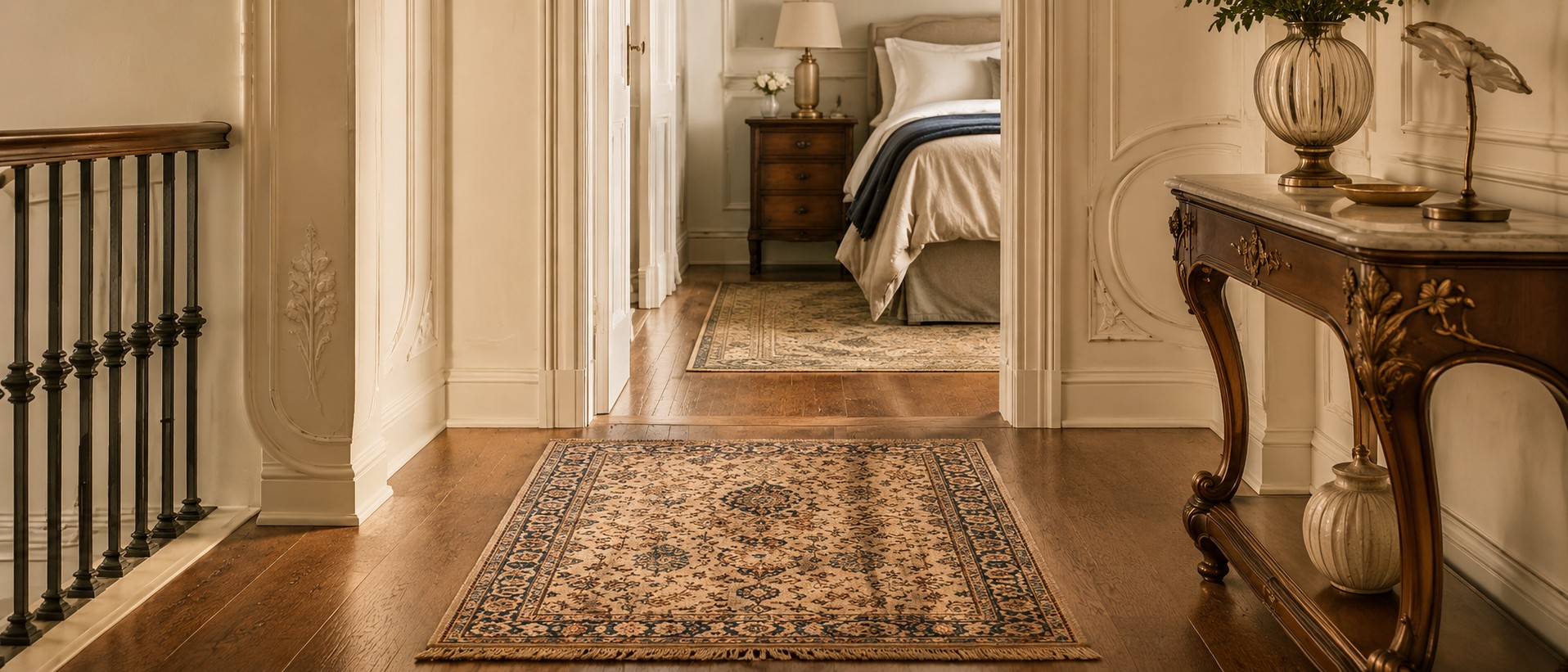
In the hallway, this small rug shows what it can do. Picture a narrow hallway in a terraced house: from the entrance to the stairs, a 70x140 hallway runner works perfectly as a corridor rug. It catches dirt from shoes while at the same time adding a visual accent to an otherwise plain entrance area.
Comfort plays a role too. The warming and impact-sound-dampening properties make standing on the bridge more pleasant. On a cold floor, it insulates and noticeably increases the comfort of the space.
Also in the bedroom and living area
In the bedroom, you place the rug bridge alongside or in front of the bed, for a warm surface right after getting up. In the living area, it accentuates a smaller seating group or a passageway. It always retains the character of a compact hallway rug, not a room-filling covering.
Robust material for high-traffic paths: why synthetic fibre scores in the hallway
In the hallway, someone walks over it every day, often in shoes. The material needs to cope with that. Synthetic fibres such as polypropylene are affordable, easy to care for, and resilient, making them suitable for heavily used rooms and even outdoor areas. A solid choice for the entrance area.
Other materials have their own strengths:
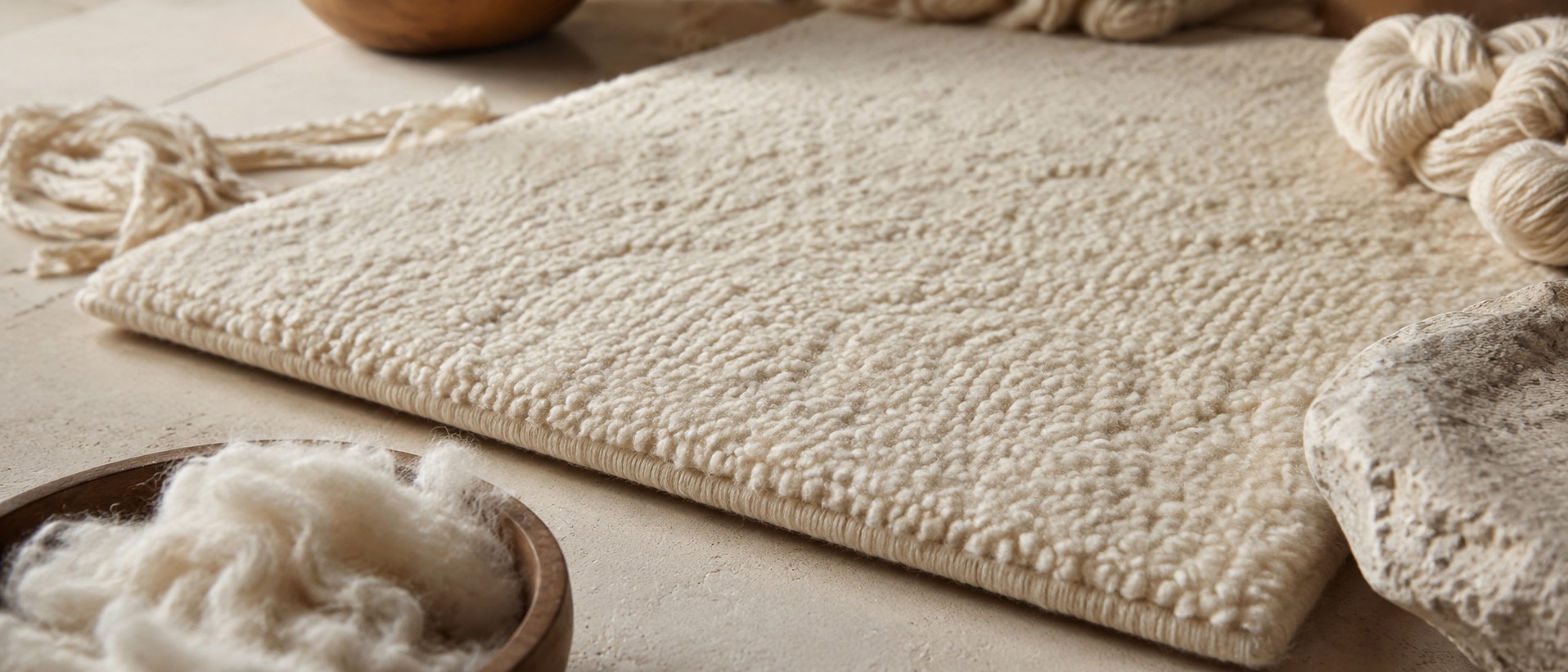
- Wool: breathable and hardwearing, provides warm underfoot comfort and has sound-absorbing properties.
- Pure new wool: good thermal insulation and also regulates moisture in the room.
- Cotton: soft and often washable, making it particularly suitable for children's rooms or bathrooms.
- Sisal: moisture should be avoided here, otherwise staining or warping of the material may occur.
Non-slip on smooth floors: anti-slip backing and underlay mats
Small rugs such as runners or mats tend to slip on smooth floors. The smoother the floor surface, the less grip the laid rug has. On parquet, tiles, or marble, a bridge will happily wander on its own.
Two approaches help: an anti-slip backing provides secure grip. If that is absent, you place a separate non-slip underlay mat underneath. It increases the friction between rug and floor and prevents slipping as well as the formation of creases. A practical example: a non-slip underlay mat beneath the hallway rug so that it stays in place on the tiles.
Harmful substances and certifications: Blue Angel, GuT, and Stiftung Warentest
When purchasing, it is worth checking for quality certifications. Stiftung Warentest tested 50 carpet tiles for odours and harmful substances; in general, no health risks were identified. The Blue Angel certification is recommended as a guide: it prohibits or restricts 51 of the 59 critical substances identified in one study.
In addition, testing institutes such as the TFI in Aachen verify within the framework of the GuT certification whether rugs are odour-neutral and low in harmful substances. If indoor air quality and material quality matter to you, these labels give you a reliable reference point when buying.
FAQ
Rug bridge or runner: what is the difference?
A rug bridge is a small rug that specifically bridges bare floor areas between living zones. A runner is elongated and narrow and generally accompanies longer stretches such as hallways and corridors. The difference lies primarily in shape and purpose: the bridge closes a gap, the runner covers a stretch.
Which material is best for a rug bridge in the hallway?
For heavily used hallways, synthetic fibres such as polypropylene are a good choice. They are affordable, easy to care for, and resilient, making them suitable for the daily high-traffic entrance area. Wool or pure new wool, by contrast, offer more warmth and absorb sound more effectively.
How do I keep a rug bridge securely in place on tiles?
Most easily with an anti-slip backing or a separate non-slip underlay mat placed underneath. Small rugs slip easily on smooth floors; the smoother the surface, the less grip it has. The underlay mat increases the friction between rug and floor and prevents slipping and the formation of creases.
What should I look out for regarding harmful substances and certifications?
The Blue Angel certification is a useful guide; it prohibits or restricts 51 of the 59 critical substances identified in one study. The GuT certification also provides information: testing institutes such as the TFI in Aachen verify whether rugs are odour-neutral and low in harmful substances.
Which formats are standard for a rug bridge?
Common sizes are 60x100 cm and 70x140 cm, with 70x140 cm considered the classic rug bridge size. Anyone needing an individual length can have runners cut from metre-length stock. The compact character is key: the bridge remains a small rug.