Virgin Wool Rug: Properties, Care and What to Look for When Buying
Living Comfort and Material Quality: What Makes a Virgin Wool Rug Special
Imagine stepping barefoot onto a soft, warm floor in the morning, even though cold hardwood lies beneath. This everyday experience captures exactly what virgin wool has been valued for as a rug material for centuries. There is more behind the term than a quality mark on a label: virgin wool combines measurable functional benefits with a tactile quality that synthetic fibres simply cannot replicate. This guide explains the material, highlights its strengths in everyday use and offers practical advice on care and purchasing.
What Sets Virgin Wool Apart from Ordinary Wool
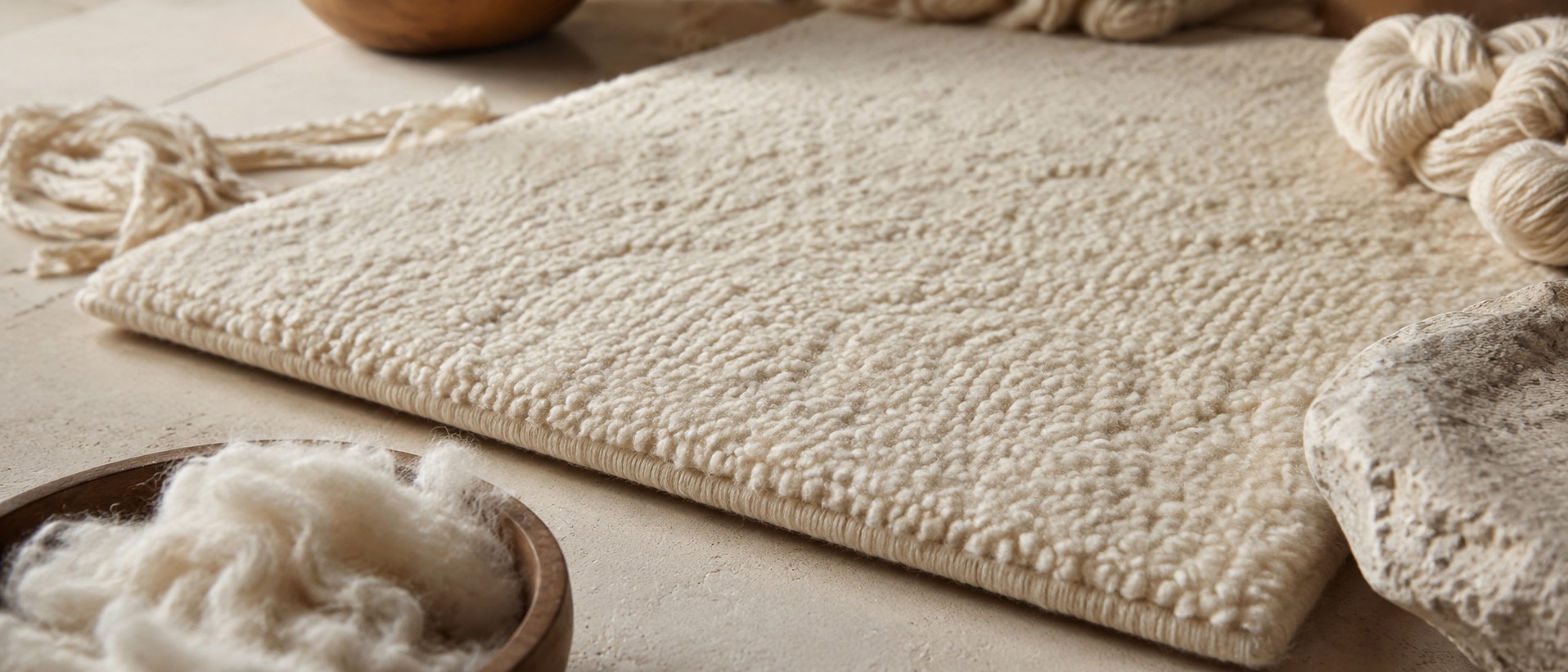
Virgin wool refers to fresh, unused wool shorn directly from living sheep. The decisive difference from recycled or shoddy wool lies in the intact fibre structure: every fibre is elastic, naturally crimped and surrounded by a fine scaly surface. This structure is the foundation for all of the material's special properties.
Quality differences emerge at this very level. Finer fibres, more careful processing and the origin of the sheep all play a role. Merino wool, for example, is known for its exceptional fineness, while coarser wools are more robust and hard-wearing. For rugs, medium to coarser wool qualities are frequently chosen, as they withstand foot traffic, abrasion and contact with furniture more durably.
The Material Properties in Detail
Warmth and Softness Through Trapped Air
The natural crimp of the wool fibre traps fine air pockets between the fibres. Air is a poor conductor of heat, which is why a virgin wool rug feels noticeably warmer and softer on hard floors than comparable flat-weave rugs made from synthetic materials. This physical effect is particularly noticeable in bedrooms and living rooms with underfloor heating or on screed.
Moisture Regulation and Indoor Climate
Wool fibres are among the few natural materials that can actively absorb water vapour and release it again when humidity drops. Virgin wool can bind up to around one third of its own weight in moisture before it begins to feel damp. This mechanism helps to buffer fluctuations in indoor humidity. In addition, specialist studies describe how wool textiles can absorb certain indoor pollutants such as formaldehyde, nitrogen dioxide and sulphur dioxide. Absolute promises regarding air purification would be an overstatement, but the potential to positively influence indoor climate is scientifically documented for virgin wool.
Natural Dirt Resistance Thanks to Fibre Structure
The natural wool grease (lanolin) and the scaly surface of the fibre make it difficult for dirt and liquids to penetrate deeply. Dust and dirt particles tend to settle on the fibre surface and can be reliably removed by vacuuming. In everyday use, virgin wool proves more robust than many buyers anticipate.
Fire Behaviour and Anti-Static Properties
Virgin wool ignites at significantly higher temperatures than most synthetic fibres and does not melt but chars. This behaviour makes it a safety-relevant material for living spaces. In addition, wool barely builds up static charge. The unpleasant crackling when walking over synthetic fibre rugs does not occur with virgin wool.
Sustainability and Renewability
Virgin wool grows back annually, is biodegradable and requires significantly fewer fossil raw materials in production compared to synthetic fibres. A high-quality virgin wool rug used for twenty or more years has a considerably better environmental footprint than a cheap synthetic fibre rug replaced after five years.
Everyday Care: What Really Matters
Regular Vacuuming as the Basis
Regular vacuuming is the most important care measure. Since dirt tends to settle on the fibre surface, it can be removed effectively with a vacuum cleaner before it works its way into the pile. A vacuum without a rotating brush system, or with reduced brush speed, is recommended to protect the fibres.
Treating Stains Correctly
For liquids, the rule is: react immediately and blot with a clean cloth (do not rub). For more stubborn spots, lukewarm water with a mild wool detergent is suitable. Aggressive cleaning agents, bleach and intensive wet cleaning can permanently damage the fibre structure.
Initial Shedding: A Normal Process
With hand-tufted or high-pile virgin wool rugs, fibres may come loose during the first few weeks. These are loose short fibres from the production process, not a quality defect. After several rounds of vacuuming, this shedding generally stops completely.
How to Recognise a High-Quality Virgin Wool Rug
The material designation alone is not sufficient as a quality criterion. The following points provide important guidance when buying:
- Pile height and density: A dense, well-crafted pile cushions better and lasts longer.
- Weight: Rugs with a higher weight per square metre contain more material and are generally more durable.
- Backing: A stable backing made from cotton or jute indicates careful craftsmanship.
- Dyeing: High-quality wool rugs are dyed with colourfast dyes or plant-based pigments that do not fade even after years of use.
- Construction: Hand-knotted rugs from traditional production regions stand for exceptional depth of craftsmanship and individual quality.
Virgin Wool in Comparison: Strengths and Limitations
Virgin Wool vs. Synthetic Fibre
Synthetic fibres such as polypropylene or polyester score points with lower purchase prices and high moisture resistance. For outdoor areas or rooms with direct water contact, they can be a sensible choice. In living spaces, where tactile quality, indoor climate, fire behaviour and durability are decisive, virgin wool clearly demonstrates its strengths. Synthetic fibres build up static charge, melt under heat and are barely biodegradable.
Virgin Wool vs. Cotton
Cotton rugs are soft and frequently washable, but less elastic and insulating than wool rugs. They flatten more quickly under load. The natural crimp of the wool fibre ensures that virgin wool rugs spring back more durably and retain their shape for longer.
Virgin Wool vs. Jute and Viscose
Jute impresses with a natural, rustic character, but is sensitive to moisture and offers less softness. Viscose imitates a silky sheen but is high-maintenance and particularly sensitive to dampness. Virgin wool offers the more balanced combination of durability, comfort and everyday suitability.
Who Benefits Most from a Virgin Wool Rug?
A virgin wool rug is particularly well suited to rooms where natural materials, a pleasant living atmosphere and lasting quality take centre stage. It is well suited for:
- Living rooms as a central design and comfort element
- Bedrooms for a warm, pleasant underfoot feel on hard floors
- Reading corners, home offices and representative living areas
- Families who value dense construction and robust colours
For allergy sufferers: wool can bind dust particles that are removed again when vacuuming. However, individual sensitivities to wool fibres are possible. Anyone uncertain should seek medical advice before purchasing.
The higher purchase price becomes relative over the period of use: a well-crafted virgin wool rug accompanies a room for many years, often decades, and gains character along the way.
FAQ
What properties make virgin wool a premium fibre?
Fresh, unused wool shorn directly from living sheep with an intact, naturally crimped fibre structure Trapped air pockets provide a warm, soft feel underfoot Active moisture regulation: absorbs water vapour and releases it again Naturally difficult to ignite, does not melt With good craftsmanship, exceptionally durable and dimensionally stable
How much effort does caring for a virgin wool rug really involve?
Regular vacuuming is sufficient as basic care in everyday use The natural fibre surface prevents dirt from penetrating deeply into the pile Blot stains immediately (do not rub), use lukewarm water and a mild wool detergent Avoid aggressive cleaning agents and intensive wet cleaning Initial shedding with high-pile models is normal and settles after a few weeks
Does the quality of a virgin wool rug justify the higher price?
High durability: well-crafted virgin wool rugs last for decades Stable appearance and shape even after years of intensive use Measurable everyday benefits: warmth, moisture regulation, pleasant underfoot feel Natural material with a better environmental footprint than short-lived synthetic alternatives Cost per year of use is lower than with cheaper, less durable rugs
Where does virgin wool have the edge over synthetic fibre?
Considerably more pleasant to the touch and warmer underfoot Barely builds up static charge, no crackling when walking over it Difficult to ignite, does not melt, no hazardous melting behaviour under heat Biodegradable and made from a renewable raw material Synthetic fibre can be more practical for outdoor areas or very high moisture exposure
In which rooms does a virgin wool rug make the most sense?
Living rooms: as a warming centrepiece and design anchor in the space Bedrooms: a pleasant barefoot feel on cold hardwood or screed Reading corners and home offices: calm, acoustic dampening and a high-quality atmosphere Representative areas where natural materials and quality should be visible In heavily used spots, pay attention to dense construction and a colour suited to everyday life