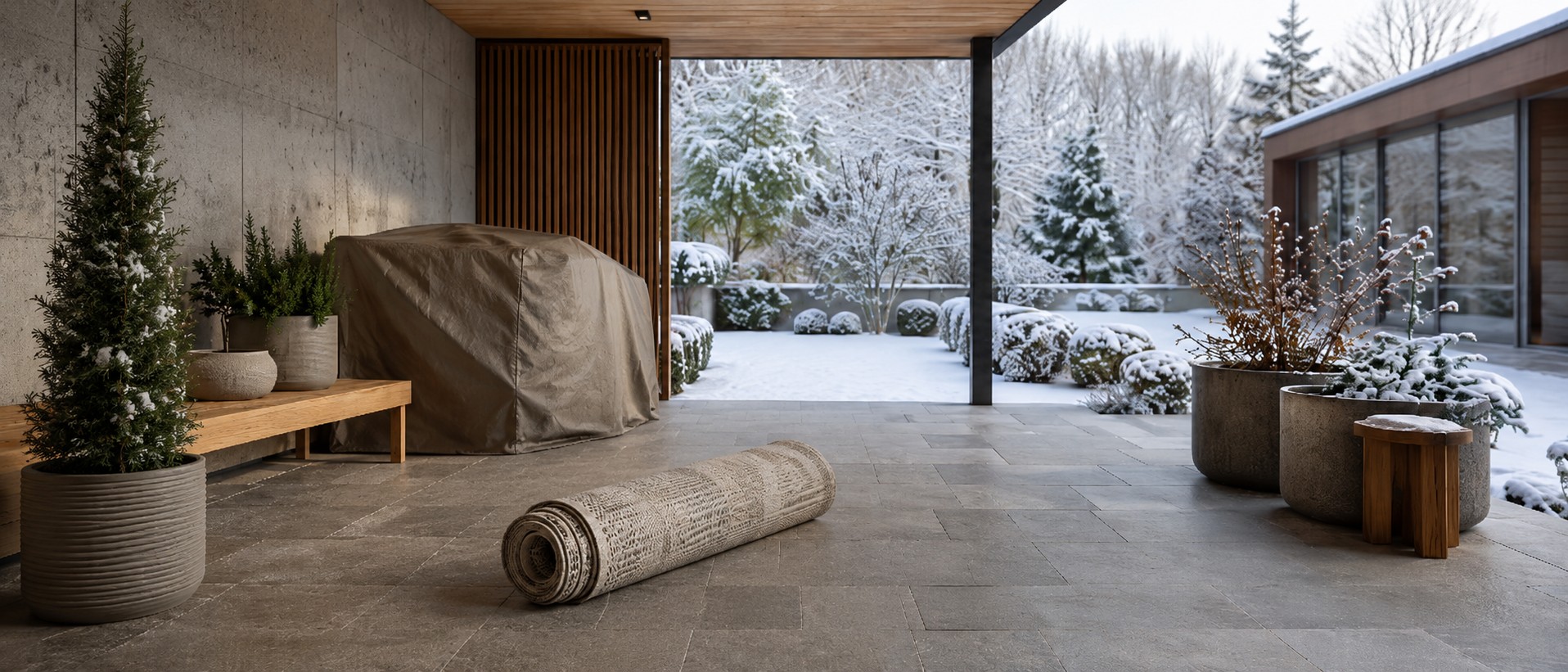
Outdoor Rug in Winter: How to Keep It Safe Through the Cold Season
In short: storing it is worth it
As soon as temperatures reliably drop below zero at night, I recommend bringing the outdoor rug in from the patio or balcony. Clean it thoroughly, let it dry completely, roll it up loosely and store it somewhere frost-free and well ventilated. Anyone who has done this once will bring out a rug in spring that looks exactly the same as when it was put away.
I say this with conviction: high-quality outdoor rugs are built to be robust. But robustness means resistance to normal weather conditions, to rain, sun and occasional moisture. Prolonged contact with snow, ice and standing water over weeks is an entirely different matter.
What to look for when buying a winterproof outdoor rug?
Before getting into care, it is worth taking a look at the material. Choosing the right fibres from the outset makes winter preparation considerably easier.
- Polypropylene (PP): The first choice for balconies, patios and gardens. Water-repellent, UV-resistant and easy to care for. Dirt and moisture barely adhere to the fibre.
- Polyester (PET) and PE: Also very well suited. Dimensionally stable, colourfast and easy to clean. Good resistance to weathering.
- Flat weave structure: Low-pile or flat-woven outdoor rugs dry more quickly and offer mould less surface to take hold.
- Natural fibres (jute, seagrass, coir): Visually appealing, but sensitive to direct and prolonged moisture. These rugs should be brought indoors consistently in wintry conditions.
A well-chosen outdoor rug is an investment that lasts several seasons. This is especially true when it is treated correctly at the right time.
Why winter can take its toll on outdoor rugs
"Weatherproof" appears on many product descriptions, and it is accurate. However, it describes resistance to rain, sun and temperature fluctuations, in other words, what a normal summer on a patio or balcony brings. What happens in winter is a different matter.
When snow lies on the rug, it melts, freezes again and melts once more. The moisture created in this process often has nowhere to drain. Water collects beneath the rug, air circulation is absent, and an ideal climate for mould, green growth and odour develops. Added to this is the material stress caused by frost: fibres become more brittle, backing fabric can tear and colours fade sooner than necessary.
This is not a worst-case scenario, but it is a clear reason to take care of the rug before the first frost arrives.
Step by step through winter preparation
Step 1: Shake out and vacuum thoroughly
Before water comes into play, everything dry should be removed. Sand, soil and leaves that have worked their way in over summer are easiest to remove at this stage. Residues that remain trapped encourage mould formation during storage.
Step 2: Treat with water and a mild cleaning agent
Outdoor rugs made from polypropylene or polyester handle water well. A garden hose, a mild cleaning agent and a soft brush are sufficient for most types of soiling. Rinse thoroughly and work carefully on stubborn spots. Aggressive scrubbing damages the fibre structure and should be avoided.
Step 3: Dry completely on both sides
This step determines everything. Both sides must be genuinely dry, especially the backing. Hang the rug up or place it on a raised surface so that air can circulate. Rolling up a rug that is still damp is the most common mistake in winter preparation.
Step 4: Roll up loosely
Rolling is better than folding. Folding leaves permanent creases and puts stress on the structure and backing of the rug. Roll up loosely with the pile facing inwards. Anyone wishing to cover the rug should use a breathable cotton cloth or a non-woven fleece cover. Airtight plastic sheeting traps moisture inside.
Step 5: Store dry, frost-free and ventilated
A cellar, garage or dry storage room are all suitable, provided there is no persistently high humidity. Store the rug on a pallet, a shelf or a wooden base to avoid direct contact with the floor. Check on it occasionally, particularly after damp periods in winter.
Leaving it outside: the conditions under which it works
A rug on a balcony in a sheltered loggia is in a different situation from a patio rug in a garden that is fully exposed to snow. A high-quality polypropylene rug will generally come through short, mild winter periods without persistent frost well.
Anyone leaving the rug outside should check it regularly, clear it after snowfall and position it elevated so that water can drain away. Standing water beneath it is the greatest risk. Over an entire winter, however, this is hardly a reliably safe solution.
What to do if mould or green growth appears?
Anyone who discovers mould spots or a musty smell when unpacking in spring must treat the rug extensively with lukewarm water and a mild cleaning agent, rinse it thoroughly and then allow it to dry very carefully. Green growth can be removed mechanically with some patience and a soft brush. With deeply embedded mould on the backing, complete restoration is sometimes no longer possible. Good winter preparation avoids this in almost all cases.
Outdoor rug indoors in winter: an underestimated option
Anyone without storage space, or who simply wants to continue using the rug, can bring it into the house without any restrictions. In a hallway, kitchen, entrance area or conservatory, an outdoor rug makes an excellent impression. It is hard-wearing, easy to care for and brings texture to a room without being delicate. It is an all-rounder that finds its place throughout the entire year.
FAQ
Can an outdoor rug stay outside for the whole winter?
Short-term and in mild, dry weather: possible. Prolonged contact with snow, frost and standing water noticeably shortens the rug's lifespan. Typical consequences: mould, green growth, odour, brittle fibres and cracks in the backing. Anyone leaving it outside should check it regularly, remove snow, and position the rug elevated so that water can drain away.
How do I approach winter storage of an outdoor rug correctly?
Shake out and vacuum: remove sand, soil and leaves completely. Clean gently, rinse thoroughly. Allow both sides to dry completely, especially the backing. Roll up loosely with the pile facing inwards; do not fold. Store dry, frost-free and ventilated, on a pallet or shelf, never directly on a concrete floor.
Is cleaning before storage really necessary?
Yes, and specifically vacuum and shake out the rug while it is still dry before wet cleaning. Trapped dirt, leaves and moisture create ideal conditions for mould and odour. If necessary, clean gently with water and rinse thoroughly. Only roll up once the rug is genuinely dry on both sides.
Which materials hold up best over winter?
Polypropylene (PP): Water-repellent, easy to care for, very robust. First choice for patios, balconies and gardens. Polyester (PET) and PE: Dimensionally stable, colourfast, resistant to weathering. Natural fibres (jute, seagrass, coir): Considerably more sensitive to prolonged moisture. Always store in a protected and dry location.
How do I continue using the rug if I have no storage space?
Bring the rug indoors: a hallway, kitchen, entrance area or conservatory are all excellent options. Outdoor rugs are hard-wearing and easy to care for, making them a good choice indoors as well. Anyone who must leave it outside should position it elevated and as sheltered from the weather as possible, consistently avoid standing water beneath it, and check regularly for mould and moisture.