How to Care for Your Outdoor Rug: Cleaning, Drying and Winter Storage
How an Outdoor Rug Lasts Many Seasons
Balcony, patio or garden: a good outdoor rug is one of the easiest-care floor coverings for outside. That said, it does require a basic routine to keep it looking great season after season. Understanding why mould, mildew stains or odours develop in the first place puts you in a position to address them directly. The cause is almost always the same: moisture with no way to escape, combined with organic dirt and a lack of air circulation.
The Right Everyday Care: A Simple Routine for Outdoors
Regular, small steps keep an outdoor rug consistently fresh and save you from labour-intensive deep cleans. The following routine is easy to integrate into daily life:
- Shake out sand, soil and pollen regularly, or brush off with a soft brush.
- Occasionally vacuum up pet hair and fine particles.
- Treat stains as early as possible, before they dry out or soak into the material.
- After heavy rain, briefly lift the rug so the underside can get some air and dry out.
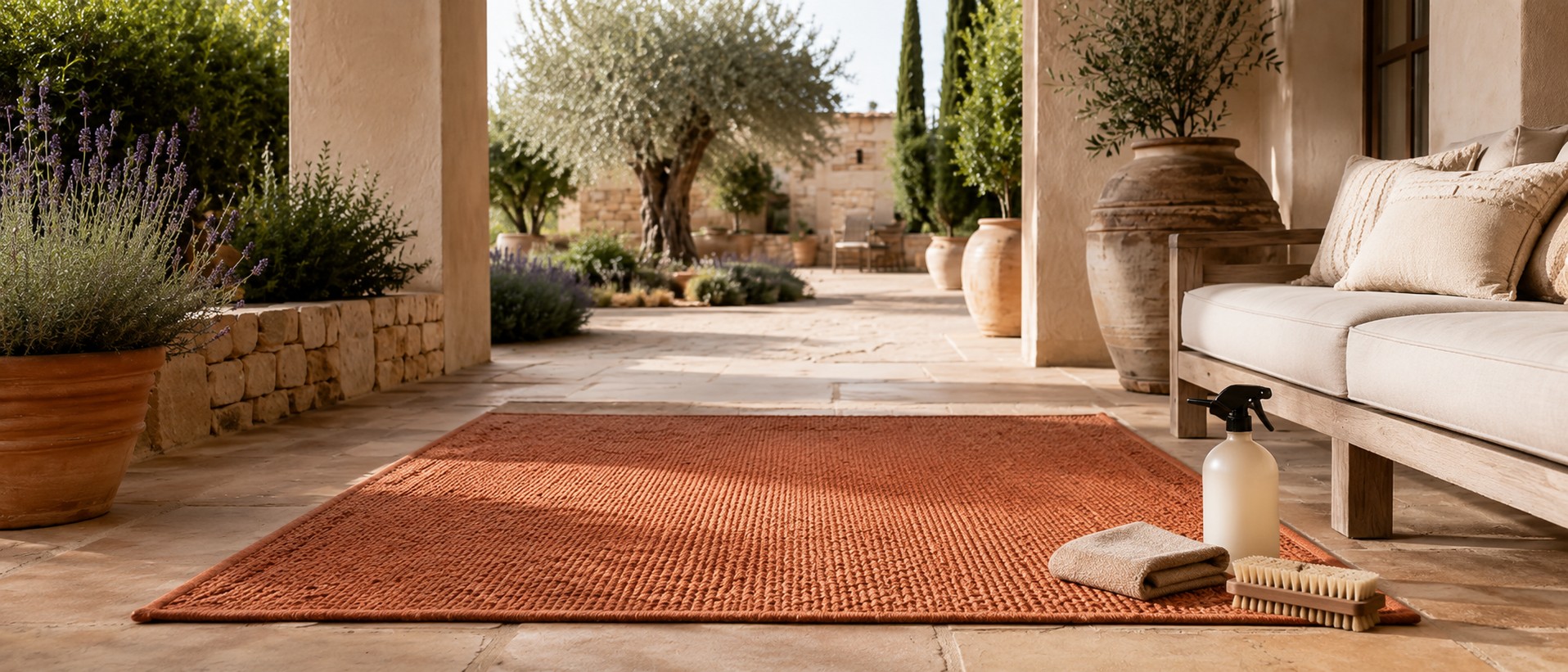
For more intensive soiling, a combination of a garden hose, soft brush and a splash of mild soap is usually sufficient. Important: rinse out soap residue completely, as remnants attract new dirt. Afterwards, hang the rug up or leave it in an airy spot to dry out fully.
Which Material Tolerates What?
The choice of material largely determines how straightforward everyday care is. A look at the most important types:
- Polypropylene (PP): The standard for outdoor rugs. Water-repellent, UV-resistant, shape-stable and easy to rinse off. Balconies, patios and gardens are the ideal environment for this material.
- Recycled synthetic fibres (e.g. PET): Equally weatherproof and easy to care for. The manufacturer's care instructions should always be followed regardless.
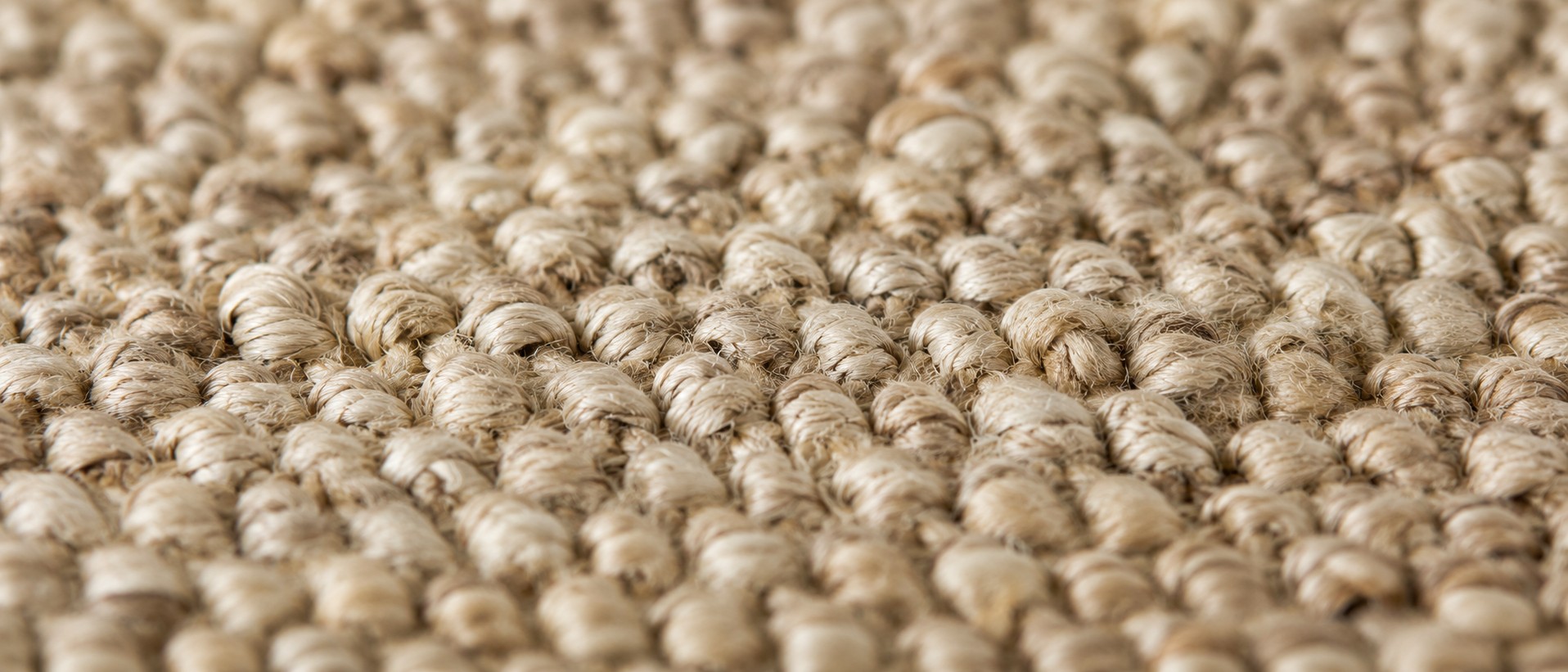
- Synthetic fibre in a natural fibre look: Rugs that imitate jute or sisal are often made from synthetic fibre and are suitable for outdoor use. Genuine jute or real sisal, on the other hand, does not cope well with prolonged moisture.
- Flat-woven qualities: Dry faster than high-pile variants and are generally easier to clean. Particularly suitable for locations with frequent rain.
Those who want as little maintenance as possible will make the best choice with a flat-woven synthetic outdoor rug. Flat weaves are more forgiving and dry out reliably.
Typical Stains and the Right Approach
Every patio has its own everyday stains. Here is a quick overview of the most common cases:
- Soil and mud: Leave to dry completely, then brush off, followed by rinsing with clear water.
- Blossom dust and pollen: Brush off dry or vacuum. Rubbing when wet spreads the dust deeper into the material.
- Grease and barbecue stains: Loosen with a drop of mild washing-up liquid, work in gently and rinse thoroughly.
- Drinks: Absorb the liquid immediately, then rinse with clear water.
- Algae and green growth: Brush off dry, then clean gently. Green growth often develops due to permanently damp ground and insufficient air circulation.
As a general rule: always treat stains gently, as vigorous rubbing damages the material. Before using a new cleaning product, a quick test on an inconspicuous area is recommended.
Mould and Mildew Stains: Tackle the Cause and Solve the Problem for Good
Mould is primarily a moisture problem. It forms where dampness sits for a long time, organic dirt is present and air circulates poorly. Rugs on permanently damp concrete, decking or artificial grass are particularly at risk.
At the first signs of mildew stains or mould: brush the rug off dry, clean gently with water and a little soap, rinse thoroughly and then allow to dry out completely. To prevent the problem from recurring, it is worth looking at the surface beneath: is leaf litter or organic material collecting under the rug? Is it lying on a permanently damp area? Is air circulation lacking? Addressing these questions and acting accordingly solves the mould problem more sustainably than any cleaning product alone could.
After Rain: Handling Drying Correctly
Synthetic fibre outdoor rugs can get wet. What matters is that the water can drain away freely and the rug dries out completely afterwards. On concrete, tiles, decking or artificial grass, moisture often builds up under the rug for longer than the surface suggests.
After a prolonged period of rain, it is advisable to hang the rug over a railing or prop it up so that both the top and underside can air equally. Even a few hours of air circulation makes a noticeable difference. A rug rolled up while still damp quickly develops odours, mildew stains and, over time, mould.
Pressure Washers: Use with Care
A pressure washer sounds like a quick solution, but it is not a universal care tool for outdoor rugs. For robust synthetic fibre rugs made from polypropylene, use is generally possible. Clear conditions apply: low pressure, sufficient distance from the material and a prior check of the manufacturer's care label.
For high-quality or finely structured outdoor rugs, a garden hose combined with a soft brush is the gentler and more reliable method. Flat-woven qualities and more delicate structures react to excessive pressure with material damage that cannot be reversed.
Winter Storage: The Conclusion of a Good Care Season
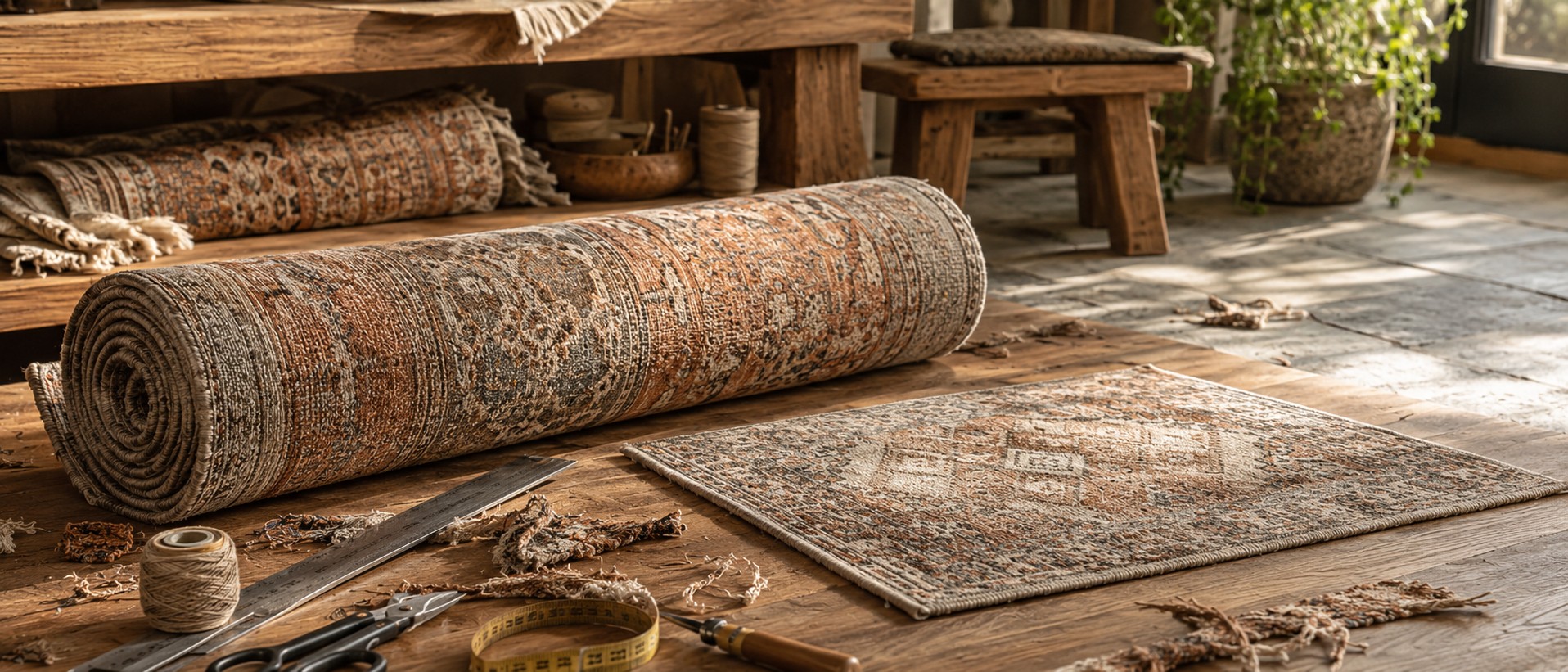
Stored correctly, an outdoor rug emerges from storage in spring fresh and ready to use. Investing five minutes in autumn saves cleaning effort at the start of the season. The key points to keep in mind:
- Clean the rug thoroughly before storage and allow it to dry out completely, including the underside.
- Roll up loosely; never fold or crease it for storage.
- Choose a dry, airy and sheltered storage location.
- Damp cellars, sealed garden boxes and airtight plastic sheeting are unsuitable as storage locations, as mould can form in them.
Typical Care Mistakes and How to Avoid Them
Most damage to outdoor rugs can be traced back to a handful of avoidable mistakes. A brief overview:
- Rolling up or folding the rug while it is still damp.
- Leaving the underside permanently on a wet or dirty surface without checking it.
- Leaving soap residue in the material.
- Driving stains deeper into the material by rubbing vigorously.
- Using aggressive cleaning agents or bleach.
- Ignoring the manufacturer's care instructions.
- Using a pressure washer without regard for the material and pressure level.
Anyone who keeps these points in mind will enjoy a good outdoor rug for many seasons.
FAQ
Can an outdoor rug stay outside all year round?
With weatherproof synthetic fibres such as polypropylene, permanent outdoor use is possible. Avoid standing moisture under the rug: allow the underside to dry regularly after prolonged rain. The surface beneath plays a role: concrete, tiles and decking retain moisture for varying lengths of time. The manufacturer's care label provides binding information about the weatherproofing of a particular model.
How do I wash an outdoor rug thoroughly?
Shake out and brush off loose dirt first. Rinse from both sides with the garden hose. For heavier soiling, use mild soap and a soft brush. Rinse out cleaning agents completely, as residue binds new dirt. Allow to dry out fully, hung up or in an airy spot, before laying the rug flat again.
What reliably helps against mould and mildew stains?
Brush the rug off dry, then clean with water and mild soap and rinse thoroughly. Do not use aggressive chemicals or mix products. Allow the rug to dry out completely afterwards, including on the underside. Address the underlying cause: a permanently damp surface, leaf litter collecting under the rug or insufficient air circulation are the most common triggers.
Is a pressure washer suitable for outdoor rugs?
Generally possible for robust polypropylene rugs, using low pressure and sufficient distance. Check the manufacturer's care instructions beforehand. For high-quality or finely structured rugs, a garden hose with a soft brush is the gentler and safer method. Treat the pressure washer as an exception; it is not a substitute for regular cleaning.
What matters when storing an outdoor rug over winter?
Clean the rug before storage and allow it to dry out completely, including the underside. Roll up loosely; do not fold or crease. Choose a dry, airy and sheltered storage location. Avoid damp cellars, sealed garden boxes and airtight plastic sheeting as storage locations, as there is a risk of mould.