Moth Damage to Rugs: Identify, Act Immediately and Prevent Permanently
Fresh feeding holes in the rug: the first steps when infestation is suspected
You lift a chair, turn the rug over and find small, irregular holes in the pile. The first reaction is usually frustration, especially when the rug was expensive. Moth damage to a rug is annoying, but as a rule entirely manageable if you act early.
Important to understand: the damage is caused exclusively by moth larvae, not by the adult moths. The small, light-brown moths you see fluttering around the room do not eat holes themselves. They lay eggs, and the hatching larvae feed on the keratin in wool. That is precisely why wool and other animal fibres are at risk, while cotton, linen and synthetic fibres remain unaffected. Blended fabrics with more than 20 per cent wool content also fall into this category.
Immediately useful: isolate the affected rug so that the infestation does not spread to other wool textiles in the room. Then vacuum thoroughly on both sides and dispose of the bag directly outside afterwards. That is the starting point; more on this below.
Combating carpet moths means: breaking the cycle, not just counting moths
When combating carpet moths, it is worth distinguishing between two things: control and elimination. Control means making the infestation visible and monitoring it. Elimination means killing all life stages of the moth, that is eggs, larvae and adult moths.
Many measures only target one point in the cycle. A pheromone trap catches males, cleaning removes larvae, cold or heat kills eggs. That is precisely why methods often only work reliably in combination. Clothes moths occur throughout the year and prefer heated rooms, so an infestation rarely disappears on its own.
Why vacuuming alone is not enough to get rid of moth larvae in the rug
Vacuuming is essential, but as the sole measure it is usually insufficient. Household vacuum cleaners remove some of the larvae and eggs, but stages sitting deep in the pile often survive. Eggs also lie loosely in the fabric and can partly be removed by vigorous beating. When beating, make sure the residue falls onto a surface with no nutritional value, that is, not onto the next wool rug.
Moths and larvae prefer to hide at the edges of the rug, under furniture and in dark, rarely walked-on areas. That is where a close inspection is most worthwhile. The rug should be vacuumed on both sides; the reverse side is explicitly included.
Identifying moth infestation in a rug
Several signs together will help you identify a moth infestation in a rug:
- Small, irregular feeding holes, often circular or linear along the larvae's feeding path
- Thin or bare patches in the pile
- Small droppings with an irregular surface that often take on the colour of the fabric
- Yellowish-white larvae and empty larval casings after moulting
- Small, light-brown moths with a fluttering flight; in severe infestations, also a musty odour
Gentle treatment: parasitic wasps, lavender and temperature used correctly
For most households, natural methods are the best starting point. They are gentle and can be combined well.
Parasitic wasps against the eggs
The approach using parasitic wasps in the rug targets reproduction directly. The tiny beneficial insects of the species Trichogramma evanescens lay their eggs inside the moth eggs, so that no larvae can hatch. They are harmless to humans and pets, and once their work is done they disappear on their own. The cards are renewed approximately every two to three weeks; after around twelve weeks the infestation should be gone. A room temperature above 15 degrees is required for use. One point to bear in mind: the denser and fluffier the rug, the harder the parasitic wasps have it with the large surface area.
Lavender and cedarwood as a deterrent
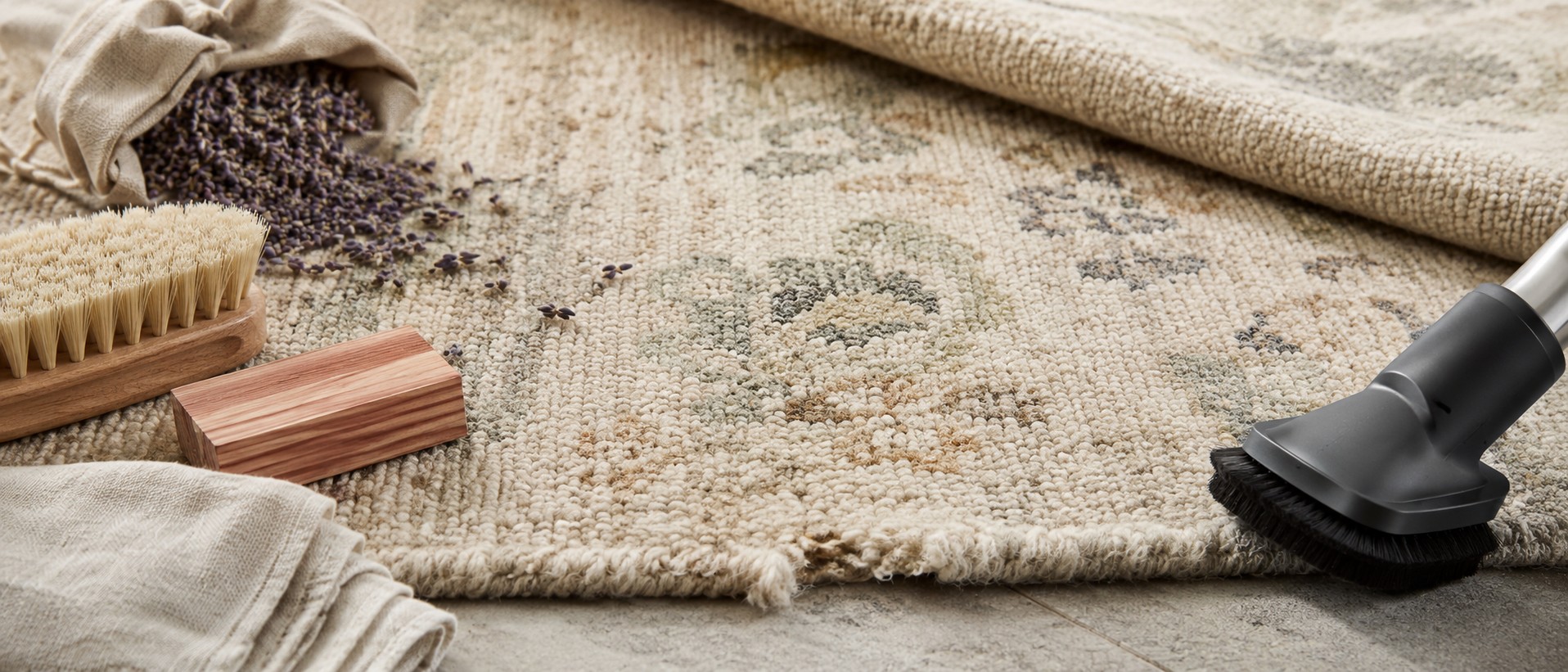
Essential oils such as lavender, cedarwood or cloves deter moths. However, they do not offer one hundred per cent protection and do not work against an existing infestation. A typical scenario: scented sachets with lavender and cedarwood placed at edges and in wardrobes, renewed approximately every three months to maintain the deterrent effect. This is prevention, not active treatment. Vinegar can be used as a supporting measure to wipe down affected areas, but it is not sufficient as a standalone solution.
Cold and heat against all life stages
Temperature is one of the most effective gentle methods. Minus 18 degrees over one week kills all developmental stages. For dense or heavy textiles such as rugs, a freezing period of three to seven days is recommended so that the cold penetrates all layers of the material. In the other direction: clothes moths reliably die at washing temperatures of around 60 degrees. For items that cannot be washed, such as wall-hung rugs, the German Federal Environment Agency recommends 50 to 60 degrees for approximately one hour in a fan oven. Caution: this oven method carries an increased fire risk and requires the utmost care; for large rugs it is barely practicable in any case.
Chemical options: pheromone traps, sprays and their limitations
When gentle methods are not sufficient, the second stage comes into play. A measured approach is more useful than hasty action here.
Pheromone traps: early warning rather than elimination
Pheromone traps use a sex attractant to lure exclusively male moths. They serve for monitoring and detection. The larvae in the pile responsible for the feeding damage are unaffected by them. A practical approach is a trap in the hallway as an early-warning system: if it catches males, you know that moths are active and when. By catching males, mating may be reduced, but a pheromone trap alone is generally not sufficient as a standalone control measure.
Sprays: only for persistent infestation and used with care
Insect sprays contain contact insecticides that must be sprayed directly into the hiding places of moths and larvae in order to work. The consumer advice centre NRW (Verbraucherzentrale NRW) advises against laypeople applying insecticides such as pyrethroids themselves for health protection reasons. One important case: in a household with a cat, particular caution is required, as insecticides based on permethrin can be especially harmful to cats. In such situations, gentle methods are clearly preferable. The active ingredient naphthalene has been banned in moth control products within the EU since 2008.
When professional cleaning is worthwhile compared to self-treatment
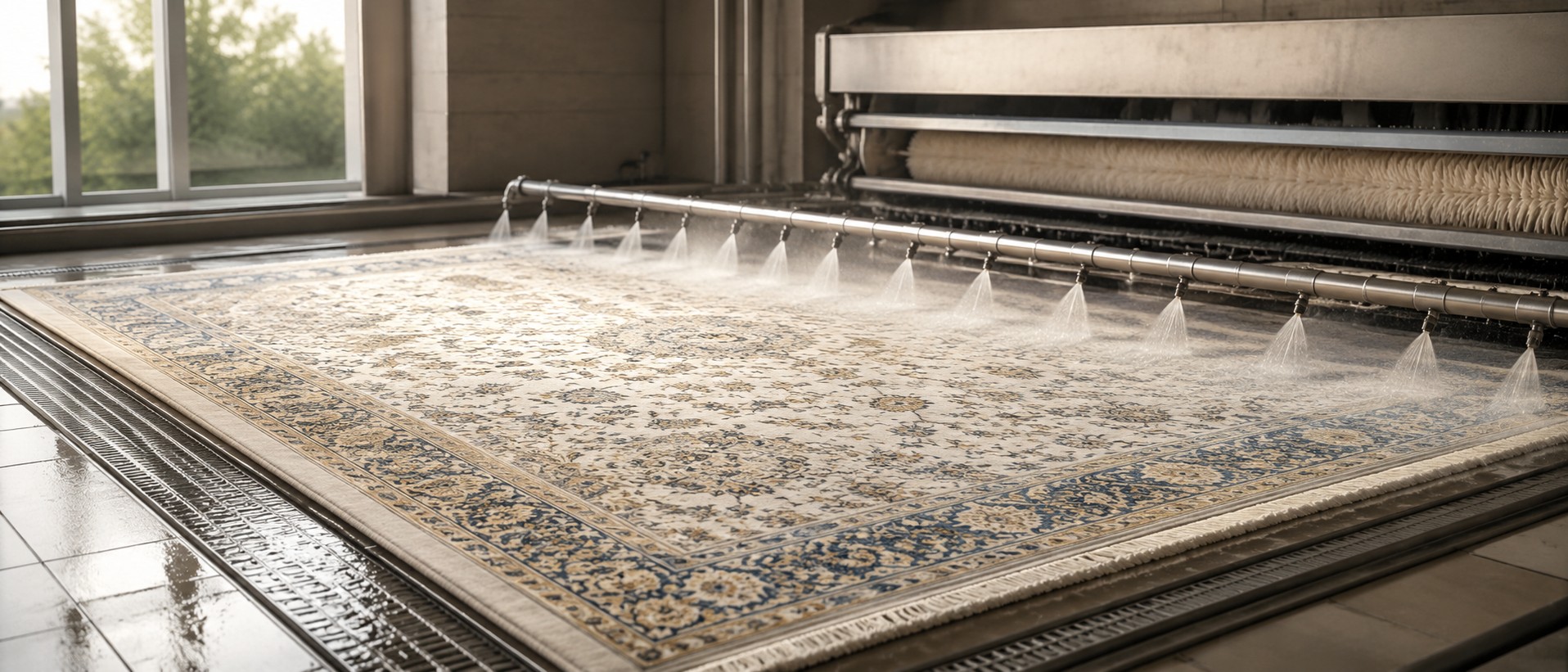
For large or valuable rugs, self-treatment reaches its limits. Professional rug cleaning is regarded as the method that reliably removes larvae and eggs even deep in the pile. Deep cleaning with water and thermal processes such as hot steam are used against all life stages.
A fitting scenario: a large, valuable Persian or wool rug. Here, professional deep cleaning with hot steam is the safe choice, and a subsequent moth-proofing treatment can protect the rug from re-infestation for around two years. In the case of severe or recurring infestation, engaging a professional pest controller is advisable, ideally one affiliated with a professional association.
Which method suits which infestation?
| Severity of infestation | Recommended course of action |
|---|---|
| Light | Vacuum on both sides, beat out, cool or heat, supplement with parasitic wasps |
| Moderate | Combine cleaning with pheromone traps for monitoring and temperature treatment |
| Severe or recurring | Commission professional cleaning or a pest controller |
Preventing the infestation from returning after treatment
Once the rug is clean, the focus shifts to preventing moths in wool rugs. A handful of habits will achieve this:
- Vacuum regularly, air the rug and turn it occasionally
- Check dark, undisturbed areas under furniture and at edges regularly
- Fly screens on windows keep moths out from outside
- Isolate new wool items in the freezer for a few days before placing them with other textiles
- Use scented sachets with lavender or cedarwood and renew them approximately every three months
And as with textile pests in storage: rarely used wool rugs should be stored clean and protected. Ultimately, a single method seldom decides the outcome. Identify early, start mechanically and naturally, add chemical or professional treatment as needed, and use a pheromone trap to monitor success. This combination will see the rug through.
FAQ
Is vacuuming enough to get rid of carpet moths?
No, vacuuming alone is usually not enough. It removes some of the larvae and eggs, but stages sitting deep in the pile often survive. Vacuum the rug on both sides, dispose of the bag immediately outside and combine vacuuming with temperature treatment, cleaning or parasitic wasps.
Are pheromone traps suitable for eliminating moths or only for monitoring?
Pheromone traps are intended for monitoring, not elimination. They attract exclusively male moths and show you whether and when moths are active. The harmful moth larvae in the pile are unaffected by them, so the trap alone is not sufficient as a standalone measure.
When is a chemical spray against carpet moths necessary and how dangerous is it?
A spray should only be considered for persistent infestation and must be sprayed directly into the larvae's hiding places. The consumer advice centre NRW (Verbraucherzentrale NRW) advises against laypeople applying insecticides such as pyrethroids themselves. In households with a cat, particular caution is required, as permethrin can be especially harmful to cats.
Does lavender or cedarwood help against an existing moth infestation?
No, lavender and cedarwood do not work against an existing infestation. The essential oils deter moths and are suitable for prevention, but do not offer one hundred per cent protection. To maintain the effect, scented sachets must be renewed approximately every three months.
How do I prevent the moth infestation from returning after treatment?
Keep the rug in use and under observation: vacuum, air and turn it regularly, check dark areas under furniture, and fit fly screens. Freeze new wool items for a few days beforehand, renew scented sachets every three months, and use a pheromone trap to monitor success.