Rug Slipping and Rippling: What Really Helps
In the morning, the large living room rug lies neatly in front of the sofa. By the evening, it has shifted, throws up a wave in the middle, and a corner is curling out from under the sofa. At first it just irritates the eye. Then someone catches their foot on the raised edge, and what was merely untidy becomes a tripping hazard. To tackle the problem at its root, you first need to know whether your rug is slipping or rippling. These are two different things with different solutions.
Slipping or Rippling: Two Problems to Tell Apart
Slipping and rippling look similar at a glance, but have little to do with each other. Slipping means the entire rug migrates across the floor. This happens mainly with smaller rugs such as runners, doormats, or bathroom mats on smooth floors. The smoother the floor, the more likely the rug is to wander. Loosely laid models with a woven backing slip particularly strongly.
Rippling is something quite different. The rug largely stays in place, but throws up bumps and folds or lifts at the edges. Larger rugs often ripple when they are positioned unfavourably. Before reaching for an anti-slip underlay, look carefully: is the entire rug migrating, or is only the surface buckling? The following sections address both in turn.
Why a New Rug Needs Time to Relax First
A freshly delivered rug almost always ripples. The reason is straightforward: it lay rolled or folded in its packaging for weeks. The fibres and backing need time to relax again. The backing retains the rolled shape, which is why edges lift and folds set in. These lying waves are normal and generally temporary.
How long this takes depends on the material. Thin, low-pile, and washable rugs usually lie flat within one to two days. Thicker rugs or natural-fibre models made of wool or jute need a week or longer. A freshly delivered jute rug will certainly test your patience. Depending on the material and thickness, you should allow a few days to two weeks before becoming concerned.
First Aid for Lying Waves: Rolling, Weighting, Moisture
You do not have to simply wait. There are three straightforward methods to help the rug along.
Counter-rolling: Roll the rug loosely in the opposite direction for several hours or overnight. This removes the ingrained rolled shape from the backing.
Weighting: Place flat objects such as books on the rippled areas. For a large living room rug, press out the stubborn folds with stacked books. The weights may remain in place for up to 72 hours. Use only light weights, as heavy objects can damage the pile or fibres. Leave the rug for one to two days after weighting before securing it.
Moisture and heat: For a stubborn ripple, a damp cloth placed on the spot and then steamed over with an iron works well, with no direct contact with the rug at all. This relaxes the fibres. Use this method only on heat-resistant materials and test on an inconspicuous area first.
When the Rug Keeps Migrating: Causes at Floor Level
If the rug continues to migrate after relaxing, the cause usually lies in the interaction between the floor and the underside. Smooth floors such as parquet, laminate, and tiles offer little resistance. A woven backing finds no grip there. Add to that dirt: dust and crumbs on the underside act like tiny ball bearings.
That is why cleaning comes before any other measure. The rug and the floor should both be clean. Beat the rug out beforehand so that deeply embedded dirt the vacuum cannot reach is also loosened. Another factor is weight. If furniture stands on the rug, slip resistance is high. The dining room rug under the table hardly shifts, because the chair legs weigh it down anyway. An exposed runner in the hallway, on the other hand, has nothing to hold it in place.
Solutions Against Slipping Compared
There are several ways to make a rug non-slip. They differ mainly in how gentle they are on the rug and the floor.
| Solution | Suitable for | Points to note |
|---|---|---|
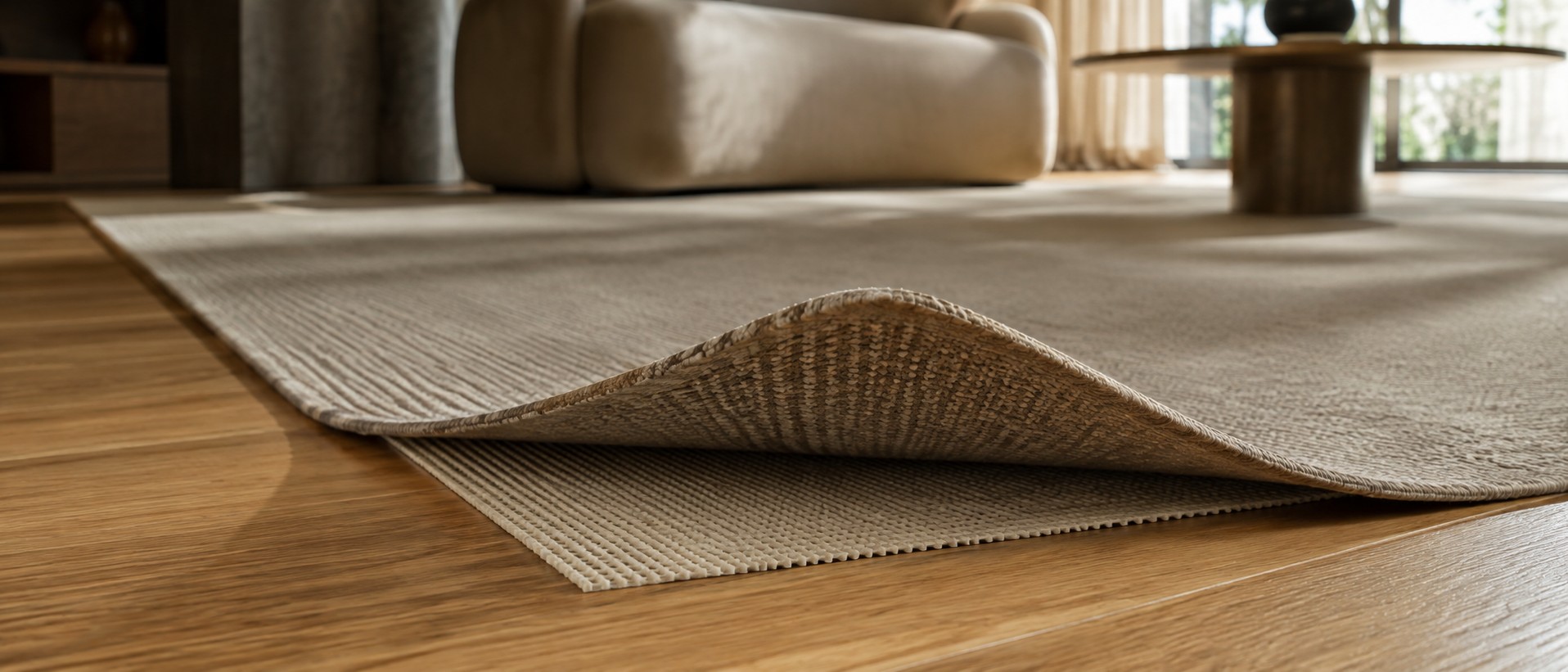
| Anti-slip underlay | Almost all rugs and smooth floors; the material-friendly standard solution | Laid loosely underneath, no additional fixing required. Cut approximately 2.5 to 5 cm smaller than the rug so that it does not protrude. |
| Rug-stop spray | Smaller rugs and runners | Use with care on sensitive floors and test beforehand. |
| Carpet tape | When a fixed position is desired | Can leave residue on the floor or rug when removed. |
| Velcro tape | Firm fixing in one position | Also has an adhesive surface; use with care on sensitive floors. |
| Non-slip backing as standard | Rugs already equipped for wood, tiles, or laminate | Check the product description at the time of purchase. |
The anti-slip underlay is the best choice for most situations. It simply lies loosely underneath, and when cleaning you can separate the rug from the underlay effortlessly, with no adhesive residue left on the rug or the floor. Such underlays are typically made of natural rubber, latex, or PVC. Which of these suits which floor type is covered in detail in the article on choosing the right rug underlay.
Caution with Adhesives and Plasticisers on Sensitive Floors
Before reaching for a permanent adhesive solution, pause for a moment. Parquet and laminate tolerate less than tiles or a carpeted floor. Carpet tape and Velcro tape work with adhesive surfaces that can leave residue when removed. With some materials, plasticisers present in the product can also cause discolouration on sensitive floors.
The safe sequence: make sure the surface is clean, dry, and even. Only then choose a measure. For most households, a loose underlay is sufficient, as it leaves the floor undisturbed while still holding firm. Aggressive products and permanent adhesives remain the exception for cases where nothing else genuinely works.
How to Avoid the Problem Altogether at the Point of Purchase
The problem can be addressed at the point of purchase. Look for a non-slip backing: there are rugs available as standard for wood, tiles, or laminate. Consider straight away whether to add a suitable underlay, especially for exposed runners in walkways.
Think about size and intended location as well. A rug that partly sits under the sofa or the dining table is weighed down by the furniture and hardly shifts. A runner in an open hallway, on the other hand, almost always needs an anti-slip underlay. Thinking it through at the time of purchase saves the need to readjust later.
FAQ
Why is my rug rippling even though it is new?
Because it lay rolled or folded in its packaging for weeks. The fibres and backing need time to relax again, which is why edges lift and folds set in. This is normal and generally temporary. Thin rugs lie flat after one to two days; thicker models or natural-fibre rugs need a week or longer.
Can I remove ripples with an iron?
Yes, with care. Place a damp cloth on the rippled area and steam over it with an iron, with no direct contact with the rug at all. This relaxes the fibres. Use this method only on heat-resistant materials and test on an inconspicuous area first.
How long can I leave books as weights on the rug?
Up to 72 hours. Use only light weights such as flat books, as heavy objects can damage the pile or fibres. Leave the rug for one to two days after weighting before securing it.
Can carpet tape or Velcro tape damage my floor?
This is possible. Both work with adhesive surfaces that can leave residue on the floor or rug when removed. You should be careful on sensitive floors such as parquet and laminate. The gentler choice is a loose anti-slip underlay, as it can be removed without leaving any residue.
What should I look for when buying my next rug to avoid the problem altogether?
Look for a non-slip backing; there are rugs available as standard for wood, tiles, or laminate. Plan for a suitable underlay from the outset, especially for exposed runners. Think about size and intended location: a rug that partly sits under furniture hardly shifts at all.