Viscose Rugs: the Silk Look and What It Demands in Everyday Life
A viscose rug makes an immediate impression. It shimmers, feels soft and expensive, and when light falls on it, it looks like a hotel room you have just checked into. The interesting question comes afterwards, though: does such a rug suit your household and the way you live? That is exactly what we look at here, covering everything viscose can do and where it reaches its limits.
What Is Viscose and Why Does It End Up in the Living Room So Often
Let us start with the basic question: what is viscose, exactly? Viscose is a semi-synthetic fibre made from cellulose, the main component of plant cell walls. The raw materials are fast-growing woods such as beech, spruce, eucalyptus, and pine, along with plants like bamboo, sugarcane, and soya. This makes viscose a regenerated fibre: plant-based in origin, technically refined.
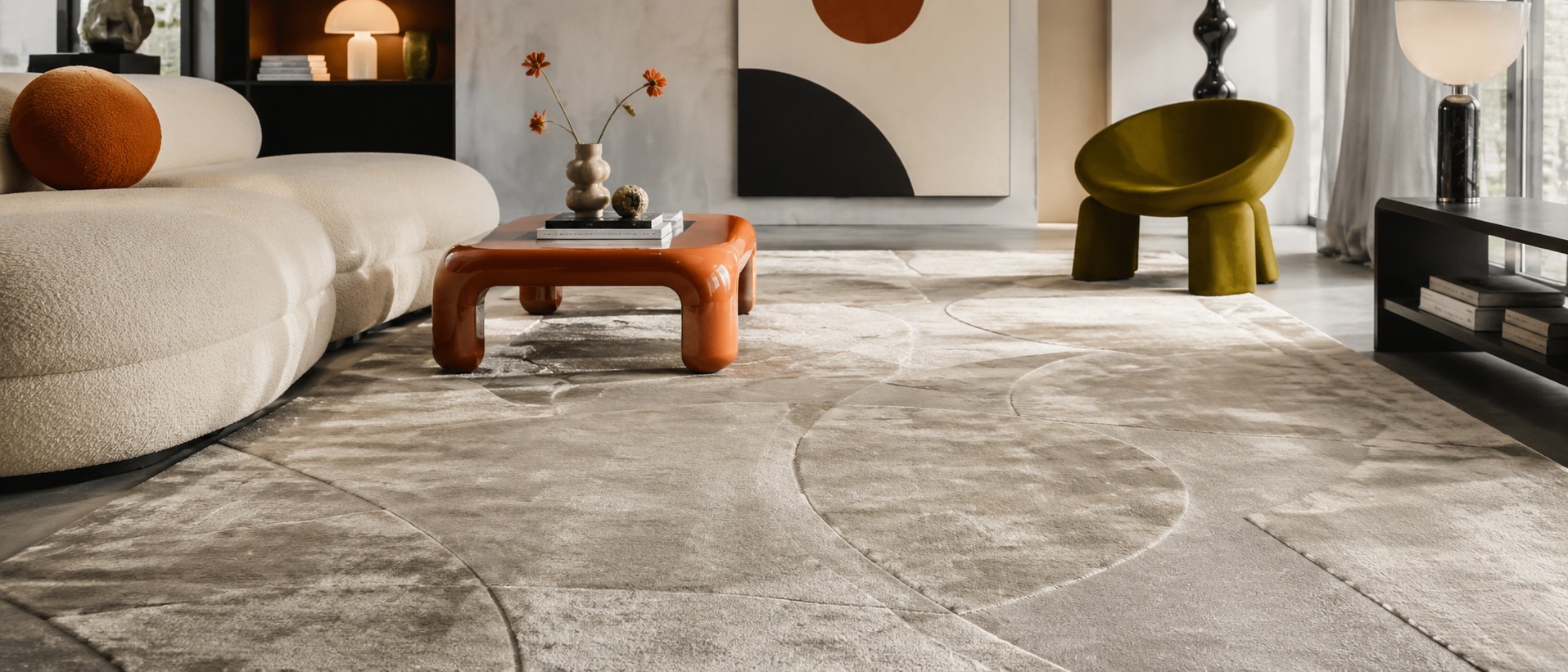
It was once known as art silk. The term is no longer official, but you still hear it colloquially. And it captures the essence: viscose has a silky sheen, feels smooth, and takes colour beautifully. In a rug, this means intense colours, an elegant surface effect, and a soft feel underfoot. The smooth surface invites you to walk barefoot.
The viscose material really comes into its own wherever light plays a role. In a living room with large windows, viscose amplifies the brightness and makes the space feel larger. In dining areas with indirect lighting, the fibre reflects the lamplight and creates a softer atmosphere. That is why you see viscose so often in living spaces, where it provides a lustrous, refined contrast alongside classic wool rugs.
The Silk Look at a Lower Price: Viscose vs Real Silk
Viscose was originally developed to offer a more affordable alternative to expensive silk. Both materials impress with vivid colours, a strong sheen, and a beautiful drape. Visually, they are quite close.
In a direct comparison, real silk still has the edge: it is smoother, softer, and more supple, because it is made from protein fibres. Viscose creases more easily by comparison. On the other hand, viscose is generally considerably cheaper. Anyone who loves the luxurious look but does not want to pay the price of silk will find viscose a sensible alternative. You get a great deal of visual impact for your money, but you should be aware that the fibre reacts more sensitively than its appearance might suggest.
Production Step by Step: from Cellulose to Gleaming Fibre
The journey from plant to rug yarn explains well why viscose is neither a pure natural material nor a conventional synthetic fibre like polyester. In simplified terms, the process goes like this:
- Wood pulp is extracted and pressed into firm pulp sheets.
- To obtain the fibre, these sheets must be re-liquefied. To achieve this, they are steeped in sodium hydroxide solution.
- Further chemicals are used in the process, including carbon disulphide and sulphuric acid.
- After drawing, the fibres are freed from chemical residues by hot washing, alkali salts, or bleaching agents.
Incidentally, the treatment with sodium hydroxide controls the sheen. Depending on the process, the result is either a strong or a silky-matt lustre. Because viscose can absorb a great deal of moisture, it can be dyed and printed as desired. The colours appear more intense than on cotton and remain so after repeated washing. A pleasant side effect: viscose does not build up static electricity.
Viscose Rug Pros and Cons at a Glance
Before you decide, a clear comparison is helpful. Here the viscose rug pros and cons are set out side by side.
| Points in favour | Points against |
|---|---|
| Silky sheen and refined appearance | Prone to creasing |
| Soft, smooth feel | Very sensitive to moisture |
| Intense, colour-fast tones | Can fade with direct sunlight |
| Less expensive than real silk | Suitable for low to moderate use only |
| Does not build up static charge | Absorbed moisture remains in the fibre for a long time |
The most appealing feature and the most critical one are connected: the absorbency that produces such wonderful colour uptake also makes the fibre vulnerable at the same time. If moisture remains inside too long and the rug does not dry quickly enough, mould can even develop. Water contact causes faint water marks, similar to silk.
Moisture Is the Weak Point: Assessing Rooms and Use Correctly
If you take away one point, make it this: what viscose really dislikes is prolonged moisture. In the bathroom or directly in the entrance area, it is out of place. When viscose rugs get wet, they can warp, lose their shape, or develop mould. A bathroom is therefore the classic example of an unsuitable location.
The household also plays a part. In a home with a dog or cat, viscose quickly reaches its limits, because it reacts sensitively to moisture and dirt. It is equally the wrong choice for heavily trafficked surfaces. It feels most at home in bedrooms and living rooms, where its sheen and softness can fully come into their own and the level of use remains low to moderate.
Anyone who loves the look but needs more robustness should opt for a blended weave. A blend of around 70 per cent wool and 30 per cent viscose suits living rooms with moderate use. A viscose-cotton mix with the reverse proportions works well in a bedroom. In this way, a pink rug, for instance, can be placed as a soft, colour-rich option directly alongside classic wool rugs without constant worry. Those who prefer cooler tones can combine the idea with blue rugs in quieter zones. For heavily used hallways, a sisal rug is the more hard-wearing alternative. One further point: prolonged, direct sunlight can cause the colours to fade and weaken the fibre.
Stains, Dust, and Drying: Keeping the Rug Looking Its Best
A viscose rug requires a certain amount of attention, and in return it rewards you with its appearance. The most important measure is regular vacuuming, especially with a light colour or in more frequently walked-on areas. The reason: if a soiled rug continues to be walked on, dirt particles work their way deeper into the pile. This makes removal harder and causes the material to age more quickly.
Care is needed when vacuuming. Conventional brush attachments are too sharp-edged and can damage individual fibres if the suction direction is wrong or the setting is too high. Specialist attachments for viscose rugs are available in shops.
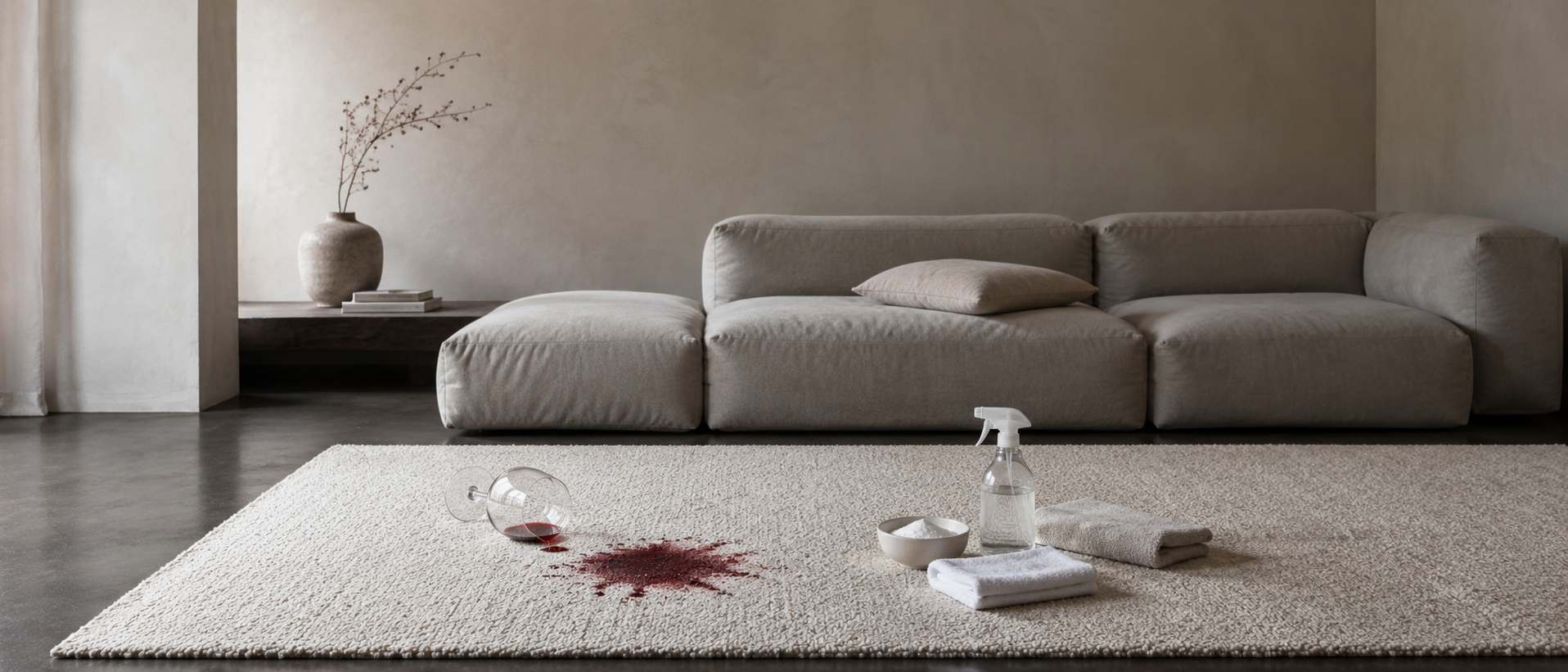
When dealing with a stain, proceed as follows: scrape off solid dirt carefully with a spoon or knife. Absorb liquids with a highly absorbent microfibre cloth. You should never rub affected areas, as the viscose fibre breaks under strong pressure and this process cannot be reversed. After treatment, lay the rug flat so that it dries without creases. Aggressive cleaning agents are inadvisable, as they can damage the material and burden the environment.
For thorough cleaning, several guides cite a guideline of approximately 12 to 18 months between professional cleans. This is a reference point, not a fixed rule, as figures vary depending on the source. One thing is clear, however: the washing machine is not an option.
Cellulose, Chemistry, and Lyocell: the Environmental Picture
The environmental question cannot be answered in a single sentence, because it depends on the process. The classic viscose process uses sodium hydroxide and a sulphur compound, which cause significant odour pollution and are problematic for groundwater. Production also requires a great deal of energy. When waste water is properly treated, that is one thing; when it is not, soils and rivers can be affected.
There is another side to the picture, however: viscose, modal, and lyocell are all completely biodegradable. Lyocell is regarded as the more environmentally friendly alternative, as its production requires less water and fewer chemicals. In the lyocell process, 99.5 per cent of the solvent is recycled, which is referred to as a closed-loop system.
A word on marketing: the term bamboo viscose sounds more natural than it is. It simply refers to viscose derived from bamboo pulp. Anyone who likes the look of viscose should therefore avoid labelling it either broadly as green or as harmful. What matters is how carefully it was produced. A glance at a harmful-substance certification such as STANDARD 100 by OEKO-TEX can provide guidance, as it tests not only the surface but also the backing, dyes, and coatings.
FAQ
Is a viscose rug easy to care for?
It requires a certain amount of attention. Regular, gentle vacuuming with a suitable attachment is important, as sharp brushes can damage the fibres. Treat stains dry and without rubbing. With this routine the appearance stays beautiful for a long time, but viscose does call for some care.
Is viscose sensitive to moisture?
Yes, moisture is the weak point. Viscose absorbs a great deal of water and releases it only slowly. When the rug gets wet, it can warp, lose its shape, or develop mould, and faint water marks appear. Bathrooms and entrance areas are therefore unsuitable locations.
Can I clean a viscose rug in the washing machine?
No, this is clearly inadvisable. Viscose reacts very sensitively to moisture, and too much water will harm both the shape and the colour. Treat stains locally, scrape off solid dirt carefully, and blot up liquids with a microfibre cloth. Afterwards, leave the rug to dry flat.
How sustainable is viscose?
It depends on the process. The raw material is renewable cellulose, and the fibre is biodegradable. However, the classic viscose process uses chemicals and a great deal of energy and can place a burden on waste water. Lyocell is considered the more environmentally friendly alternative, as it requires less water and fewer chemicals and the solvent is largely recycled.
Is viscose a good alternative to silk?
For the look, yes. Viscose was developed to offer the silk look at a lower price, and it delivers vivid colours with a strong sheen. Real silk remains smoother, softer, and more supple, while viscose creases more easily. If appearance matters more to you than the last few per cent of tactile quality, viscose is a sensible choice.