Rugs for Pets: Finding the Right Model for Dogs and Cats
Beautiful Living Spaces and Pet Life: How Both Work Together
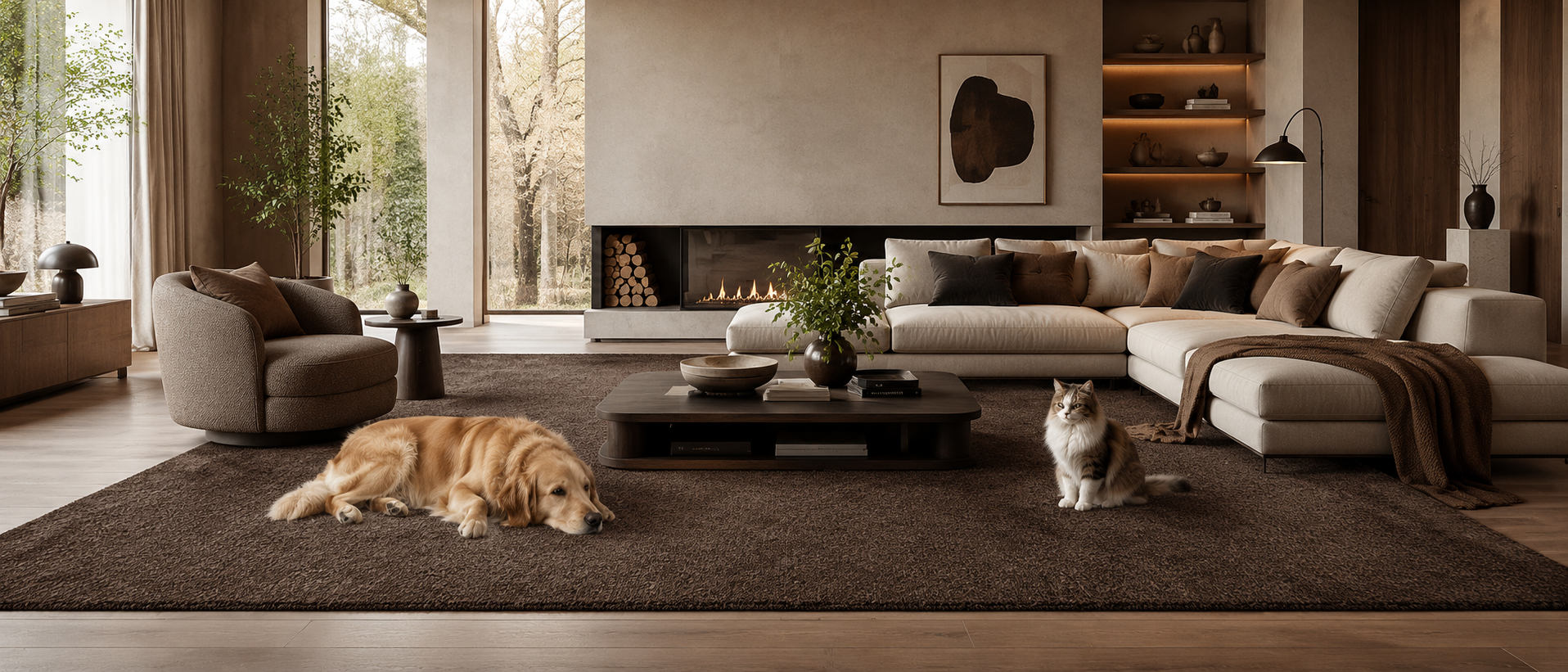
Four paws, a living room and the desire for a rug that truly delivers on its promises. Anyone living with a dog or cat has different demands of a rug than a pet-free household: robustness against hair and claws, quick cleaning when stains occur, no deep pile structures in which odours can settle. And yet the result should still feel homely, suit the interior style and remain attractive in the long term. This guide shows what really matters.
Care Routine First: How to Keep Any Rug Manageable
Before the question of the right material can be answered, it is worth looking at everyday life. Even the most robust rug benefits from a consistent care strategy. Three immediate rules apply to almost every type of flooring:
- Pet hair: Regular vacuuming with a powerful appliance is the most effective measure. A vacuum cleaner with a HEPA filter retains fine particles and does not release them back into the room air, which is particularly relevant for people with sensitivity to pet allergens.
- Liquids: Act immediately. Using a white, absorbent cloth, blot from the outside inwards. Rubbing spreads the stain and drives it deeper into the pile.
- Urine: Avoid heat. Warm water or steam can permanently fix the stain and odour in the fibres. Instead, blot with cold water and treat with an enzymatic cleaner. These products break down organic residues at a molecular level and are particularly effective for urine, vomit or food remnants.
An important note on choosing cleaning products: dogs and cats move very close to the floor with their paws, noses and tongues. Products containing ammonia and those with tea tree oil are considered problematic for animals. Mild, pet-safe cleaners are the better choice. Always follow the rug manufacturer's instructions and test any new product on an inconspicuous area first.
Short Pile and Flatweave: The Most Practical Starting Point
Short pile is the most widely recommended choice for pet owners, and for good reason. Pet hair sinks in less deeply, the vacuum cleaner works more evenly and stains can be treated more quickly because the surface absorbs less. Flatwoven rugs offer the same advantage with an even more compact structure.
Loosely woven loop pile, on the other hand, carries risks: cat claws and dog claws can pull out individual threads, which damages the surface over time. Densely woven short pile offers considerably more resistance.
High pile and shaggy models feel soft and look lavish. In a household with an active dog or a cat that likes to scratch, however, hair, crumbs, moisture and odours accumulate in deep pile layers, and cleaning becomes more demanding. Differentiation is worthwhile here: a calm, older dog in the bedroom has different requirements from a young, active dog in the hallway or living room.
Material Comparison: What Really Stands the Test of Time?
Polypropylene
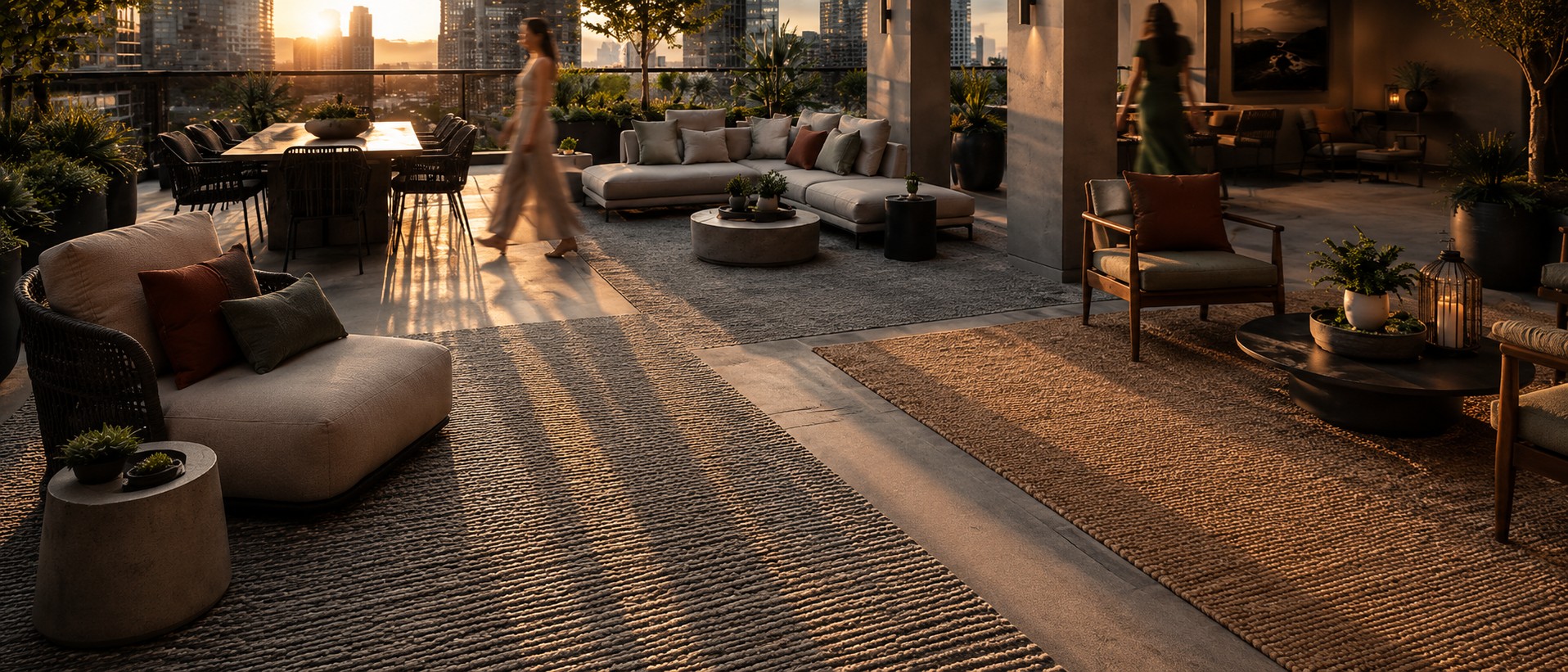
Polypropylene impresses in pet households through its combination of robustness and easy care. The fibres are inherently dirt-resistant, absorb almost no moisture and can be cleaned with a damp cloth when needed. Stains remain on the surface and can be blotted away quickly. Notably, the same material qualities that make polypropylene rugs a popular outdoor rug material also pay dividends in the home with pets. Weather resistance, moisture resistance and robustness are at the core of this material.
Polyester and PET
Polyester, in particular recycled PET, combines a soft feel with straightforward everyday care. It is less water-resistant than polypropylene, but handles pet hair and light stains well. Many washable rugs are made from polyester, which makes it an interesting option for areas such as the food bowl spot or the entrance.
Wool
Wool is naturally elastic, dirt-resistant and long-lasting. Quality wool rugs recover well from pressure marks and withstand a great deal. With moisture and organic stains, however, they require more attention than synthetic fibres, because wool fibres absorb more moisture. Those willing to put in this extra effort will have a rug with genuine homeliness and a long lifespan.
Viscose and Silk
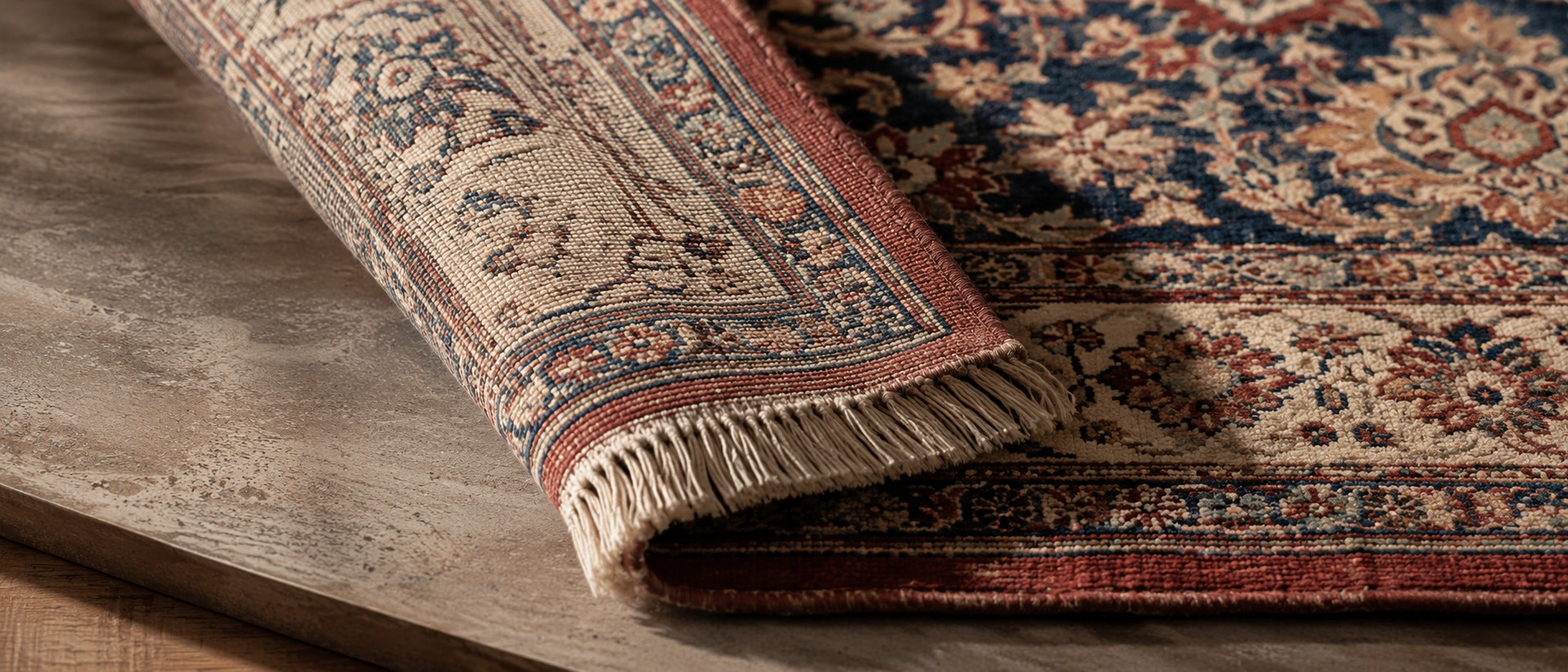
Both materials look elegant, but are very susceptible in pet households. Viscose reacts sensitively to moisture and can suffer permanent structural damage. Silk is simply not designed for heavy use. Those seeking a premium look will find aesthetically convincing alternatives in polypropylene or carefully maintained wool.
Colour and Pattern: Making Everyday Life Smarter
The choice of colour is more practical than it may appear at first glance. Plain, very light or very dark rugs show hair and small marks most clearly. Earth tones, grey tones, melange textures and understated geometric patterns conceal both light and dark pet hair more effectively. This reduces not only the visual impression, but also the subjective pressure to reach for the vacuum cleaner constantly.
Non-Slip Properties: Safety for the Animal and the Rug
Young or large dogs in particular can slip on smooth surfaces. A non-slip rug underlay gives the animal a secure footing and at the same time prevents the rug itself from shifting. This is especially relevant in the hallway and in open-plan living areas with smooth flooring.
Washable Rugs: Practical with a Realistic Perspective
Washable rugs are a sensible option for smaller formats: for example, under the food bowl, at the entrance or in a child's room shared with a pet. For large living room rugs, the concept and practice quickly come into conflict: weight, drum size of the washing machine, drying time and subsequently moving the furniture back make regular washing impractical. Those specifically looking for a washable rug should carefully check size, weight, backing and machine compatibility according to the manufacturer's instructions.
Pet Hair and Sensitivity: What Is Realistically Achievable
Rugs bind dust and allergen particles. The shorter, denser and easier to care for a rug is, the better the overall burden in the room can be controlled. A consistent vacuuming routine with a HEPA filter is crucial in this regard. The label "allergy-friendly" is not a verified product claim, but a short-pile rug that is cleaned regularly is considerably more manageable in everyday life than a deep-pile model.
FAQ
How do I tell whether a rug is truly suitable for pets?
Pile height: Short pile or flatweave is ideal. Pet hair sinks in less deeply, vacuums work more effectively and stains can be treated more quickly. Weave: Prefer a dense, closed structure. Loose loops are vulnerable to claws. Material: Polypropylene and polyester/PET impress through robustness and easy care. Wool is long-lasting and high quality, but requires more care with moisture. Colour: Melange tones and understated patterns conceal hair and small stains more effectively than plain surfaces.
What is particularly important in a rug for dogs?
Low pile height: Dog hair sinks in less deeply and the vacuum cleaner works more evenly. Synthetic fibres: Polypropylene or polyester are straightforward to clean when dealing with wet paws, dirt and occasional accidents. Non-slip underlay: Gives the dog a secure footing, especially in the hallway or on smooth surfaces. Avoid sensitive materials: For young or very active dogs, viscose, silk and high pile are less suitable.
Which rug properties are especially important for cats?
No loose loops: Cat claws can pull out individual threads. Densely woven surfaces are considerably more resistant. Prefer short pile: A compact structure offers claws less to grip. Provide a scratching post: An appealing scratching option diverts the cat away from the rug. Choose dark or textured patterns: Light cat hair is less noticeable on patterned or melange surfaces.
How do I best deal with urine, hair and odours?
Pet hair: Vacuum regularly with a powerful vacuum cleaner (ideally with a HEPA filter). Liquids: Blot immediately with a white cloth from the outside inwards. Do not rub. Urine: Do not use heat. Blot with cold water, then treat with an enzymatic cleaner and allow to dry thoroughly. Cleaning products: Pay attention to pet safety. Avoid ammonia-based products and tea tree oil. Follow manufacturer's instructions and test any new product on an inconspicuous area first.
Is a washable rug worthwhile in a pet household?
For smaller formats, a washable rug is a practical choice: in the entrance area, under the food bowl or in a room with limited floor space. For large rugs, the concept reaches its limits. Weight, drum size of the washing machine, drying time and subsequently moving the furniture back make regular washing demanding. Those specifically looking for a washable rug should carefully check size, weight, backing and machine compatibility according to the manufacturer's instructions.